24Hours Tel
0086-139 8951 3573
Free Inqiry
E-mail:[email protected]
24Hours Tel
0086-139 8951 3573
Free Inqiry
E-mail:[email protected]
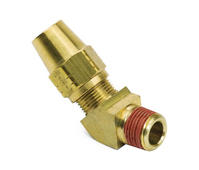
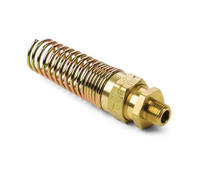
A comprehensive technical review of industrial pneumatic and fluid transfer components has identified the engineering principles behind Compression Brass Fittings, specifically the Union Compression series. Engineered to meet the rigorous functional requirements of SAE J-512 and carrying UL Listing for flammable liquids, these fittings represent a critical advancement in mechanical coupling technology. This report analyzes the metallurgical integrity of forged and extruded brass shapes, the mechanical advantages of acetal versus brass sleeves, and the operational efficiency afforded by "no tube preparation" installation protocols in high-pressure industrial environments.
The structural reliability of Compression Brass Fittings is rooted in the high-quality manufacturing processes used to create the fitting bodies. These components are produced using a combination of forged and extruded brass shapes, each serving a specific mechanical purpose.
Forging involves the shaping of metal using localized compressive forces, which refines the grain structure and follows the part's contour. This results in superior impact strength and resistance to fatigue, making forged Compression Brass Fittings ideal for high-vibration machinery and heavy-duty compressors. Extruded shapes, on the other hand, provide excellent dimensional consistency and internal smoothness, which is vital for maintaining laminar flow in air lines and cooling lines.
One of the most significant technical highlights of the Union series is that there are no steel products in contact with the tube. This prevents galvanic corrosion, which occurs when dissimilar metals interact in the presence of moisture or electrolytes. By ensuring a brass-to-tube interface, the system maintains chemical stability across diverse media, including lubrication lines and fluid transfer systems. Furthermore, being UL Listed for flammable liquids, the material composition is verified to remain stable and leak-proof even when conveying volatile substances.
The Union Compression design is engineered for rapid deployment without compromising the integrity of the seal. The system's primary innovation is the elimination of the need for tube preparation (such as flaring, soldering, or deburring).
In standard industrial assembly, tube preparation is a time-consuming variable that introduces potential failure points—such as improper flares or residual burrs. Compression Brass Fittings utilize a mechanical interference fit where the nut compresses a sleeve (ferrule) onto the tubing. Because no tube preparation is required, the risk of human error during installation is significantly reduced, ensuring that the seal is formed purely through the calibrated torque applied to the fitting's nut.
The Union series offers versatility through the availability of either a brass or acetal sleeve. The choice between these materials is governed by the specific requirements of the application:
Brass Sleeves: Typically used for high-pressure pneumatic systems and metal tubing (such as copper or aluminum). The brass-on-brass compression creates a permanent, high-strength mechanical bond suitable for industrial machinery.
Acetal Sleeves: Preferred for plastic or thermoplastic tubing applications. Acetal provides a resilient grip that seals effectively without over-compressing or "biting" through softer tube walls, making it ideal for low-pressure air lines and printing equipment.
The engineering versatility of Compression Brass Fittings allows them to be deployed across a wide spectrum of industrial markets, including packaging, printing, and general pneumatics.
In compressed air applications, maintaining system pressure is paramount. The precision threading and sleeve compression of these fittings ensure that there is zero air loss at the connection points. This efficiency is critical for compressors and pneumatic tools that require constant, regulated airflow to function correctly.
For industrial machinery, lubrication lines must deliver grease or oil at specific pressures to prevent bearing failure. The Union Compression Brass Fittings provide the necessary high-pressure resilience to ensure that lubricants reach their destination without leakage. Similarly, in cooling lines, the corrosion-resistant nature of brass ensures that the cooling medium does not degrade the fitting over long-term exposure.
The following table summarizes the key technical attributes and compliance standards for the Union Compression Brass Fittings series:
|
Feature Category |
Technical Specification / Achievement |
Operational Benefit |
|---|---|---|
|
Material Process |
High-Quality Forged & Extruded Brass |
Superior structural strength and grain refinement |
|
Safety Certification |
UL Listed for Flammable Liquids |
Verified safety for volatile fluid transfer |
|
Standard Compliance |
Meets SAE J-512 Requirements |
Compatible with automotive and industrial standards |
|
Sleeve Options |
Brass or Acetal (Plastic) |
Versatility for both metal and plastic tubing |
|
Installation Logic |
No Tube Preparation Required |
Reduces labor time and minimizes cumulative error |
|
Connection Size |
Stocked ANSI Standard Sizes |
Ready integration with existing US pipelines |
|
Media Interface |
No Steel Contact with Tube |
Eliminates galvanic corrosion and rust issues |
|
Part References |
62, 262, s62, 62A |
Standardized part numbering for easy identification |
The Compression Brass Fittings are engineered to be "set and forget" components. Once the nut is tightened to the specified torque, the sleeve undergoes controlled deformation to lock the tube in place.
Machinery Integration: The robust nature of the forged bodies allows these fittings to handle the thermal expansion and contraction cycles common in heavy industrial machinery.
Packaging and Printing: In these high-speed environments, the compact design of the fittings allows for dense manifold configurations, facilitating complex air-logic and fluid control within a small footprint.
Fluid Transfer: The smooth internal bores of the extruded shapes minimize turbulence, ensuring that fluid transfer is achieved with minimal pressure drop across the fitting.
The engineering behind Compression Brass Fittings represents a sophisticated approach to fluid and pneumatic management. By adhering to the SAE J-512 standard and providing a UL Listed solution that requires no tube preparation, these fittings provide a stable, durable, and highly efficient connection point for the most demanding industrial sectors. Whether utilized in simple air lines or critical flammable liquid systems, the technical integrity of the Union Compression series ensures operational stability and long-term leak-proof performance.
Add:Xingzhong Road DianKou Town Zhuji City Zhejiang Province China
Mob: 0086-139 8951 3573
Tel: 0086-575-87560582
Fax: 0086-575-87560582
E-mail:[email protected]

 英语
英语 西班牙语
西班牙语