24Hours Tel
0086-139 8951 3573
Free Inqiry
E-mail:[email protected]
24Hours Tel
0086-139 8951 3573
Free Inqiry
E-mail:[email protected]
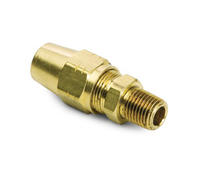
In the construction of modern hydraulic and pneumatic transmission systems, the reliability of hose-to-port connections directly determines system safety, assembly efficiency, and long-term operating stability. For OEM engineers, maintenance professionals, and wholesale distributors, Push-On Hose Fittings—especially when integrated with a Male SAE 45° Flare Adapter—have become a preferred solution for applications requiring fast installation, vibration resistance, and leak-free performance. This technical overview analyzes the structural design, material advantages, sealing mechanics, and economic value of Push-On Hose Fittings, with a focus on the reference product series 100B-3 / KA-MS / 727 / 282 / 302 / 682 / 945 used across global industrial markets.
Push-On Hose Fittings are precision-machined connectors designed exclusively for use with Push-On Hose. Unlike traditional crimped or clamped assemblies, these fittings rely on an engineered barb profile that interacts precisely with the hose inner diameter (I.D.) and braid angle. The result is a mechanically secure, clamp-free connection capable of withstanding demanding operating conditions.
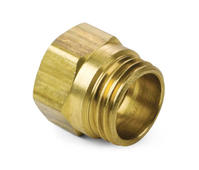
The integration of a Male SAE 45° Flare Adapter further enhances compatibility with standard hydraulic and pneumatic ports, particularly in automotive, refrigeration, and industrial equipment. The 45° flare geometry ensures consistent metal-to-metal sealing, minimizing leakage risks caused by vibration, pressure pulsation, or thermal cycling.
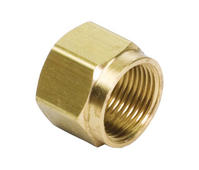
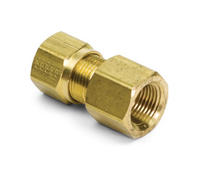
Push-On Hose Fittings are typically manufactured from high-quality brass or stainless steel, selected based on application environment and media compatibility. Brass versions are favored for their excellent machinability, corrosion resistance, and inherent lubricity, which improves barb engagement during assembly. Stainless steel variants are used where higher mechanical strength or chemical resistance is required.
Advanced CNC machining ensures that each barb is dimensionally optimized to match Push-On Hose specifications. This precision guarantees uniform load distribution along the hose wall, preventing localized stress concentrations that could lead to premature hose failure. The presence of a yellow stop ring provides a clear visual indicator, ensuring the hose is fully seated and all barbs are engaged.
Traditional hose assemblies rely on external clamps to maintain sealing integrity, introducing additional failure points and assembly variability. In contrast, Push-On Hose Fittings achieve retention through controlled interference between the barb geometry and the hose I.D. When the hose is pushed to the stop ring, elastic deformation of the hose material creates a uniform radial sealing force.
This design eliminates clamp loosening due to vibration or thermal expansion and significantly reduces installation time. For high-volume assembly lines and field maintenance operations, clamp-free connections translate into improved productivity and reduced labor costs.
To ensure maximum performance and service life, Push-On Hose Fittings must be assembled according to strict guidelines:
Cut the hose cleanly and squarely to the required length.
Lightly lubricate the hose I.D. and fitting barbs using light oil or soapy water.
Push the hose onto the fitting until it bottoms firmly against the yellow stop ring.
Verify that the hose end is fully seated and free from fraying.
It is critical to note that Push-On Hose Fittings are designed only for use with Push-On Hose. They should not be used with other hose styles or manufacturers, as mismatched tolerances may compromise sealing integrity and safety.
The pressure rating of a Push-On Hose Assembly is primarily limited by the hose I.D. rather than the fitting itself. When properly matched, the fitting-to-hose interface provides a secure connection capable of handling typical pneumatic and low-to-medium pressure hydraulic applications.
This makes Push-On Hose Fittings ideal for fuel lines, air brake systems, lubrication circuits, coolant lines, and general industrial fluid transfer where reliability and ease of service are essential.
The Male SAE 45° Flare Adapter is widely used in North American and global equipment standards. Its conical sealing surface provides excellent resistance to vibration and thermal cycling, making it suitable for:
Automotive fuel and transmission systems;
Refrigeration and HVAC lines;
Industrial pneumatic circuits;
Agricultural and construction machinery.
When combined with Push-On Hose Fittings, the SAE 45° flare interface ensures system-wide compatibility while maintaining fast, tool-free hose installation.
| Reference Part No. | Product Type | Material | Connection Standard | Typical Applications |
|---|---|---|---|---|
| 100B-3 | Push-On Hose Fitting | Brass | Male SAE 45° Flare | Automotive & Pneumatic Systems |
| KA-MS | Push-On Hose Fitting | Stainless Steel | Male SAE 45° Flare | Industrial Fluid Handling |
| 727 / 282 | Push-On Hose Fitting | Brass | Male SAE 45° Flare | Fuel & Lubrication Lines |
| 302 / 682 | Push-On Hose Fitting | Stainless Steel | Male SAE 45° Flare | High-Durability Applications |
| 945 | Push-On Hose Fitting | Brass | Male SAE 45° Flare | General Industrial Use |
From a total cost of ownership perspective, Push-On Hose Fittings with Male SAE 45° Flare Adapter offer a compelling balance of performance, safety, and economic efficiency. Reduced installation time, elimination of clamps, reliable sealing, and simplified maintenance all contribute to lower lifecycle costs.
For global distributors and OEM partners, standardized reference part numbers, consistent quality control, and compatibility with established SAE standards ensure smooth integration into existing supply chains. Whether for high-volume production or field maintenance, Push-On Hose Fittings represent a proven, industry-trusted solution for modern fluid and gas transmission systems.
Add:Xingzhong Road DianKou Town Zhuji City Zhejiang Province China
Mob: 0086-139 8951 3573
Tel: 0086-575-87560582
Fax: 0086-575-87560582
E-mail:[email protected]

 英语
英语 西班牙语
西班牙语