24Hours Tel
0086-139 8951 3573
Free Inqiry
E-mail:[email protected]
24Hours Tel
0086-139 8951 3573
Free Inqiry
E-mail:[email protected]
The world of fluid dynamics and mechanical engineering relies heavily on the integrity of connections. Among the most versatile and reliable methods for joining pipes and tubes are compression fittings. These mechanical joints provide a leak-proof seal without the need for heat or specialized chemicals. This guide provides an exhaustive look at the nature of compression fittings, their internal mechanics, the materials used in their construction, and the diverse applications they serve across modern industry.
To understand the importance of compression fittings, one must first look at the challenges inherent in plumbing and gas distribution. Traditionally, joining two pipes required soldering, welding, or threading. While effective, these methods often require significant labor and specific environmental conditions. Compression fittings emerged as a solution that prioritizes ease of installation while maintaining high performance standards under pressure.
At its core, a compression fitting is a mechanical coupling that creates a seal through the application of pressure. When the components are tightened, a small metal or plastic ring is squeezed between the nut and the body of the fitting. This action causes the ring to deform and grip the tube tightly, creating a robust barrier against fluid or gas escape. Because compression fittings do not require open flames or toxic adhesives, they are often the preferred choice in sensitive environments like residential kitchens or chemical processing plants.
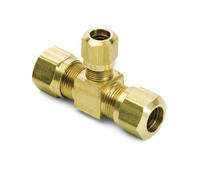
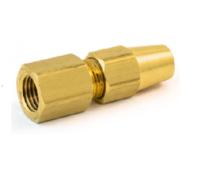
A standard assembly consists of three primary parts that work in unison to ensure a secure connection. Each part plays a critical role in the mechanical integrity of the joint.
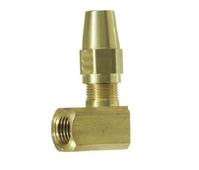
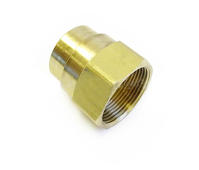
The body is the main structural component that facilitates the flow of the medium. It is typically designed with a recessed seat that accepts the tubing and the sealing ring. The quality of the machining on the interior of the body is vital because any irregularities can lead to micro-leaks. In high-quality compression fittings, the body is often forged rather than cast to provide superior strength and resistance to internal pressure.
The nut serves as the engine of the assembly. As the user turns the nut onto the threaded portion of the body, it exerts a downward force on the sealing ring. The threads must be precisely engineered to prevent cross-threading and to allow for smooth torque application. The external design of the nut often features a hexagonal shape to accommodate standard wrenches, ensuring that the necessary force can be applied to achieve a seal.
Commonly referred to as a ferrule or an olive in certain regions, this small component is the most critical part of the compression fittings system. It is usually made from a material that is slightly softer than the fitting body but firm enough to bite into the tubing. When compressed, the ferrule undergoes plastic deformation. This means it changes shape permanently to conform to the outer diameter of the tube and the inner taper of the fitting body.
The efficacy of compression fittings lies in the distribution of mechanical stress. When the nut is tightened, the force is directed axially along the tube. However, the internal geometry of the fitting body features a conical taper. As the ferrule is pushed into this taper, the axial force is converted into radial force.
This radial pressure is what creates the seal. The ferrule is squeezed inward until it grips the surface of the tube. In many industrial versions of compression fittings, this grip is so strong that the ferrule actually creates a small indentation in the tube wall, a process known as swaging. This mechanical interlock ensures that the tube cannot be pulled out of the fitting even under significant vibration or thermal expansion.
The performance of compression fittings is heavily influenced by the materials used in their manufacture. Engineers must select materials that are compatible with the fluid being transported and the external environment.
Brass is perhaps the most common material for domestic and light industrial applications. It offers excellent corrosion resistance and is relatively easy to machine. Brass compression fittings are frequently used in water heating systems and gas lines because they can withstand moderate temperatures and pressures without degrading.
For heavy industrial applications, stainless steel is the gold standard. These fittings are designed for high-pressure environments and are resistant to aggressive chemicals. Stainless steel compression fittings are often found in hydraulic systems, offshore oil rigs, and pharmaceutical manufacturing lines where hygiene and durability are paramount.
In irrigation and low-pressure water systems, plastic compression fittings are widely utilized. Materials such as polypropylene or PVC are lightweight and immune to rust. These are often used with flexible tubing where a metal ferrule might damage the pipe wall.
|
Material |
Pressure Rating |
Corrosion Resistance |
Common Application |
|---|---|---|---|
|
Brass |
Moderate |
High |
Residential Plumbing |
|
Stainless Steel |
Very High |
Excellent |
Chemical Processing |
|
Polypropylene |
Low |
Moderate |
Garden Irrigation |
|
Copper |
Moderate |
High |
Refrigeration |
The versatility of compression fittings allows them to be used in a staggering array of scenarios. Their main uses span from simple household repairs to complex aerospace engineering.
In the home, compression fittings are ubiquitous. They are the standard choice for connecting faucets, toilets, and water heaters. Because these areas often have limited space, the ability to install a fitting with just two wrenches is a significant advantage. Furthermore, if a fixture needs to be replaced, the compression fittings can often be disassembled and reused, provided the ferrule is replaced or the tube is trimmed.
Safety is the highest priority in gas installations. Compression fittings provide a metal-to-metal seal that is highly resistant to leaks. Unlike threaded joints that require teflon tape or pipe dope, a correctly installed compression fitting relies purely on mechanical force. This reduces the risk of chemical degradation of the sealant over time.
In machinery, fluid power is used to move heavy loads. High-pressure hydraulic lines frequently utilize specialized compression fittings to connect pumps to actuators. The ability of these fittings to withstand vibration makes them ideal for mobile equipment like excavators and tractors. Similarly, in pneumatic systems, compression fittings secure the air lines that power factory automation tools.
Precision is required when handling volatile gases or sterile fluids. Small-diameter compression fittings are used in gas chromatography and medical oxygen delivery systems. The clean design of these fittings ensures that there are no pockets where bacteria or contaminants can accumulate.
To ensure that compression fittings perform as intended, specific installation steps must be followed. Failure to do so often results in slow drips or catastrophic blowouts.
Tube Preparation: The end of the tube must be cut perfectly square. Any angle in the cut will prevent the ferrule from seating correctly. After cutting, all burrs must be removed from both the inside and outside of the tube.
Component Sequencing: The nut is slid onto the tube first, followed by the ferrule. The tube is then inserted into the fitting body until it hits the internal stop.
Hand Tightening: The nut should be tightened by hand until it is finger-tight. This ensures that the components are aligned before mechanical force is applied.
Final Torque: Using a wrench, the nut is typically turned an additional three quarters to one full turn. It is vital to avoid over-tightening, as this can crush the ferrule or crack the fitting body.
While compression fittings are reliable, they are not infallible. Understanding why they fail is key to long-term system maintenance.
The most common mistake during installation is applying too much torque. When a user fears a leak, the instinct is to tighten the nut further. However, excessive force can cause the ferrule to warp or the threads on the body to strip. Once a ferrule is over-compressed, it may no longer provide a uniform seal around the tube.
In industrial settings, machinery often vibrates or undergoes rapid temperature changes. This can cause the nut of the compression fittings to slowly loosen over time. Regular inspections are necessary in these environments to ensure the joints remains secure. Some high-vibration applications utilize specialized locking nuts or double-ferrule designs to mitigate this risk.
A frequent question is whether compression fittings can be reused. While the body and nut are usually reusable, the ferrule is a single-use component. Once it has been deformed onto a tube, it cannot be reliably moved to a new section of pipe. If a joint must be broken, it is best practice to cut the tube and start with a fresh ferrule to ensure a perfect seal.
To truly appreciate the value of compression fittings, one must compare them to other common joining techniques like soldering and push-to-connect fittings.
Soldering provides a permanent, high-strength bond. However, it requires a heat source and carries a fire risk. In many commercial buildings, a hot work permit is required just to solder a pipe. Compression fittings eliminate this bureaucratic and physical hurdle. Furthermore, soldering cannot be performed if there is any moisture inside the pipe, whereas compression fittings can be installed on wet lines.
Modern push-fit technology is even faster than compression. However, push-fit joints rely on rubber O-rings for their seal. These O-rings can perish over decades, especially when exposed to heat or chemicals. Compression fittings offer a metal-to-metal seal that generally has a much longer service life in harsh conditions.
As materials science advances, we are seeing the emergence of smarter compression fittings. Some manufacturers are developing fittings with built-in tension indicators that change color or "click" when the correct torque has been reached. This removes the guesswork from the installation process. Additionally, new alloys are being developed that offer the strength of stainless steel with the weight of aluminum, potentially revolutionizing the aerospace application of compression fittings.
The demand for reliable fluid transport continues to grow in sectors like renewable energy and hydrogen fuel cells. In these high-stakes environments, the humble compression fitting remains a cornerstone of engineering excellence. Its simplicity, combined with the sophisticated physics of the ferrule seal, ensures that it will remain a vital component for decades to come.
Compression fittings represent a perfect marriage of simplicity and effectiveness. By understanding the mechanical principles of the ferrule and the importance of material compatibility, professionals can ensure the longevity of their fluid systems. Whether you are fixing a leak under a kitchen sink or maintaining a complex industrial hydraulic circuit, compression fittings provide the versatility and reliability required for modern infrastructure. Their ability to create high-pressure seals without the need for heat or specialized tools makes them an indispensable asset in any technician's toolkit.
Add:Xingzhong Road DianKou Town Zhuji City Zhejiang Province China
Mob: 0086-139 8951 3573
Tel: 0086-575-87560582
Fax: 0086-575-87560582
E-mail:[email protected]

 英语
英语 西班牙语
西班牙语