24Hours Tel
0086-139 8951 3573
Free Inqiry
E-mail:[email protected]
24Hours Tel
0086-139 8951 3573
Free Inqiry
E-mail:[email protected]
Primary Categories of Pipe Fittings
Pipe fittings fall into distinct functional categories based on their intended purpose within piping systems. Each category addresses specific engineering requirements for direction changes, diameter transitions, branch connections, and flow control.
Elbows represent the most common directional fittings, available in 45 degree and 90 degree standard angles to redirect flow around obstacles or between equipment. Long radius elbows minimize pressure drop and turbulence, making them ideal for high velocity applications or systems handling slurries and viscous fluids. Short radius elbows occupy less space but create greater flow resistance, suitable for compact installations with lower velocity requirements.
Return bends create 180 degree direction changes, commonly employed in heat exchangers, cooling systems, and U bend pipe configurations. These fittings allow pipes to loop back parallel to their original direction while maintaining continuous flow characteristics.
Reducers connect pipes of different nominal diameters, with concentric reducers maintaining centerline alignment between different pipe sizes. Eccentric reducers offset the centerlines, preventing air pocket formation in horizontal pump suction lines or maintaining drainage slopes in sanitary systems. Standard reducer size transitions follow established ratios, with common reductions including 2 inch to 1.5 inch, 4 inch to 3 inch, and 6 inch to 4 inch configurations.
Tees and crosses enable pipeline branching, with equal tees maintaining identical bore diameters on all openings and reducing tees featuring smaller branch connections. Lateral fittings provide 45 degree branch angles rather than perpendicular connections, reducing turbulence when merging flows. Wye fittings offer smoother directional transitions for drainage applications where solid waste transport requires gradual flow changes.
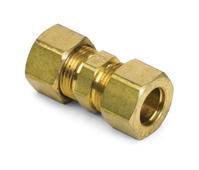
Couplings join two pipe sections of identical diameter in straight runs, available as full couplings for standard connections or half couplings for branch takeoffs. Unions provide removable connections allowing system maintenance without cutting pipes, featuring threaded or flanged separable joints. Caps and plugs seal pipe ends temporarily or permanently, with caps covering external threads and plugs fitting internal threads.
Adapters bridge different connection types, such as converting threaded ends to socket weld configurations or mating dissimilar flange standards. Nipples are short pipe sections with male threads at both ends, extending connections or providing spacing between components.
Material selection fundamentally determines fitting performance, longevity, and compatibility with transported media. The operating environment, fluid characteristics, pressure conditions, and temperature ranges dictate appropriate material choices.
Carbon steel fittings dominate industrial applications due to their high strength and cost effectiveness, with ASTM A234 WPB representing the standard specification for moderate and high temperature service. These fittings handle pressures up to 3000 psi in standard schedules and operate effectively between minus 20 degrees Fahrenheit and 800 degrees Fahrenheit. Carbon steel requires protective coatings or corrosion allowances when exposed to moisture or corrosive environments.
Stainless steel fittings provide superior corrosion resistance across grades 304, 316, and 321, with 316 stainless offering enhanced chloride resistance for marine and chemical applications. Duplex stainless steels combine austenitic and ferritic structures, delivering twice the yield strength of standard austenitic grades while maintaining excellent stress corrosion cracking resistance. Stainless fittings represent higher initial costs but reduce lifecycle expenses in aggressive environments.
Copper and brass fittings serve plumbing and HVAC applications where antimicrobial properties and thermal conductivity prove advantageous. Copper tube fittings utilize soldered or brazed connections, achieving pressure ratings exceeding 200 psi in refrigeration and water distribution systems. Brass fittings offer machinability and moderate corrosion resistance for lower pressure applications.
Polyvinyl chloride (PVC) fittings provide economical solutions for water supply, drainage, and irrigation systems operating below 140 degrees Fahrenheit. Schedule 40 PVC handles pressures to 450 psi at 73 degrees Fahrenheit, while Schedule 80 increases wall thickness for higher pressure ratings. Chlorinated polyvinyl chloride (CPVC) extends temperature capability to 200 degrees Fahrenheit for hot water distribution.
Polyethylene and polypropylene fittings offer chemical resistance and flexibility for industrial process piping. High density polyethylene (HDPE) fittings utilize heat fusion welding, creating monolithic joints stronger than the pipe itself. These systems excel in mining, landfill leachate collection, and chemical processing where corrosion and abrasion resistance prove critical.
Specialty alloys address extreme service conditions. Inconel and Monel fittings withstand high temperature oxidation and reducing environments in petrochemical processing. Titanium fittings provide exceptional seawater corrosion resistance for desalination plants and offshore platforms. Aluminum fittings offer lightweight alternatives for aerospace and cryogenic applications.
| Material | Max Temperature | Pressure Range | Primary Applications |
|---|---|---|---|
| Carbon Steel | 800°F | Up to 3000 psi | Oil and gas, steam systems |
| Stainless Steel 316 | 1500°F | Up to 4500 psi | Chemical processing, marine |
| PVC Schedule 80 | 140°F | Up to 850 psi | Water supply, irrigation |
| Copper | 400°F | Up to 700 psi | Plumbing, refrigeration |
| HDPE | 180°F | Up to 335 psi | Mining, chemical drainage |
Pipe fitting dimensions follow standardized systems ensuring interchangeability and proper mating between components. Understanding these standards prevents mismatched connections and installation failures.
Nominal pipe size (NPS) designates fitting diameters, though the numerical designation does not correspond to actual physical dimensions for sizes above 12 inches. Pipe schedule numbers indicate wall thickness, with higher schedules representing thicker walls and increased pressure ratings. Schedule 40 serves as standard weight for general applications, while Schedule 80 provides extra strength for high pressure systems. Schedule 160 and double extra heavy (XXH) schedules accommodate extreme pressure requirements.
Diameter nominal (DN) represents the metric equivalent sizing system, with DN50 corresponding to 2 inch NPS and DN100 equaling 4 inch NPS. International projects require careful conversion between imperial and metric designations to ensure compatibility.
National pipe thread (NPT) constitutes the predominant tapered thread standard in North America, with 60 degree thread angles and taper ratios of 1 inch in 16 inches diameter change. NPT threads seal through thread deformation and require thread sealant compounds or tape for leak tight joints. National pipe thread fuel (NPTF) provides dryseal capability without additional sealants through controlled thread tolerances.
British standard pipe (BSP) threads utilize Whitworth thread forms with 55 degree angles, common in European and Asian equipment. BSP parallel (BSPP) threads seal against gaskets or O rings, while BSP tapered (BSPT) threads seal similarly to NPT. Mixing NPT and BSP threads produces mismatched connections prone to leakage and mechanical failure.
Flanged fittings follow American Society of Mechanical Engineers (ASME) B16.5 standards for sizes up to 24 inches and B16.47 for larger diameters. Pressure classes range from 150 to 2500, with class 150 flanges rated for approximately 285 psi at ambient temperature in carbon steel. Raised face, flat face, and ring type joint flange facings accommodate different gasket types and sealing requirements.
Flange bore dimensions must match pipe inside diameters to prevent flow restrictions and turbulence. Lap joint flanges pair with stub ends allowing rotational alignment during assembly, while weld neck flanges provide structural reinforcement for high stress applications.
Connection methodology significantly impacts system integrity, maintenance accessibility, and installation costs. Each technique offers distinct advantages for specific applications and service conditions.
Threaded fittings suit smaller diameter pipes, typically 2 inches and below, where welding proves impractical. Proper thread engagement requires five to seven full threads visible beyond the fitting after makeup. Excessive thread engagement indicates mismatched threads or damaged components, while insufficient engagement risks joint separation under pressure.
Thread sealant selection depends on service conditions. Polytetrafluoroethylene (PTFE) tape suits water and air services, while anaerobic thread sealants provide superior chemical resistance. Pipe dope compounds fill thread imperfections and lubricate during assembly. Never mix dissimilar sealant types, as chemical reactions may degrade joint integrity.
Socket weld fittings accommodate pipes through 2 inches diameter, inserting pipe into socket depths approximately 1.5 times pipe diameter before fillet welding. These connections offer good structural strength and leak tightness for high pressure applications. The 1/16 inch gap between pipe end and socket bottom accommodates thermal expansion during welding.
Butt weld fittings join pipes by welding ends directly together, providing the strongest permanent connections for critical services. Full penetration welding creates smooth internal surfaces minimizing flow resistance and erosion. Preheating requirements for carbon steel butt welds depend on material thickness, with above 0.75 inch thickness typically requiring 200 to 400 degrees Fahrenheit preheat.
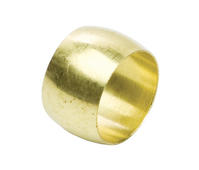
Compression fittings utilize ferrules and nuts to mechanically grip pipes without threading or welding. These reusable connections suit copper, plastic, and stainless steel tubing in instrumentation and plumbing applications. Proper ferrule installation requires 1.25 turns past finger tight for front ferrule seating and back ferrule gripping.
Push fit fittings enable rapid installation by inserting pipe into specially designed sockets with O ring seals and gripper teeth. These fittings support 200 psi working pressures in residential plumbing and allow disassembly using release tools. However, push fit connections prove unsuitable for exposed outdoor installations or continuous high temperature cycling.
Grooved couplings roll or cut circumferential grooves into pipe ends, engaging coupling housings with elastomeric gaskets. These connections install up to ten times faster than welding and accommodate system expansion, contraction, and vibration. Rigid grooved couplings lock pipes axially, while flexible couplings permit angular deflection and linear movement.
Mechanical press fittings cold form pipe ends into fitting profiles using hydraulic pressing tools. Copper press fittings achieve 300 psi ratings and eliminate soldering hazards in occupied buildings. Carbon steel press fittings serve industrial applications with pressure ratings to 1000 psi. Press connection quality depends on proper tool calibration and complete pressing cycle completion.
Different industries impose unique requirements on pipe fittings regarding material certification, surface finish, documentation, and testing protocols.
Petrochemical applications require fittings meeting American Petroleum Institute (API) and American Society of Mechanical Engineers (ASME) standards with full material traceability. Sour service environments containing hydrogen sulfide demand fittings compliant with National Association of Corrosion Engineers (NACE) MR0175/ISO 15156 hardness limitations, typically restricting carbon steel hardness to 22 HRC maximum to prevent sulfide stress cracking.
Subsea fittings withstand external hydrostatic pressures exceeding 3000 psi and require cathodic protection compatibility. Clad or lined fittings combine carbon steel strength with corrosion resistant alloy (CRA) internal surfaces, reducing material costs while maintaining chemical compatibility.
Sanitary fittings feature mirror polished surfaces with roughness average (Ra) below 32 microinches, preventing bacterial adhesion and enabling clean in place (CIP) sterilization. Tri clamp connections using ferrules and gaskets allow tool free disassembly for inspection and cleaning. Material certificates confirm stainless steel grades and surface finish compliance with Food and Drug Administration (FDA) and 3A sanitary standards.
Pharmaceutical applications require fittings with complete material certifications including heat numbers, chemical composition, and mechanical properties. Electropolishing enhances surface smoothness and corrosion resistance beyond mechanical polishing alone. Dead legs and crevices must be eliminated to prevent product contamination.
Nuclear grade fittings meet ASME Section III requirements with extensive quality assurance documentation and nondestructive testing. These fittings undergo 100% radiographic or ultrasonic examination and liquid penetrant or magnetic particle surface inspection. Material traceability extends from raw material through final installation with complete documentation chains.
Fossil fuel power plants utilize chrome molybdenum alloy fittings (P11, P22, P91 grades) for high temperature steam service above 1000 degrees Fahrenheit. These alloys resist creep deformation and thermal fatigue in boiler and turbine piping systems.
Commercial building systems prioritize installation efficiency and space constraints. Press fit and grooved connections dominate modern HVAC installations, reducing labor costs and fire hazards associated with soldering or welding. Expansion loops and flexible connectors accommodate thermal movement in long piping runs.
Fire protection systems require fittings listed by Underwriters Laboratories (UL) or Factory Mutual (FM) with specific pressure ratings and flow characteristics. Sprinkler fittings include specialized branch line takeoffs and drop nipples for head connections.
Pipe fitting quality assurance encompasses material verification, dimensional inspection, and pressure testing to ensure safe operation in intended services.
Mill test reports (MTRs) document chemical composition, mechanical properties, and heat treatment conditions for each material lot. Positive material identification (PMI) using X ray fluorescence or optical emission spectroscopy verifies alloy compositions before installation, preventing catastrophic material mix ups. Forged fittings require certification of forging reduction ratios ensuring grain structure integrity.
Dimensional verification confirms outside diameters, wall thicknesses, center to end dimensions, and thread conformance to applicable standards. Wall thickness measurements require minimum 87.5% of nominal thickness at any point for ASME compliance. Visual inspection identifies surface defects, cracks, laminations, or improper machining that could compromise fitting integrity.
Hydrostatic testing at 1.5 times maximum allowable working pressure verifies fitting strength and leak tightness. Pneumatic testing requires additional safety precautions due to stored energy in compressed gas. Standard test durations range from 10 seconds for small fittings to several minutes for large diameter components. Helium mass spectrometer testing detects minute leaks in critical applications requiring extreme leak tightness.
Nondestructive examination includes radiographic testing for internal defects, ultrasonic testing for wall thickness and crack detection, and surface methods for detecting cracks or porosity. Acceptance criteria follow ASME Section V and VIII standards with defect size limitations based on service requirements.
Systematic selection ensures pipe fittings meet operational demands while optimizing lifecycle costs and maintenance accessibility.
Fitting pressure ratings decrease as operating temperatures increase, requiring consultation of manufacturer derating curves. A fitting rated for 3000 psi at 100 degrees Fahrenheit may only withstand 1500 psi at 800 degrees Fahrenheit. Always select fittings with pressure ratings exceeding maximum anticipated operating pressures by appropriate safety factors, typically minimum 1.5:1 for normal service.
Electrochemical compatibility prevents galvanic corrosion when dissimilar metals contact in the presence of electrolytes. Stainless steel and carbon steel connections require dielectric isolation in wet environments. Chemical compatibility charts verify fitting materials resist transported fluids without degradation, swelling, or stress cracking.
Evaluate future maintenance requirements when selecting connection types. Welded systems offer permanence but require cutting for modifications, while flanged or grooved systems allow component replacement. Space constraints may dictate compact fitting configurations despite higher pressure drops or costs.
Installation skill requirements influence selection. Threaded fittings require moderate skill with proper torque application, while welding demands certified procedures and qualified welders. Push fit and press systems reduce skill dependencies but require proper tooling investments.
Lifecycle cost analysis considers installation labor, maintenance frequency, expected service life, and failure consequences. Stainless steel fittings cost 3 to 5 times carbon steel equivalents but may prove economical in corrosive environments by eliminating replacement costs and downtime. High integrity connections in inaccessible locations justify premium fitting costs to minimize future intervention requirements.
Standardization reduces inventory costs and prevents field confusion. Limiting fitting varieties to essential configurations streamlines procurement and ensures availability of replacement components. Document selected specifications clearly in piping specifications and isometric drawings to maintain consistency across projects.
Pipe fitting technology continues evolving to address sustainability demands, installation efficiency, and extreme service conditions.
Composite material fittings combining fiber reinforcement with polymer matrices offer weight reductions of 70% compared to steel while maintaining pressure ratings. These fittings resist corrosion in offshore and chemical applications where metallic fittings require extensive protection. Additive manufacturing enables complex fitting geometries optimized for flow characteristics and stress distribution, producing components impossible to manufacture through traditional forging or casting.
Smart fittings incorporating sensors monitor pressure, temperature, vibration, and corrosion rates, transmitting data for predictive maintenance. Radio frequency identification (RFID) tags embedded in fittings store material certifications, installation dates, and inspection histories, supporting digital twin implementations for asset management.
Environmental regulations drive development of low emission connection methods. Mechanical connections replacing welded joints eliminate hot work permits and fire watches while reducing energy consumption. Biodegradable thread sealants and gasket materials address environmental concerns in temporary installations and sensitive ecosystems.
Add:Xingzhong Road DianKou Town Zhuji City Zhejiang Province China
Mob: 0086-139 8951 3573
Tel: 0086-575-87560582
Fax: 0086-575-87560582
E-mail:[email protected]

 英语
英语 西班牙语
西班牙语