24Hours Tel
0086-139 8951 3573
Free Inqiry
E-mail:[email protected]
24Hours Tel
0086-139 8951 3573
Free Inqiry
E-mail:[email protected]
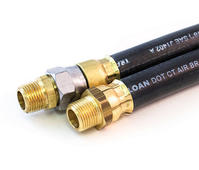
Brass Fittings are the dominant connection solution across plumbing, HVAC, gas distribution, and industrial fluid systems because no other widely available fitting material combines corrosion resistance, machinability, pressure rating, and cost efficiency as effectively as brass. From residential water supply lines to commercial compressed air networks and precision instrumentation tubing, brass fittings appear in virtually every built environment on the planet. Their prevalence is not accidental: it reflects more than a century of engineering validation across millions of installations and an extraordinarily broad range of operating conditions.
Brass, an alloy of copper and zinc typically in proportions of 60 to 70 percent copper and 30 to 40 percent zinc, offers a combination of mechanical properties that are ideally suited to the demands of pipe fittings and flow control components. It is strong enough to hold thread engagement under pressure, ductile enough to be cold-formed into complex geometries, naturally resistant to corrosion from water and most common industrial fluids, and capable of accepting a reliable leak-free seal through both threaded and compression jointing methods. These properties explain why Brass Fittings Manufacturers continue to invest in brass as their primary production material even as stainless steel, polymer, and composite alternatives have expanded the available material options in the fitting market.
The range of Brass Fittings available from professional manufacturers covers every standard piping geometry and connection requirement encountered in construction, manufacturing, and infrastructure. Understanding the primary categories and their intended applications allows engineers, contractors, and procurement managers to specify the correct fitting type for each system requirement.
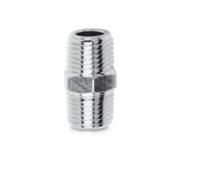
Threaded Brass Fittings use National Pipe Thread (NPT) or British Standard Pipe (BSP) thread forms to create mechanical connections between pipe sections, valves, and equipment. They include elbows, tees, crosses, couplings, reducers, caps, plugs, and union fittings, each available in a wide range of pipe sizes from 1/8 inch up to 4 inches in standard commercial production. Threaded brass fittings are rated for working pressures up to 1,000 PSI (approximately 69 bar) in smaller sizes, making them suitable for the majority of industrial compressed air, water, and gas applications encountered in building services and light manufacturing.
The thread engagement in a brass fitting creates its primary sealing mechanism when used with thread sealant tape or anaerobic thread sealant compound. The malleability of brass allows the thread crests and roots to deform slightly under assembly torque, improving the conformance of male and female thread forms and contributing to the fitting's leak-free performance. This thread deformation behavior is a property that stainless steel and harder alloy fittings do not replicate as effectively, which is one reason brass remains preferred over harder metals for many threaded applications despite its lower tensile strength.
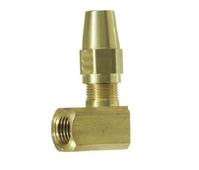
Compression Fittings are among the most widely specified Brass Fittings in plumbing, refrigeration, and instrumentation applications because they create reliable, leak-tight connections to copper, brass, and plastic tubing without soldering, welding, or adhesive, using only a compression nut and ferrule (also called an olive) that deforms onto the tube outer diameter under assembly torque.
The assembly sequence for a standard Compression Fitting is straightforward: the compression nut is slid over the tube end, followed by the ferrule, and the tube is then inserted fully into the fitting body. Tightening the compression nut draws the ferrule forward into the tapered seat in the fitting body, causing the ferrule to swage radially inward onto the tube and outward against the fitting seat simultaneously, creating a dual metal-to-metal seal that is both mechanically secure and fluid-tight. A correctly assembled brass Compression Fitting can seal reliably against working pressures of 200 to 700 PSI depending on tube diameter and wall thickness, covering the full pressure range of domestic and light commercial water supply, gas distribution, and refrigerant piping systems.
The key advantage of Compression Fittings in installation practice is their suitability for situations where heat cannot be applied for soldering or welding, such as connections near existing electrical components, connections to plastic pipe systems requiring a metal-to-plastic transition, or repair work on live systems where system drainage is impractical. They are also straightforwardly disassembled for inspection or modification, a flexibility that threaded sealant joints do not offer as conveniently.
Beyond threaded and compression types, leading Brass Fittings Manufacturers also produce push-to-connect fittings for rapid assembly in refrigeration and pneumatic systems, and flare fittings for high-pressure gas and refrigerant applications. Flare fittings require a flaring tool to form a conical flare at the tube end that seats against the fitting body's matching tapered face under compression from the flare nut, creating a metal-to-metal seal without a separate ferrule component. Flare fittings are the standard connection method for high-pressure refrigerant lines rated above 500 PSI and for liquefied petroleum gas (LPG) distribution piping where the strength of the metal-to-metal flare joint is preferable to the elastomeric seals used in push-to-connect systems at elevated pressures.
| Fitting Type | Connection Method | Typical Pressure Rating | Primary Applications | Disassembly Possible |
|---|---|---|---|---|
| Threaded (NPT or BSP) | Thread engagement with sealant | Up to 1,000 PSI (small sizes) | Water, compressed air, gas, HVAC | Yes (with sealant removal) |
| Compression | Ferrule swaged onto tube OD | 200 to 700 PSI | Plumbing, refrigeration, instrumentation | Yes (ferrule replacement needed) |
| Flare | Metal to metal flared cone seat | Up to 3,000 PSI | High-pressure refrigerant, LPG, hydraulics | Yes (fully reusable) |
| Push-to-Connect | Internal collet and O-ring seal | Up to 150 PSI | Pneumatics, low-pressure water, plumbing | Yes (release collar tool required) |
The quality and reliability of Brass Fittings are fundamentally determined by the manufacturing processes, material controls, and quality systems of the Brass Fittings Manufacturers supplying the market. A fitting that fails in service is almost always the result of a manufacturing deficiency: incorrect alloy composition, insufficient thread tolerance, undersized wall thickness, or inadequate surface treatment. Selecting suppliers who can demonstrate verifiable manufacturing quality is therefore the most important procurement decision in any brass fitting specification process.
Not all brass is equal for fitting applications. The two most widely used brass alloys in fitting production are C36000 (free-machining brass, approximately 61.5% Cu, 35.5% Zn, 3% Pb) and C37700 (forging brass, approximately 59% Cu, 38% Zn, 2% Pb). A third alloy, C69300 (also known as eco-brass or low-lead brass, with less than 0.09% Pb), is increasingly specified for potable water applications in markets with stringent lead content regulations including the United States (NSF/ANSI 61 and the Reduction of Lead in Drinking Water Act), Canada (NSF 61-G), and the European Union (EN 15664).
Dezincification resistance is a critical alloy property for Brass Fittings used in water systems, particularly in areas with aggressive, soft, or slightly acidic water supplies. Dezincification is the selective leaching of zinc from the brass matrix, which leaves a porous, copper-rich structure that has very low mechanical strength and eventually causes the fitting to crack or leak. Dezincification-resistant (DZR) brass alloys, which contain small additions of arsenic (0.02 to 0.06%) to inhibit the dezincification mechanism, are mandatory in many European standards including BS EN 12164 and DIN 17660 for fittings used in hot water systems and chlorinated water supplies. Reputable Brass Fittings Manufacturers supply material compliance documentation confirming alloy grade and dezincification resistance test results to BS EN ISO 6509.
Brass Fittings are produced by two primary manufacturing methods: hot forging from brass billets and CNC machining from extruded brass bar stock. Each method produces fittings with different structural characteristics and is appropriate for different fitting geometries and performance requirements.
Hot-forged fittings are produced by heating brass billets to approximately 700°C and pressing them under high tonnage into precision dies, which simultaneously forms the fitting geometry and aligns the grain structure of the brass along the stress flow lines of the component. Forged brass fittings have grain flow patterns that follow the component profile, giving them approximately 20 percent higher tensile strength and significantly better fatigue resistance than equivalent machined fittings, because the forging process eliminates the discontinuities in grain flow that occur when machining cuts across the straight grain of bar stock. For high-cycle, high-pressure, or vibration-exposed applications, hot-forged Brass Fittings are the technically superior choice.
Machined bar stock fittings are produced by CNC turning and milling of extruded brass bar to the final fitting geometry. This method allows highly precise dimensional control, fast production changeover between fitting designs, and economical production of small batch quantities. Machined fittings are well-suited to instrumentation, pneumatic, and analytical applications where dimensional precision is the primary performance requirement and operating pressures and mechanical loads are within the capability of the machined brass structure.
When evaluating Brass Fittings Manufacturers for commercial or industrial supply, the following certifications and approvals provide objective evidence of manufacturing quality and product compliance:
Compression Fittings deserve detailed treatment because they are among the most frequently specified and most frequently incorrectly installed types of Brass Fittings in plumbing and mechanical systems. The majority of Compression Fitting failures in service are attributable to installation errors rather than product defects, which means that understanding correct assembly technique is as important as selecting a quality product from a reputable manufacturer.
Compression Fittings are available in single ferrule and double ferrule configurations, and the distinction is commercially important in instrumentation and high-pressure tubing applications. Single ferrule fittings use one deformable ring (the olive or ferrule) that both grips the tube and creates the seal against the fitting body seat. Double ferrule fittings use two rings: a front ferrule that creates the primary seal against the fitting body, and a back ferrule that provides additional tube grip and vibration resistance behind the front ferrule. Double ferrule Compression Fittings, such as the Swagelok and Parker A-Lok designs, are rated for working pressures up to 10,000 PSI in stainless steel versions and provide superior tube pullout resistance and vibration fatigue performance compared to single ferrule designs, which is why they are the standard connection method in process instrumentation, analytical equipment, and hydraulic tubing systems.
For standard plumbing and HVAC applications using copper tube, single ferrule brass Compression Fittings are entirely adequate and are simpler and more economical to assemble. The single ferrule design is the standard specified in BS EN 1254-2 (copper alloy compression fittings for copper tubes) and equivalent national standards governing residential and commercial plumbing installation practice in most markets.
Achieving a reliable seal with Compression Fittings requires attention to five key installation steps that are consistently underperformed by inexperienced installers:
Brass Compression Fittings are compatible with a range of tube materials, each with specific considerations for ferrule selection and installation technique:
The global supply landscape for Brass Fittings Manufacturers is geographically concentrated but technically diverse, with production centers in India, China, Europe, and North America each offering distinct capabilities, certifications, and cost profiles that affect sourcing decisions for different application requirements.
India, particularly the Jamnagar region of Gujarat, accounts for an estimated 40 to 50 percent of global brass fitting production by volume and is the largest export source for brass fittings to North America, Europe, the Middle East, and Southeast Asia. Jamnagar-based manufacturers benefit from proximity to brass ingot and rod suppliers, a large skilled workforce trained in precision brass machining, and extensive experience supplying to international standards including NSF 61, WRAS, and CE marking requirements. Leading Indian manufacturers supply major international distributors and OEM customers under private label and their own brands.
European manufacturers, particularly in Italy, Germany, and the Czech Republic, produce premium-tier Brass Fittings for high-pressure, high-temperature, and specialty gas applications where exacting dimensional tolerances, certified material traceability, and third-party pressure testing records are required. European manufacturers typically command higher unit prices than Asian competitors but offer documentation depth and product liability support appropriate for safety-critical applications in the oil and gas, pharmaceutical, and power generation sectors.
When evaluating any Brass Fittings Manufacturer for commercial supply, the following practical verification steps reduce the risk of receiving non-conforming product:
| Manufacturing Region | Primary Strengths | Common Certifications | Best Suited For |
|---|---|---|---|
| India (Jamnagar) | High volume, competitive pricing, export-oriented | NSF 61/372, WRAS, CE, ISO 9001 | Plumbing, HVAC, water supply, distribution |
| China | Cost competitiveness, wide product range, large capacity | ISO 9001, CE (varies by supplier) | General industrial, pneumatic, OEM supply |
| Italy and Germany | Premium quality, full traceability, specialty alloys | PED, ATEX, ISO 9001, DIN, EN standards | Oil and gas, pharmaceutical, power generation |
| North America | Domestic compliance, lead-free alloys, local support | NSF 61/372, UL, ASME, CSA | Potable water, fire protection, code-compliance projects |
Selecting the correct Brass Fittings for a piping or fluid system application requires aligning four key parameters: the fluid medium and its chemical compatibility with brass, the operating pressure and temperature range of the system, the jointing method appropriate for the installation conditions, and the regulatory or certification requirements of the market where the installation will be used.
For potable water systems in North American markets, specify NSF 61 and NSF 372 certified low-lead brass (C69300 or equivalent) in the appropriate connection format for the installed pipe material. For European water supply systems in areas with aggressive water chemistry, specify DZR brass fittings complying with BS EN ISO 6509 dezincification testing. For industrial compressed air and gas systems, standard C36000 threaded brass fittings with PTFE tape sealant are appropriate for pressures below the fitting pressure rating and temperatures below 150°C. For instrumentation and analytical tubing systems requiring frequent connection and disconnection with leak-free performance, double ferrule Compression Fittings in brass or stainless steel are the established industry choice.
The most reliable Brass Fittings procurement approach is to identify manufacturers whose certifications align with your application requirements, request and verify documentation before first orders, and conduct incoming inspection of initial deliveries against dimensional and material specifications. Establishing this qualification baseline with a small number of approved Brass Fittings Manufacturers creates supply chain reliability that protects both installation quality and project schedule across the full lifecycle of your systems.
Add:Xingzhong Road DianKou Town Zhuji City Zhejiang Province China
Mob: 0086-139 8951 3573
Tel: 0086-575-87560582
Fax: 0086-575-87560582
E-mail:[email protected]

 英语
英语 西班牙语
西班牙语