24Hours Tel
0086-139 8951 3573
Free Inqiry
E-mail:[email protected]
24Hours Tel
0086-139 8951 3573
Free Inqiry
E-mail:[email protected]
In the fields of residential plumbing, commercial construction, industrial manufacturing, and automotive engineering, the reliable and leak-proof transport of fluids and gases is an absolute necessity. To build a cohesive, functional fluid distribution system, pipes and tubes of various sizes, directions, and materials must be securely connected. Among the diverse materials used to manufacture connecting hardware, brass has stood for centuries as the industry standard for high-performance applications.
These essential connecting components, universally known as brass fittings, are celebrated for their exceptional physical durability, high thermal conductivity, natural resistance to corrosion, and superb mechanical workability.
Whether you are connecting copper water lines in a home kitchen, installing pneumatic air lines in an automotive workshop, or routing chemical solvents in an industrial processing plant, selecting the appropriate type of connector is critical for system safety and longevity.
To determine which connector is best suited for your specific system, it is essential to explore the unique metallurgy of brass, analyze the diverse structural designs of fittings, and understand their specific application requirements.
To appreciate why brass fittings are so widely specified across different industries, one must first examine the chemical composition and physical properties of the metal itself.
Brass is a versatile metal alloy composed primarily of copper and zinc. By adjusting the ratios of copper and zinc, and by introducing small percentages of other elements such as lead, aluminum, silicon, or manganese, metallurgists can create diverse brass formulations tailored to specific engineering requirements.
The copper content provides the alloy with high natural resistance to electrochemical corrosion, which is a major advantage when the fitting is continuously exposed to oxygenated water, soil moisture, and mild acids.
Unlike iron or steel, which oxidize to form destructive red rust that can eventually eat through the metal walls, brass reacts with environmental elements to form a stable, protective outer patina.
This protective layer seals the underlying metal from further chemical degradation, ensuring that the fitting maintains its structural integrity and leak-proof performance for decades.
Additionally, the zinc content increases the mechanical strength and hardness of the alloy, while significantly lowering the melting point, making brass highly suitable for precision casting and high-speed CNC machining processes.
In hot water heating systems, steam lines, and refrigeration circuits, the thermal properties of the piping materials have a direct impact on overall system efficiency. Brass possesses excellent thermal conductivity, allowing it to transfer heat rapidly and evenly, which is critical for preventing localized thermal stress within the connection joints.
The low coefficient of thermal expansion of brass also ensures that as the system cycles between freezing cold and boiling hot temperatures, the fittings expand and contract in close unison with surrounding copper pipes, minimizing the risk of joint fatigue and sudden leaks.
Furthermore, the smooth interior surfaces of high-quality machined brass fittings offer exceptionally low resistance to fluid flow.
This low friction surface reduces turbulent flow, prevents the accumulation of mineral scales and biological biofilms, and minimizes the pressure drop across the connection joints, allowing process pumps to operate with greater energy efficiency and less physical wear.
The way a brass fitting mechanically secures a pipe is the most critical design factor determining the pressure rating, installation speed, and ease of maintenance of the system.
Threaded brass fittings are among the most traditional and widely used connectors in the plumbing and piping industries. These fittings rely on mechanical threads machined onto the interior, known as female threads, or the exterior, referred to as male threads, of the fitting body.
Threaded connections are typically categorized under standardized thread profiles, such as National Pipe Thread, which is widely abbreviated as NPT, or British Standard Pipe, commonly referred to as BSP.
NPT threads are engineered with a slight taper of approximately one in sixteen.
As the male and female tapered threads are screwed together and tightened, the individual thread flanks wedge against one another, creating a tight mechanical seal.
To ensure complete leak-proof security, installers must apply a thread sealant, such as polytetrafluoroethylene tape or a high-performance pipe joint compound, to fill any microscopic gaps between the metal thread peaks and valleys.
Threaded fittings are highly valued because they do not require open-flame soldering or specialized hydraulic press tools to install.
They can be assembled using simple wrenches and can be disassembled easily for system modifications, cleaning, or component replacement, making them highly suitable for low to medium pressure water, oil, and gas lines.
Compression brass fittings are highly popular for connecting thin-walled copper, brass, and plastic tubing where the application of heat from a soldering torch is dangerous or impractical. A standard compression fitting consists of three distinct components, namely the fitting body, a compression nut, and a small, brass ring known as a ferrule or sleeve.
To assemble the connection, the user slides the compression nut and the ferrule onto the clean end of the tubing, inserts the tubing fully into the fitting body, and tightens the nut onto the external threads of the body.
As the nut is tightened, it compresses the brass ferrule inward against the outer wall of the tubing.
The ferrule deforms slightly, biting into the soft metal of the tube to create a highly secure, airtight, and watertight mechanical grip.
Because compression fittings require no heat, adhesives, or specialized crimping tools, they are widely used by DIY homeowners and professional plumbers alike for installing under-sink shutoff valves, water filtration lines, refrigerator ice maker hookups, and low-pressure gas appliances.
However, compression connections are sensitive to vibration and must be inspected periodically to ensure the mechanical compression remains tight and secure over time.
For high-pressure applications, particularly in air conditioning systems, refrigeration loops, and propane gas lines, standard compression fittings are not robust enough to guarantee safety. In these critical environments, flare brass fittings are the industry standard.
A flare connection requires a specialized flaring tool to expand the end of the soft copper tubing outward into a forty-five degree cone shape.
The flared end of the tube is then clamped securely between a matching angled seat on the fitting body and a heavy-duty flare nut.
This design creates a metal-to-metal seal over a large contact area, providing exceptional resistance to high pressures, physical vibration, and temperature fluctuations, which is why flare fittings are heavily specified for automotive brake lines and high-vibration industrial machinery.
Sweat fittings, which are also known as solder fittings or capillary fittings, are designed to create permanent, fused joints with copper pipes.
The fitting has a smooth, unthreaded socket that fits snugly over the outer diameter of the pipe.
To install the joint, the copper pipe and the interior of the fitting socket are thoroughly cleaned, coated with an acidic chemical paste known as flux, and heated using a propane or MAPP gas torch.
Once the metal reaches the correct temperature, a lead-free solder wire is applied to the joint.
The liquid solder is drawn into the microscopic gap between the pipe and the fitting socket through natural capillary action, cooling to form a completely solid, permanently fused, and highly durable metal-to-metal connection that can withstand high temperatures and water pressures for the entire lifetime of the building structure.
Beyond the connection method, the physical geometry of the brass fitting determines how it directs, splits, or terminates fluid flow within the piping network.
Piping systems rarely run in a single, straight line, requiring specialized directional connectors to navigate structural walls, floor joists, and equipment obstacles.
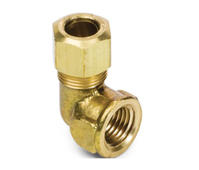
The elbow fitting is designed to change the direction of the piping run by a specific angle, most commonly ninety degrees or forty-five degrees.
Elbows are available with diverse inlet and outlet configurations, including female-to-female, male-to-male, or male-to-female, which is widely referred to as a street elbow.
A street elbow features a male thread on one end and a female thread on the other, allowing the installer to connect directly to another fitting without needing a short pipe segment, which saves valuable physical space in tight utility closets and crawlspaces.
Tee fittings are T-shaped connectors featuring three distinct connection ports, including one perpendicular branch positioned at ninety degrees to the main run.
Tees are utilized to split a single fluid stream into two separate lines, or to combine two fluid streams into a single outlet.
For systems where the branch line requires a different pipe size than the main run, manufacturers produce reducing tees, which incorporate a smaller or larger branch port.
This design eliminates the need to install separate adapters, simplifying the system design, reducing the number of potential leak points, and minimizing pressure drops caused by unnecessary fittings.
When extending a straight pipe run over long distances, or when transitioning between different pipe materials and thread styles, continuity fittings are indispensable.
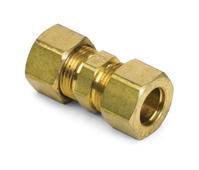
A coupling is a simple, short sleeve designed to connect two pipes of the same or different diameters in a straight line.
If the coupling connects pipes of different sizes, it is called a reducing coupling.
While a coupling is highly cost-effective, once installed, it cannot be disconnected without cutting the pipe or unscrewing a significant portion of the system.
A union is a highly sophisticated, three-piece connector that solves this maintenance challenge.
A union consists of a male tailpiece, a female tailpiece, and a heavy-duty nut.
The two tailpieces are secured permanently to the respective pipe ends, and the nut is tightened to draw the two tailpieces together into a tight, sealed metal-to-metal or gasketed joint.
Unions allow maintenance crews to disconnect a specific pump, water heater, or control valve for servicing or replacement simply by loosening the union nut, completely eliminating the need to cut or rebuild the surrounding copper piping.
Adapters and bushings are used to resolve compatibility issues within a system.
An adapter is utilized to transition between different connection styles, such as converting a female sweat joint to a male NPT thread.
A hex bushing features a male thread on the exterior and a smaller female thread on the interior, allowing an installer to reduce the port size of a larger valve or manifold cleanly and efficiently.
+-------------------------------------------------------------+
|               ANATOMY OF A THREE-PIECE UNION                |
+-------------------------------------------------------------+
|                                                             |
|   [Pipe 1] --> [Male Tail] <|  [Nut]  |> [Female Tail] <--  |
|                                                             |
|   * Loosening the center nut allows immediate split         |
|   * Essential for servicing pumps and water heaters         |
|                                                             |
+-------------------------------------------------------------+
To ensure system safety and allow for localized maintenance, a piping network must incorporate reliable mechanism to regulate flow and seal unused ports.
Brass valves are mechanical flow control devices integrated directly into the fitting body.
The most common types include ball valves, which utilize a rotating spherical ball with a bored hole to provide rapid, quarter-turn shutoff control, and gate valves, which use a threaded stem to raise or lower a solid wedge barrier for precise flow regulation.
Because of the high zinc content, brass valves are exceptionally strong and can withstand continuous turning, high fluid velocities, and abrasive materials with minimal mechanical wear.
Caps and plugs are used to terminate a piping run permanently or temporarily during construction phases.
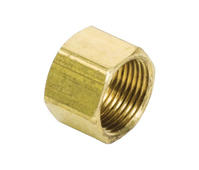
A cap features internal threads or a smooth sweat socket designed to seal the external end of a pipe.
A plug, in contrast, features external threads or a solid hex head designed to screw directly into a female port on a manifold, pump casing, or tee fitting.
These terminating components are critical during system pressure testing, allowing inspectors to pressurize the line with air or water to detect leaks before finishing the wall assemblies.
To help project managers and plumbing technicians choose the best joint style for their systems, the table below compares the four primary connection methods based on operational performance and installation dynamics.
|
Connection Category |
Relative Pressure Rating |
Physical Removability |
Specialized Tooling Needed |
Primary Vulnerability |
|---|---|---|---|---|
|
Threaded NPT/BSP |
Moderate to High |
Yes; easily disassembled with wrenches |
None; requires only basic wrenches and sealants |
Thread stripping and dry joint leaks under high vibration |
|
Compression Ferrule |
Low to Moderate |
Yes; but ferrule cannot be reused |
None; standard open-ended wrenches |
Tubing deformation and localized sliding under sudden stress |
|
Flared Joint |
Exceptionally High |
Yes; reusable metal seat |
High; requires a high-precision flaring tool |
Poor flare angles causing uneven metal-to-metal contact |
|
Sweat / Solder Joint |
High |
No; must be cut or melted to remove |
High; requires a gas torch, solder, flux, and sandcloth |
Thermal damage to nearby valves and dry solder voids |
Choosing the correct type of brass fitting requires an analysis of chemical, structural, and regulatory variables that extend beyond simple dimensions and thread pitches.
When selecting brass fittings for drinking water systems, the chemical purity of the alloy is a paramount regulatory concern. Historically, brass formulations contained up to eight percent lead to improve the machineability of the metal and enhance its sealing properties.
However, lead is a highly toxic heavy metal that can leach out of the brass matrix into the water supply, presenting severe neurological hazards to human health, particularly for infants and young children.
To address this biological threat, modern environmental legislation, such as the Safe Drinking Water Act in the United States, enforces strict limits on the lead content of plumbing components.
Fittings used in potable water systems must be certified as lead-free, which means the alloy contains a weighted average of no more than zero point twenty-five percent lead on the wetted surfaces.
To meet these strict standards, manufacturers produce specialized lead-free brass formulations, often replacing lead with bismuth or silicon to preserve the machineability and strength of the metal without compromising water safety.
Always look for certification markings, such as NSF sixty-one or UPC logos, stamped on the body of the fitting to verify that the product is fully compliant with lead-free water regulations.
In regions with aggressive municipal water chemistry, particularly water characterized by low pH levels, high chloride concentrations, and high electrical conductivity, standard brass fittings can suffer from a destructive chemical phenomenon known as dezincification.
Dezincification is a selective leaching process where the zinc atoms are chemically dissolved out of the brass alloy, leaving behind a porous, mechanically weak copper framework.
This structural degradation manifests externally as a white, powdery deposit on the fitting surface, and internally as a spongy, fragile metal structure that can easily fracture or develop pinhole leaks under normal water pressures.
To prevent this catastrophic failure, engineers working in aggressive water zones must specify Dezincification Resistant brass fittings, which are widely designated as DZR or CR brass.
DZR brass alloys are formulated with specific chemical additives, such as small amounts of arsenic, antimony, or phosphorus, which chemically inhibit the loss of zinc, ensuring that the fitting retains its mechanical strength, physical density, and leak-proof performance over long-term exposure to corrosive water chemistries.
A successful piping system often incorporates diverse piping materials, including copper, steel, stainless steel, and plastic.
Connecting these dissimilar metals directly can trigger galvanic corrosion, a process where one metal behaves as an anode and the other as a cathode in an electrochemical circuit.
When copper is connected directly to galvanized steel in a wet environment, the difference in electrical potential causes the steel to corrode rapidly, leading to rust buildup and eventual pipe failure.
Brass serves as an excellent metallurgical buffer in these multi-material systems.
Because the electrical potential of brass lies between copper and steel, installing a brass coupling, valve, or transition adapter between a copper pipe and a steel pipe significantly dampens the galvanic current.
For complete protection, many building codes require the installation of specialized dielectric unions, which incorporate a brass body combined with an internal non-conductive plastic sleeve and rubber gasket, physically isolating the dissimilar metals from direct electrical contact and preventing galvanic corrosion entirely.
To guarantee that your brass fittings achieve their maximum operational lifespan and remain completely leak-free, installers must follow precise mechanical procedures during assembly and maintenance.
One of the most common causes of brass fitting failure during installation is over-tightening.
While brass is a durable alloy, it is significantly softer than stainless steel or carbon steel.
When tightening a threaded male brass fitting into a female port, applying excessive force with a large wrench can easily strip the soft metal threads, stretch the fitting body, or split the female socket.
To prevent thread damage, installers should follow the hand-tight plus one-to-two turns rule for tapered NPT connections.
First, clean the threads thoroughly of any manufacturing oils or debris.
Apply two to three wraps of high-quality Teflon tape in a clockwise direction, following the direction of the threads, or apply a smooth layer of pipe joint compound.
Screw the fitting into the port by hand until it is snug, and then use an open-ended wrench or an adjustable wrench to tighten the connection an additional one to two complete turns.
Avoid using heavy-duty pipe wrenches with aggressive serrated jaws on hexagonal brass fittings, as the hardened steel teeth can easily chew through the soft brass flats, distorting the fitting shape and making future removal extremely difficult.
Piping systems are subjected to continuous dynamic forces that can slowly weaken connection joints over time.
In hot water supply lines, the rapid introduction of boiling water causes the metal pipes to expand, while cold water causes them to contract.
If a piping run is installed completely rigid without any allowance for thermal movement, this thermal stress will concentrate at the rigid brass elbows and tee joints, leading to localized metal fatigue and structural cracks.
To manage this thermal movement, installers must design expansion loops or incorporate flexible offsets in long pipe runs, allowing the piping to flex safely without transferring physical stress to the fittings.
Another destructive force is water hammer, which occurs when a fast-flowing liquid is stopped suddenly by a rapid-closing valve, such as those found in modern washing machines or dishwashers.
The kinetic energy of the moving liquid column generates a high-pressure shock wave that travels backward through the pipe, producing a distinct banging sound and subjecting the brass fittings to immense physical pressure spikes.
Over time, repeated water hammer shock waves can loosen compression nuts, fatigue soldered sweat joints, and damage internal valve seals.
To protect your brass fittings from this damage, installers should always mount water hammer arrestors, which are small brass chambers containing a pressurized air cushion, directly adjacent to rapid-closing appliances, safely absorbing the hydraulic shock waves and ensuring the long-term mechanical security of your plumbing system.
Add:Xingzhong Road DianKou Town Zhuji City Zhejiang Province China
Mob: 0086-139 8951 3573
Tel: 0086-575-87560582
Fax: 0086-575-87560582
E-mail:[email protected]

 英语
英语 西班牙语
西班牙语