24Hours Tel
0086-139 8951 3573
Free Inqiry
E-mail:[email protected]
24Hours Tel
0086-139 8951 3573
Free Inqiry
E-mail:[email protected]
A technician is kneeling beside a propane line with a roll of white tape in one hand and a flare nut in the other. That image contains the whole question. On a tapered thread — NPT, NPTF, BSPT or their metric equivalents — yes, you can use PTFE tape on gas fittings, provided the tape is rated for fuel gas and your local code accepts tape as a sealant. On a flare, compression, face-seal, O-ring or push-in joint, no: the tape does nothing useful, and it can turn a joint that would have sealed into one that leaks, or shed shreds into a valve orifice downstream.
That is the honest short answer, and it is not the answer most people get when they search. Forum threads tend to collapse into two camps — "tape is banned on gas" and "tape is fine, everyone uses it" — and both are partly wrong because both ignore the joint type. A 45-degree flare on a gas dryer connection and a 1/2-inch NPT nipple on a black iron manifold are not the same problem, even though both carry gas and both get wrapped by somebody who was told to wrap them.
Three things decide whether tape is correct on a given joint: the thread form, the sealing principle of the connection, and the rules that apply in the jurisdiction where the work is being inspected. Appliance instructions sit on top of all three and frequently override them. Before you unwrap a single turn, identify which of those is in play. The rest of this article walks through each one, then covers how to apply tape correctly when it is the right choice, what to use instead when it is not, and how to prove the joint is tight before you walk away.
PTFE tape is permitted on tapered metal threads in most fuel gas codes, with conditions attached to the type of tape, the way it is applied and the material it contacts. It is not permitted — or at least not useful and frequently harmful — on any joint that seals on a machined face, a cone, a ferrule, an O-ring or a soft seat rather than on thread interference.
Why tapered threads are different: an NPT or BSPT thread is not gas-tight by geometry. The crests and roots do not mate perfectly; when a male taper is screwed into a female taper, the flanks interfere and the assembly is held by friction and deformation, but a continuous spiral gap remains along the thread helix. That spiral is the leak path. A sealant works by filling it. PTFE tape does that mechanically — it is compressed into the gaps, sheared into a thin film and packed against the flanks. It also lubricates the assembly, which changes how much torque reaches the joint and how much the female fitting is stressed.
Where the thread is parallel rather than tapered — BSPP, NPSM, and the straight thread on many European gas appliance inlets — the thread is a clamping device, not a seal. The seal lives on a bonded washer, a copper crush ring, an O-ring or a machined shoulder. Wrapping tape on the thread of a parallel joint accomplishes nothing except adding a compliant layer that lets the fitting back off and disguising the fact that the washer is missing or reused. If a parallel-thread gas joint leaks, the fix is the washer or the seat, never more tape.
Then there is the category that causes the most callbacks: joints that seal on a cone or a face, where tape is actively risky. Flare fittings, inverted flare, compression ferrules, POL cylinder connections, quick-connects and push-in fittings all depend on metal-to-metal or elastomer contact at a defined surface. Tape on those threads cannot reach the sealing surface, and any tape that migrates into the joint can hold the surfaces apart by a few thousandths of an inch — which is enough to leak at 7 inches of water column, let alone at 2 psi.
Codes differ in wording but converge on principle. Most fuel gas codes require thread sealants to be resistant to the gas being carried — a specific concern with liquefied petroleum gas, which attacks some compounds — and many specify that joint compound be applied to the male thread only, leaving the first one or two threads bare so no excess enters the pipe bore. Tape is treated as a sealant in that framework. Some jurisdictions name it explicitly as acceptable; a few restrict it or require listed products. None of them endorse tape on a flare.
The mechanism matters because it explains the failure modes you will actually see in the field. PTFE is a soft, waxy, chemically inert polymer. Under the compression of a tightening taper thread it flows into the spiral clearance, forming a thin gasket along the thread helix. Because it is also a lubricant with a very low coefficient of friction, it reduces the torque needed to reach a given thread engagement — which is convenient when you are assembling brass into brass, and dangerous when you keep pulling on the wrench.
That lubrication effect is behind one of the most common tape-related failures: split female fittings. A brass coupling that would have stopped at a comfortable torque with dry threads will keep turning with taped threads, and the hoop stress climbs until the wall cracks — often not at the time of assembly, but weeks later, under thermal cycling or vibration. Thin-wall brass and aluminium fittings are especially vulnerable. The same effect explains why tape should not be used to "help" a joint that is already tight but leaking at the wrong point: adding lubricity to a joint that is already at its torque limit usually produces a cracked fitting rather than a sealed one.
On a flare joint, the sealing surface is the 45-degree cone on the male stub meeting the matching cone inside the nut or the adapter body. Those two surfaces must touch across their full circumference. Tape wrapped on the threads is squeezed backwards as the nut is drawn down, and slivers can end up trapped between the cones, holding them apart along part of the circumference. It also changes the torque signal — a taped flare feels tight before the cones have fully seated, so the installer stops short, and the joint leaks the moment pressure arrives. Even when tape stays entirely on the threads, it can prevent the nut from running down far enough to load the cone, or it can mask a scored cone that should have been replaced.
Compression fittings behave similarly. The ferrule is deformed onto the tube by the nut; the thread only provides the clamping force. Tape on the thread reduces friction, so the nut may appear tight while the ferrule has not been driven far enough to swage onto the tube. The result is a joint that holds at low pressure and weeps at full line pressure, or a tube that pulls out under strain.
There is also a contamination pathway that gets overlooked. Tape fragments — the curly offcuts that accumulate on a bench, the tail left overhanging the first thread, the sliver cut off by a sharp thread crest — travel downstream. Gas appliance valves, pilot orifices, regulator vents and thermocouple ports are small-bore by design. A single shred of PTFE lodged in a pilot orifice produces a service call that looks like a failed gas valve. In commercial kitchens and boiler rooms, where a manifold feeds several appliances, the debris can travel further than the installer expects.
Colour is a convention, not a standard. The tape in your van might be white, yellow, pink, green or unmarked, and the colour tells you what the manufacturer intended, not what a code authority will accept. What matters is the label: a gas-rated tape will normally cite a standard such as EN 751-3 (unsintered PTFE tape for metallic threaded joints in contact with first, second and third family gases and hot water), state the gas families it covers, and carry a batch number and a temperature range. A five-for-a-pound roll with no markings is a plumbing consumable, not a gas sealant.
Physically, gas-rated tapes are denser and thicker than budget white tape. A typical gas tape runs around 0.1 mm thick or more, with a density quoted in the 0.4 to 0.8 g/cm³ range, against roughly 0.3 to 0.4 g/cm³ for a thin general-purpose tape. The practical difference is that a gas tape delivers more PTFE per wrap, so you need fewer turns to fill the thread clearance, and it resists being cut through by sharp thread crests. Higher-density tape is also less likely to shred on the way in.
Paste and anaerobic sealants are legitimate alternatives on tapered threads and are preferred by many installers for larger pipework because they fill the thread more uniformly and do not leave tails. Anaerobic sealants cure in the absence of air and are specified under EN 751-1; non-hardening jointing compounds fall under EN 751-2. Both must be rated for the gas in question. Traditional hemp and paste still has adherents on larger screwed steel pipework, though it is slower and less common on small brass.
The table below compares the options on the criteria that matter at the point of assembly rather than on a datasheet.
| Sealant | Typical marking or colour | Standard reference | Where it performs best | Failure modes to watch |
|---|---|---|---|---|
| General-purpose PTFE tape | White, thin, often unmarked | Usually none cited | Water and low-pressure air only | Shreds on sharp threads; may not be gas-rated; easily over-wrapped |
| Gas-rated PTFE tape | Yellow in the UK and Ireland; yellow or marked "gas" elsewhere | EN 751-3 or national equivalent | Tapered NPT, NPTF and BSPT threads on brass, steel and aluminium | Lubricity can lead to over-torque and split fittings; excess tape can enter the bore |
| High-density PTFE tape | Pink or red, thicker | Manufacturer specification | Larger diameter threads, rougher or re-used threads | Too thick for small fittings; same over-torque risk |
| Anaerobic thread sealant | Liquid in a bottle, often green or red | EN 751-1 | Clean, well-cut tapered threads; manifolds and multi-joint assemblies | Will not fill badly damaged threads; needs clean, dry, oil-free surfaces to cure |
| Non-hardening paste | Soft paste in a tin or tube | EN 751-2 | General screwed pipework, easy re-make of joints | Can migrate into the bore if over-applied; some formulations attacked by LPG |
| Hemp with approved paste | Loose fibre plus compound | Depends on compound | Larger steel pipework, high-vibration installations | Slow; stray fibres can block small orifices; requires skill to apply evenly |
One more selection point that is often missed: compatibility with the gas, not just with the pipe. Natural gas is essentially inert towards PTFE, which is why the material is so widely used. Liquefied petroleum gas is a solvent for some oils and compounds and can soften certain non-hardening pastes that were never intended for it. That is why codes single out LPG when they require sealants to be resistant to the gas being carried. Read the can, not the colour of the lid.
If the joint is a tapered thread and the tape is gas-rated, application technique decides whether it works. The following sequence is the one that survives inspection and, more importantly, survives a few years of thermal cycling.
Two habits prevent most of the problems. First, keep the roll clean and capped; grit in the tape scores the thread on the way in. Second, never reuse a joint "just to check" without removing the old tape first. A taped joint that has been cracked open and re-tightened has a compressed, hardened film in the thread that no longer flows, and it will often leak at the pressure test even though it looks identical to a fresh one.
Torque deserves its own paragraph because brass is unforgiving. Thread sealant reduces friction, so the same wrench force produces higher axial load and higher hoop stress than it would on dry threads. On a thin-wall brass coupling, that difference can be the margin between a joint that lasts twenty years and one that stress-cracks in a heating season. Use a wrench that fits, hold the fitting body with a second wrench so the torque goes into the thread rather than into the pipework, and if you have no torque reference, stop at two to three turns past finger-tight and test.
These are the joints where the answer to the original question is a firm no. Each depends on a defined sealing surface, and each has a different reason for rejecting tape.
There is a partial exception worth knowing: on some parallel-thread joints, a small amount of tape is used as an anti-galling aid rather than a sealant, particularly with stainless-to-stainless assemblies. That is an engineering decision made with the fitting manufacturer, not a field fix for a leaking gas joint, and it never substitutes for the washer or O-ring that actually seals.
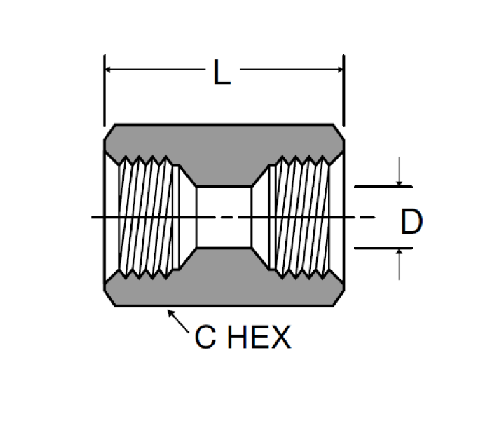 SAE 45° Brass Union Flare Fitting with Long NutAll-brass SAE 45° union flare fitting with a vibration-resistant long nut, UL listed and built to SAE J512/J513 requirements for flare-jointed tubing assemblies.View Product →
For anyone assembling flare-jointed gas tubing, the practical takeaway is that the quality of the cone and the cleanliness of the seating surfaces do all the work. A union machined with a true 45-degree seat and a nut that runs down without binding will seal with a modest wrench load and no sealant at all; a scored cone will leak no matter what is wrapped around the thread.
Nobody should take installation advice from a web article when a code book and a local inspector are available, but the shape of the rules is consistent enough to summarize. Fuel gas codes generally regulate the sealant rather than the tape as a distinct category: the material must be resistant to the action of the gas, it must be applied so that no excess enters the pipe, and the joint must be tested after assembly.
In the United States, NFPA 54 and the International Fuel Gas Code require pipe joint compound to be resistant to liquefied petroleum gas and direct that it be applied to male threads only, with the end threads left bare. Tape is treated within that framework by most authorities, but individual appliance instructions sometimes specify compound and prohibit tape — and the listing instructions govern. Where a manufacturer's manual says "use pipe dope, do not use Teflon tape", that manual is the controlling document for that appliance.
In the United Kingdom and Ireland, gas installation pipework is governed by national standards that call up EN 751 for sealing materials, and gas-rated PTFE tape to EN 751-3 is the conventional choice for tapered threads. Work on gas appliances and pipework is restricted to competent, registered persons, and the practical enforcement mechanism is the tightness test and the inspection record rather than the tape itself. In Australia and Canada, similar structures apply: a national gas installation code, a requirement for gas-resistant sealants, and a mandatory leak test. European practice varies by country but converges on the EN 751 family of standards.
Two consistent threads run through all of them. First, the sealant must be suitable for the gas — the LPG clause exists for a reason. Second, the joint must be proved tight after assembly. No code says "wrap it and hope"; every one of them requires evidence. If you remember nothing else about the regulatory side, remember that the tape is a means to an end and the tightness test is the end.
This is the classic DIY question, and the classic mistake. A flexible connector with a 1/2-inch flare nut onto a 1/2-inch flare stub is a cone-to-cone joint. No tape. Check the cone for nicks, check that the nut is the correct thread for the stub — flare nuts come in several thread families that look similar — and tighten firmly by hand plus a quarter to half turn with a wrench. Then test with approved leak-detection solution at every joint, including the appliance regulator and the manifold connection.
Here tape or paste is appropriate. Gas-rated tape, two to three wraps, male thread only, one thread bare, then a proper tightness test. On manifolds with several joints, paste is often easier to control because there are no tails to manage, and it can be applied thinly and evenly with a brush. Either way, remember that a manifold is tested as a system — one leaking joint hidden behind a bracket is still a failed installation.
The POL connection at the cylinder valve and the inverted flare or compression connection at the regulator are both non-thread-sealing joints. Tape is not used on either. If a cylinder connection smells, the usual causes are a worn or hardened nose seal, a damaged valve seat, an over-tightened or cross-threaded nut, or a perished pigtail — not insufficient tape. Replace the pigtail on its age or condition schedule rather than attempting to seal it.
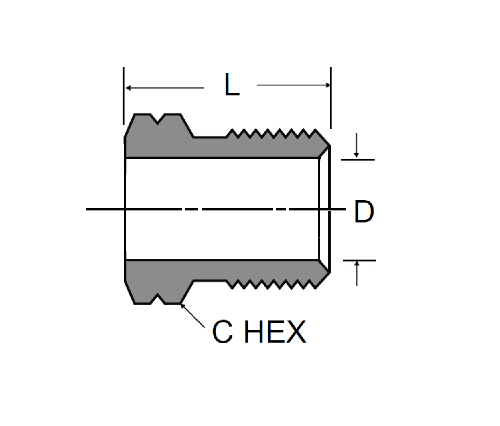 Brass POL Male Thread Nut for LP and Natural GasSolid brass adapter converting POL female to 1/4-inch male pipe thread, with 0.880-14LH POL thread for propane and natural gas connections.View Product →
Bottled gas hardware rewards buying the right part. A POL nut machined to the correct 0.880-inch left-hand thread and a tailpiece with a clean seating face will seal reliably; a mismatched or worn part will leak no matter how carefully it is assembled.
Air is not fuel gas, but the same tape rules apply and the consequences are instructive. PTFE fragments from over-wrapped air joints are a well-known cause of sticking solenoid valves, blocked air tools and contaminated spray finishes. If your shop already has tape debris in its air system, it will have the same problem in a gas system, only with a different risk profile.
Many European and some North American appliance inlets use a parallel thread with a fibre or copper washer. Tape here is a common misdiagnosis: the installer wraps the thread, the joint still weeps, and the real fault — a missing, hardened or double-stacked washer — goes unfixed. Replace the washer, check the mating face for burrs, and tighten only enough to crush the seal.
The tightness test is where the argument about tape becomes irrelevant. Either the joint holds or it does not, and the test is the only thing that says which. Three methods cover almost all domestic and light commercial work.
Never use a flame to find a leak, and never rely on smell alone. Odorant levels vary, and a small leak in a well-ventilated plant room may be undetectable by nose while still being a defect. After the test, purge the line properly before attempting ignition, and confirm appliance inlet pressure against the data plate — a joint that seals but starves a burner is still a failed commissioning.
For buyers and OEM engineers, the tape question is really a specification question. If the fitting is designed for a tapered thread and a sealant-based joint, say so on the drawing and state the thread standard, the material and the pressure class. If it is a flare or face-seal design, specify that the joint must be assembled dry, and make sure the receiving inspection checks the cone angle and surface finish — because that is what determines whether the dry joint seals.
Practical specification points that prevent field problems include: thread form called out exactly (NPT, NPTF, BSPT, BSPP) rather than "1/4 gas thread"; brass grade and temper stated, since soft thin-wall fittings crack under sealant-lubricated torque; a note that the female thread must not be plated or coated in a way that changes friction; and a requirement for batch traceability if the parts go into a regulated gas assembly. Where the parts will see LPG, ask for confirmation of compatibility with the gas and with any residual oil from the manufacturing process.
Corrosion behaviour deserves a line in the specification too. Brass pipe fittings in damp plant rooms, coastal installations and agricultural buildings can dezincify if the alloy is wrong for the environment. A fitting that has lost zinc at the thread flanks will not seal with any amount of tape, and the failure is often blamed on the sealant rather than on the material choice.
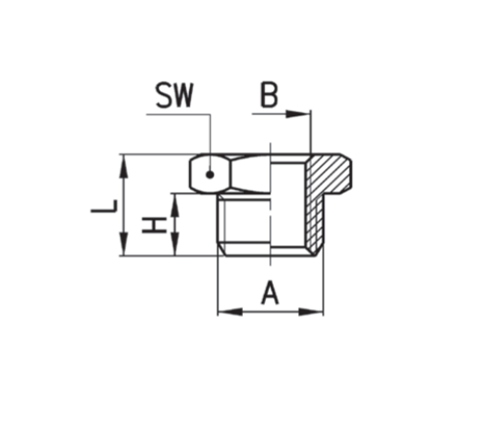 Steel Hex Bushing with BSPT and BSP ThreadsCarbon or stainless steel hex bushing with Dryseal BSPT(R)/BSP(G) threads and a broad size range for connecting and reducing threaded pipe runs.View Product →
Threaded brass couplings are the simplest place to see the distinction. A coupling built to a defined BSPT or BSPP standard, with full thread engagement and consistent wall thickness, will do what the drawing says; a light-duty part with a short thread will seal only if it is over-tightened, which is exactly the failure mode that tape lubricity encourages.
For reference data on thread dimensions and joint configurations, manufacturers publish selection catalogues that are worth keeping on the bench. Dimensional references such as a threaded pipe fittings catalogue save the guesswork of measuring a taper by eye, and flared product ranges are documented separately, as in this SAE flare fittings overview, which is useful when matching a nut to a stub that has already been installed by someone else.
Most tape-related failures fall into a handful of recognizable patterns. The table below maps what you see to what probably happened, which is usually faster than re-reading a code book on site.
| Symptom | Probable cause | Corrective action |
|---|---|---|
| Slow bubble at a taped NPT joint after a week | Too few wraps, or tape unwound during make-up | Break, clean threads, re-wrap in the direction of rotation, retest |
| Crack at the female collar of a brass fitting | Over-torque on lubricated threads; thin-wall fitting | Replace the fitting; reduce torque and use a backing wrench |
| Leak at a flare that was wrapped anyway | Tape trapped between cones, or nut stopped short | Remove tape, inspect the cone, remake dry, retest |
| Pilot burner will not light; gas valve seems faulty | PTFE shred blocking a small orifice | Strip and clean the gasway; replace the blocked orifice |
| LPG cylinder connection smells after tightening | Worn nose seal or damaged valve seat; tape holding the nose off its seat | Remove tape, inspect the POL nose and valve, replace worn parts |
| Joint weeps at a parallel-thread appliance inlet | Missing, hardened or doubled washer | Fit a new washer of the correct type; do not tape the thread |
| Tape tail found inside a regulator or valve body | Wrapping started at the thread end, or excessive wraps | Clean the component; change the wrapping method |
One pattern deserves singling out because it is misread so often: the joint that passes a bubble test on the day and leaks at the first cold snap. That is usually a flare or compression joint that was marginally tight, or a taped joint with too few wraps where the PTFE film has crept under thermal cycling. In both cases the fix is mechanical — more cone contact or a proper wrap — not more sealant applied to an already assembled joint, which never works and sometimes cracks the fitting.
Match the sealant to the sealing principle and the rest follows. Tapered metal threads carrying fuel gas get a gas-rated PTFE tape or an approved paste, applied to the male thread, in the direction of rotation, with the first thread bare and no more wraps than the thread clearance needs. Parallel threads get their washer. Flares, compression fittings, face seals, O-rings, POL connections and push-in fittings get nothing at all — they are designed to seal dry, and the tape only interferes with the surfaces that do the work.
Around that rule sit three practical habits. Keep gas-rated tape separate from general-purpose tape so the wrong roll never comes out of the bag on a gas job. Torque brass with the lubrication effect in mind and hold the fitting body while you tighten the nut. And test every joint you touched, plus the ones you did not, because a tightness test is the only evidence that matters when the question is whether a gas joint is safe.
The tape itself is not the villain. PTFE has been sealing tapered gas threads for decades and will keep doing so. The failures come from putting it where it does not belong, using the wrong grade, and skipping the test at the end — three mistakes that cost far more than the roll of tape ever saved.
Add:Xingzhong Road DianKou Town Zhuji City Zhejiang Province China
Mob: 0086-139 8951 3573
Tel: 0086-575-87560582
Fax: 0086-575-87560582
E-mail:[email protected]

 英语
 西班牙语