Abstract:
Brass Fittings, Teflon Tape Usage, and Which Fitt...
Brass Fittings, Teflon Tape Usage, and Which Fitting Type Suits Your Application
Brass fittings are threaded or compression type connectors, adapters, elbows, tees, valves, and couplings manufactured from copper-zinc alloy (typically 60% to 70% copper and 30% to 40% zinc) and used across water supply plumbing, compressed air systems, shower assemblies, gas distribution, and hydraulic circuits wherever a corrosion-resistant, pressure-rated, mechanically strong metal fitting is required. Brass is the dominant fitting material in these applications because it machines to extremely precise thread tolerances, resists corrosion from water and most common gases, solders and brazes readily, and maintains dimensional stability across a wide temperature range without the brittleness of pure copper or the corrosion vulnerability of steel.
Do you use Teflon tape on brass fittings? The answer depends on the connection type. For NPT (National Pipe Taper) and BSP (British Standard Pipe) threaded brass fittings, yes: Teflon tape (PTFE tape) is the correct thread sealant and must be applied to the male thread before assembly. For compression-type brass fittings (which seal through mechanical compression of a ferrule or olive), flare fittings (which seal through metal-to-metal contact at the flared seat), and push-to-connect fittings (which seal through an internal O-ring), Teflon tape is not applied and would actually be counterproductive by interfering with the mechanical sealing action.
Brass elbows, brass shower fittings, and brass air line fittings each represent a specific application category of the broader brass fittings family, with distinct pressure ratings, thread standards, surface finish requirements, and corrosion resistance demands that differ by application. This guide covers all three in practical detail.
Brass Fittings: Material Properties, Manufacturing Standards, and Application Range
Brass fittings owe their commercial dominance across plumbing, pneumatic, and fluid conveyance applications to a combination of material properties that no single alternative material replicates completely. Understanding why brass is specified over stainless steel, plastic, cast iron, or copper for fitting applications provides the foundation for correct material selection decisions across different system types and environments.
The Alloy Composition That Defines Brass Fitting Performance
Brass is a copper-zinc binary alloy whose properties vary significantly with zinc content. The two most common brass alloys used for fittings are:
- CW617N (DZR Brass, also called Dezincification Resistant Brass): Contains approximately 57% to 59% copper, 39% to 42% zinc, and 1.7% to 2.8% lead for machinability, with a small arsenic addition (0.02% to 0.15%) that suppresses the dezincification corrosion mechanism. DZR brass is the mandatory specification for brass fittings used in aggressive water supply conditions (high-chloride water, acidic water, or very soft water below 50 ppm total dissolved solids) where standard brass fittings would experience selective leaching of zinc from the alloy surface, creating a porous, weakened copper sponge at the fitting surface. DZR brass fittings carry the WRAS approval and the DZR designation and are required by UK water regulations for all new potable water installations.
- C36000 (Free-Cutting Brass): Contains approximately 61% to 63% copper, 35% to 37% zinc, and 2.5% to 3.7% lead. C36000 is the benchmark free-machining brass alloy, offering excellent machinability (rated at 100% on the standard machinability index where 160 series stainless steel rates at approximately 45%). The high machinability of C36000 allows brass fittings to be manufactured with the precise thread forms, tight tolerances, and smooth sealing surfaces that make threaded and compression fittings leak-free in service. C36000 is used for general-purpose brass fittings in air, non-aggressive water, gas, and hydraulic applications where the dezincification resistance of DZR brass is not required by the system's water chemistry.
Why Brass Fittings Outperform Common Alternatives
| Property |
Brass Fittings |
Plastic (PVC/PP) |
Stainless Steel |
Galvanised Steel |
| Machinability |
Excellent |
Good |
Poor |
Moderate |
| Corrosion resistance (water) |
Very good (DZR excellent) |
Excellent |
Excellent |
Poor long-term |
| Temperature resistance |
Up to 200 degrees C |
60 to 100 degrees C |
Up to 800 degrees C |
Up to 300 degrees C |
| Pressure rating (typical) |
Up to 250 bar (pneumatic: 16 to 40 bar) |
Up to 10 to 16 bar |
Up to 500+ bar |
Up to 100 bar |
| Thread quality |
Excellent (precise tolerance) |
Moderate |
Good but expensive to machine |
Good |
| Relative cost |
Moderate |
Low |
High |
Low to moderate |
Comparative performance of brass fittings against common alternative fitting materials across key selection criteria
Brass Fittings Thread Standards: NPT, BSP, and Metric
Brass fittings are manufactured to several different thread standards that are not interchangeable with each other, and correctly identifying the thread standard used in an existing system is essential before purchasing replacement or extension fittings. The three dominant standards are:
- NPT (National Pipe Taper): The dominant standard in North America, used on water, gas, steam, and air fittings throughout the USA and Canada. NPT threads are tapered: the thread diameter increases from the thread end toward the body of the fitting at a rate of 1 inch per 16 inches of thread length (1/16 taper). This taper creates an interference fit as the male and female threads engage, providing a mechanical seal that is completed by thread sealant (Teflon tape or thread compound) filling the remaining micro-gaps. NPT threads are identified by their taper and by the designation pattern where the thread size is nominal pipe size, not actual thread diameter: a 1/2 inch NPT thread has an actual outside diameter of approximately 0.84 inches.
- BSP (British Standard Pipe): The dominant standard in the United Kingdom, Europe, Australia, and most of Asia. BSP threads come in two variants: BSPT (Tapered, equivalent in sealing principle to NPT) and BSPP (Parallel, where the thread is straight and sealing is achieved by a bonded seal washer, DOWTY washer, or O-ring on the face of the fitting rather than in the thread engagement). BSP and NPT threads have the same taper angle (1/16 per inch) but different thread pitch and form, making them non-interchangeable even in similar sizes where the thread diameters happen to be close.
- Metric parallel threads (DIN standard): Used in European hydraulic systems and increasingly in compressed air fittings. Metric threads are straight (parallel) and seal through O-ring or bonded seal face sealing rather than thread interference. Metric brass fittings are common in European-manufactured equipment including German-origin pneumatic systems and Italian-origin hydraulic equipment.
Common Brass Fitting Types and Their Functions
- Couplings: Straight connectors joining two pipes or tubes of the same or different sizes, available as threaded, compression, solder, or push-to-connect types
- Elbows (brass elbow): Direction-change fittings available in 90 degree and 45 degree angles, covered in detail in the dedicated section below
- Tees: Three-port fittings that branch a single pipe into two directions, or combine two flows into one
- Reducers and bushings: Fittings that connect pipes or fittings of different sizes by reducing or enlarging the connection bore
- Nipples: Short lengths of externally threaded pipe used to connect two female-threaded fittings
- Unions: Three-piece fittings that allow disconnection of a piping run without disassembling the upstream or downstream components, essential in any system that requires periodic access for maintenance
- Check valves and ball valves: Integrated valve functions within the brass fitting body, controlling flow direction or allowing full-bore shutoff
Do You Use Teflon Tape on Brass Fittings: The Definitive Answer and Correct Application Technique
Do you use Teflon tape on brass fittings is one of the most searched practical questions in plumbing and pipework installation because the answer is not a simple yes or no: it depends entirely on the connection type. Applying Teflon tape where it is not needed wastes material and can interfere with sealing; failing to apply it where it is required guarantees a threaded joint that will leak. Getting this right is one of the most fundamental skills in pipe fitting work.
When to Use Teflon Tape on Brass Fittings
Teflon tape (PTFE thread seal tape) must be applied to the male threads of all tapered threaded brass fittings before assembly. This means NPT male threads, BSPT male threads, and any other tapered thread form used on brass fittings for water, air, gas, or steam applications. The purpose of the tape is not to provide the primary seal (the taper interference between male and female threads provides that) but to fill the microscopic helical gap that remains between the engaged thread roots and crests even after the fitting is tightened to its correct engagement depth, preventing fluid or gas from tracking along the thread helix path and appearing at the end of the fitting as a leak.
The following scenarios require Teflon tape on brass fittings:
- NPT threaded brass fittings: Any male NPT thread on a brass fitting must have Teflon tape applied before screwing into a female NPT port in another fitting, valve, manifold, or equipment body
- BSPT threaded brass fittings: Tapered BSP threads require the same Teflon tape treatment as NPT. BSPT and NPT are not interchangeable but both require thread sealant
- Brass air line fittings with tapered threads: Compressed air systems using NPT or BSPT threaded brass connections require Teflon tape on all male threads to prevent air leakage, which is both a waste of compressed air energy and a potential safety issue in high-pressure applications
- Brass shower fitting threaded connections: Where the shower arm screws into the wall fitting or where the shower head screws onto the shower arm, these are typically NPT or BSPT tapered threads that require Teflon tape
When NOT to Use Teflon Tape on Brass Fittings
Several brass fitting connection types must not have Teflon tape applied because their sealing mechanism is independent of the thread engagement:
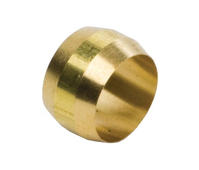
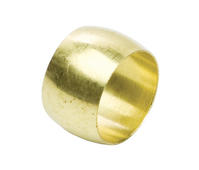
- Compression fittings: Brass compression fittings (used for copper tube, plastic tube, and stainless steel tube connections) seal through the mechanical compression of a brass ferrule (olive) against the tube outer diameter as the compression nut is tightened. Teflon tape on the body thread of a compression fitting does not contribute to the seal and can cause the nut to over-tighten before adequate ferrule compression is achieved, risking tube damage.
- BSPP parallel thread fittings with face seals: BSPP (straight BSP) fittings seal through a bonded seal washer or O-ring compressed between the fitting face and the port face. The parallel thread provides mechanical engagement only, not sealing. Applying Teflon tape to a BSPP fitting interferes with the face seal compression and does not improve the joint.
- Flare fittings: Brass flare fittings used in refrigeration and gas applications seal through metal-to-metal contact between the 45-degree flared tube end and the 45-degree seat in the flare fitting body. The seal is the metal-to-metal contact; Teflon tape on the thread does not contribute to this seal.
- Push-to-connect brass fittings: These fittings seal through an internal O-ring and a collet grip mechanism. No thread is involved, so Teflon tape is not applicable.
- Solder or braze connections: Where a brass fitting is soldered onto copper pipe, the seal is the solder fillet itself. Teflon tape would be destroyed by the soldering heat and must not be present.
How to Apply Teflon Tape on Brass Fittings Correctly
The correct application technique for Teflon tape on brass fittings is as important as knowing when to use it. Incorrectly applied tape contributes to leaks, fitting damage, or thread contamination:
- Clean the male thread. Remove any dirt, old thread sealant, oil, or moisture from the male thread surface. Teflon tape applied over contamination bonds poorly and may lift during assembly, creating gaps that allow leakage. A wire brush or thread chaser restores the thread form and clean surface.
- Start the tape at the second thread from the end. Begin wrapping from the second thread from the end of the male fitting, not from the very tip. Starting at the very end allows the tape to be shredded or folded over by the thread engagement, potentially pushing fragments of tape into the system.
- Wrap in the direction of thread engagement. Wrap the tape clockwise (when viewed from the male thread end) so that the act of screwing the male fitting into the female port tightens the tape onto the thread rather than unwrapping it. Tape wrapped in the wrong direction is pushed off the thread as the fitting is installed.
- Apply 2 to 3 wraps for water and air applications. Two to three wraps of standard white PTFE tape (typically 0.075 mm thick, also called thin film tape) is adequate for water and compressed air connections at normal working pressures up to 10 to 15 bar. Thicker yellow PTFE gas tape (approximately 0.1 to 0.2 mm thick) is used for gas lines and may need only 1 to 2 wraps due to its greater thickness. More than 3 to 4 wraps of standard tape risks the female thread being unable to engage fully, preventing the fitting from reaching its correct seating depth.
- Stretch the tape as you wrap. Apply moderate tension to the tape as it is wrapped so it conforms to the thread form and seats into the thread roots, rather than bridging loosely across the thread peaks. Well-tensioned tape fills the thread profile and provides a more consistent seal than loosely applied tape.
- Press the tape end down to secure it. After completing the wraps, press the tape end firmly onto the last wrap to prevent it from unravelling during the assembly of the fitting.
- Assemble the fitting hand-tight first, then wrench-tighten. For NPT and BSPT fittings, hand-tight engagement brings the tapers into initial contact; wrench-tightening applies the mechanical force that seats the taper fully and compresses the Teflon tape in the thread roots. Standard wrench-tightening for most brass NPT fittings is 1 to 2 turns past hand-tight, though the exact specification varies with fitting size and application pressure.
PTFE Tape Grades: Choosing the Right Tape for the Application
| Tape Grade |
Colour |
Thickness |
Application |
Wraps Needed |
| Standard thin |
White |
0.075 mm |
Water, air, low-pressure steam |
2 to 3 |
| Gas grade thick |
Yellow |
0.1 to 0.2 mm |
Natural gas, LPG, propane |
1 to 2 |
| PTFE with filler |
Pink or red |
0.1 to 0.25 mm |
High-pressure water and steam |
1 to 2 |
| PTFE wide heavy |
White |
0.2 to 0.3 mm |
Large diameter fittings (1 inch and above) |
2 to 3 |
PTFE tape grades for use on brass fittings showing colour, thickness, recommended application, and number of wraps required
Brass Elbow: Types, Dimensions, Pressure Ratings, and Installation Guidance
A brass elbow is a directional change fitting that redirects flow through an angle, most commonly 90 degrees (also called a street ell or standard elbow) or 45 degrees, within a piping or tubing system. The brass elbow is among the most frequently specified brass fittings in any pipework installation because straight runs of pipe or tubing rarely reach their destination without at least one direction change, and the choice between a 90-degree and a 45-degree brass elbow, or between a standard and a reducing elbow, has measurable effects on system pressure drop, flow velocity, and turbulence at each change-of-direction point.
Brass Elbow Configurations and When to Use Each
- 90-degree female-female threaded elbow: The most common configuration, with female NPT or BSP threads on both ports, used to connect two male-threaded pipe ends or fitting nipples at a right angle. Appropriate for all standard plumbing, compressed air, and shower fitting applications where both connecting pipes are male-threaded and no rotation constraint exists.
- 90-degree street elbow (male-female): One port is male-threaded and the other is female-threaded, allowing the elbow to screw directly into another female port without requiring an intermediate nipple. Street elbows are particularly useful in tight spaces where adding a nipple length between two fittings would exceed the available space, and they allow the angle of the second port to be positioned by rotating the elbow body in the upstream female fitting.
- 45-degree elbow: Changes direction by 45 degrees, producing less pressure drop and lower flow turbulence than a 90-degree elbow for the same flow rate and pipe size. A single 45-degree brass elbow creates approximately 50% to 60% of the pressure drop of an equivalent 90-degree elbow at the same flow velocity. Where two 45-degree elbows can achieve the same total direction change as one 90-degree elbow (by placing them in sequence with a short connecting length), the two-45 arrangement produces noticeably lower system pressure loss, which matters in high-flow or pressure-sensitive applications such as commercial shower systems and compressed air distribution mains.
- Reducing elbow: Changes direction and reduces the pipe size simultaneously, combining two fittings (a straight reducer and a 90-degree elbow) into a single body. Reducing elbows are used where the pipe size decreases at the same point as the direction changes, saving installation space and reducing the number of potential leak points in the system.
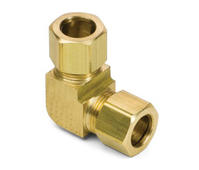
- Compression elbow: Both ports connect via compression fittings rather than threads, used to change direction in copper or plastic tube runs without the need for threading tools. Compression elbows are the standard choice for connecting flexible copper tube in plumbing installations where the tube wall thickness is insufficient for reliable NPT threading.
Pressure Ratings and Size Standards for Brass Elbows
Brass elbow pressure ratings depend on the fitting size, the wall thickness of the elbow body, and the connection type. For threaded brass elbows manufactured to ASTM B124 or BS EN standards:
- 1/8 inch to 1/2 inch threaded brass elbow: Typically rated at 150 PSI (10.3 bar) for steam service, 300 PSI (20.7 bar) for gas service, and 1,000 PSI (68.9 bar) for water service at ambient temperature under Class 150 ratings. Higher-class fittings (Class 300, Class 600) are available for high-pressure applications.
- 3/4 inch to 2 inch threaded brass elbow: Working pressure ratings decrease as fitting size increases because the same pressure creates greater total force on the larger cross-sectional area of the fitting bore. A 2-inch brass elbow of the same wall thickness as a 1/2-inch fitting has a proportionally lower pressure rating.
- Compressed air applications: Most standard brass elbows are rated for compressed air service at pressures up to 150 PSI (10.3 bar) working pressure, which covers the operating range of most workshop and industrial compressed air systems (typically 80 to 125 PSI).
Selecting the Right Brass Elbow for Your System
The correct brass elbow for a specific application is determined by five factors that must all be verified before purchase:
- Thread standard (NPT, BSPT, BSPP, or compression) matching the existing system
- Thread size (nominal pipe size in inches or millimetres) matching the connected pipe or fitting
- Angle (90-degree or 45-degree) required by the direction change in the installation
- Connection type on each port (both female, male-female street, both compression, or mixed)
- Pressure and temperature rating sufficient for the operating conditions of the system
Brass Shower Fittings: Performance, Finishes, and Installation Requirements
Brass shower fittings encompass the shower arm (the curved or straight pipe that exits the wall and positions the shower head), the shower head itself, the wall flange escutcheon that covers the wall exit point, and in some configurations the diverter fitting or flow control valve integrated into the shower arm assembly. Brass is the preferred base material for shower fittings in every segment of the market from economy to luxury because it provides the corrosion resistance, thread reliability, and surface finish durability that shower environments demand.
Why Brass Is the Correct Base Material for Shower Fittings
Shower environments expose fittings to continuous thermal cycling (temperature changes between hot water flow and ambient room temperature between uses), mineral-laden water that deposits limescale on all wetted surfaces, chemical attack from cleaning products and water treatment chemicals, and physical contact from daily cleaning routines. The material requirements for shower fittings in this environment are:
- Corrosion resistance to hot potable water: Brass resists the combination of hot water, dissolved oxygen, and dissolved minerals that causes rapid corrosion and pitting in galvanised steel shower fittings, and avoids the toxic lead and cadmium concerns that limit some plated zinc alloy (zamak) fittings from use in potable water systems
- Dimensional stability under thermal cycling: Brass maintains its thread dimensions and seal integrity through the daily temperature cycles of shower use, unlike plastic fittings that may creep at high water temperatures or become brittle at cold ambient temperatures in unheated bathrooms
- Surface finish adhesion: The surface chemistry of brass accepts electroplated finishes (chrome, nickel, gold, PVD coatings) with superior adhesion and longevity compared to zinc alloy substrates. A chrome-plated brass shower fitting will maintain its finish quality for 10 to 25 years under normal bathroom conditions, while chrome-plated zinc alloy fittings typically begin showing finish failure (blistering, peeling, or corrosion spotting) within 5 to 8 years
- Thread reliability under repeated coupling: The shower head to shower arm connection is threaded (typically 1/2 inch NPT or BSP) and is engaged and disengaged during shower head replacement or cleaning. Brass threads withstand this repeated assembly and disassembly without the thread deterioration that occurs in zinc alloy or plastic threads after multiple cycles
Brass Shower Fitting Finishes and Their Practical Durability
Brass shower fittings are available in a range of surface finishes that combine aesthetic appearance with practical corrosion and wear resistance in the bathroom environment:
- Chrome over nickel over brass (triple-plated): The most common premium finish for brass shower fittings. The nickel undercoat provides corrosion resistance and a bright base for the chrome topcoat; the chrome provides hardness (Vickers hardness 800 to 1,000 HV for decorative chrome) and chemical resistance to cleaning products. Triple-plated brass shower fittings retain their appearance for 15 to 25 years under daily bathroom conditions with appropriate cleaning.
- PVD (Physical Vapour Deposition) coatings: Titanium nitride, chromium nitride, and zirconium nitride PVD coatings applied directly over polished brass substrate produce extremely hard, chemically resistant surfaces in a range of colours including brushed gold, matte black, rose gold, and gunmetal. PVD-coated brass shower fittings are the most durable finish option, with hardness values of 1,800 to 3,000 HV and chemical resistance that far exceeds standard chrome plating.
- Brushed or satin nickel: An electroplated nickel finish with a directional brushing texture applied before or after plating, providing a softer, less reflective appearance than polished chrome. Brushed nickel is popular for contemporary and transitional bathroom designs and hides water spots and fingerprints more effectively than polished chrome, reducing cleaning frequency required to maintain appearance.
- Unlacquered polished brass: Raw polished brass without a protective topcoat, which develops a natural patina (surface oxidation) over time that darkens the bright initial appearance to a warmer, antique brass tone. Unlacquered brass shower fittings appeal to traditional and vintage bathroom designs; the patina development is considered an aesthetic feature rather than a defect in these applications.
Installing Brass Shower Fittings: Key Practical Steps
Correct installation of brass shower fittings, particularly the shower arm connection to the wall elbow and the shower head to arm connection, determines both leak-free performance and long-term appearance:
- Apply Teflon tape to the male thread of the shower arm that engages with the wall fitting (the fitting behind the wall that accepts the shower arm). This is a tapered NPT or BSP thread that requires 2 to 3 wraps of white PTFE tape before assembly. The tape prevents water from tracking along the thread and appearing as a drip at the wall escutcheon junction.
- Thread the shower arm into the wall fitting hand-tight, confirming the arm is at the correct angle (the outlet end pointing at the correct position for the shower head) before applying final tightening. Once tightened fully, the arm should not be backed off to adjust its angle because backing off breaks the Teflon tape seal.
- Tighten with a strap wrench or padded wrench to avoid marking the chrome or PVD finish of the shower arm. Metal pipe wrenches will damage plated finishes irreversibly even with a single contact. One to two turns past hand-tight is typically sufficient for 1/2 inch shower arm threads.
- Install the wall flange escutcheon over the shower arm before attaching the shower head, sliding it back against the wall to cover the wall exit hole. The escutcheon seals against the wall tile or plaster with its integral gasket or a small bead of neutral-cure silicone sealant.
- Apply Teflon tape to the male shower arm outlet thread and attach the shower head. Hand-tighten the shower head to the arm, then tighten by one additional half turn with a strap wrench. Overtightening brass shower head connections can crack the female thread on the shower head body.
- Turn on the water and inspect for leaks at both threaded connections. Small weeping at the wall thread is corrected by tightening the arm a further quarter turn. Leaks at the shower head thread are corrected by removing the head, adding an additional wrap of Teflon tape, and reinstalling.
Brass Air Line Fittings: Compressed Air System Applications, Standards, and Selection
Brass air line fittings are the connectors, adapters, couplings, elbows, tees, and valves that form the fixed infrastructure of compressed air distribution systems in workshops, factories, garages, and industrial facilities. They connect the compressor output through the air receiver tank, pressure regulators, filters, lubricators, and distribution mains to the individual air tool connection points throughout the facility. Brass is the material of first choice for fixed compressed air system fittings because it resists the oil mist and moisture that circulate through compressed air systems, provides reliable thread sealing at the pressures and temperatures of compressed air service (typically 80 to 150 PSI at ambient to 60 degrees Celsius), and does not corrode in the wet, oily internal environment that causes rapid deterioration of galvanised steel fittings over time.
The Components of a Brass Air Line Fitting System
A complete compressed air distribution system assembled from brass air line fittings includes:
- Compressor outlet fittings: The first brass fittings downstream of the compressor output port, typically a nipple or adapter connecting the compressor's outlet thread to the system mainline. These fittings experience the highest pressure in the system and must be rated for the compressor's maximum cut-out pressure (typically 125 to 175 PSI for workshop compressors).
- Distribution manifold fittings: Tees, crosses, and multi-port manifold blocks that branch the single compressor main into multiple distribution circuits serving different areas of the workshop. Brass manifold blocks with 4 to 10 outlet ports allow multiple air drops to be served from a single mainline connection point, reducing the length of small-bore tubing in the system.
- Air drop point assemblies: The fitting assembly at each point where an air tool will be connected, typically comprising a nipple from the overhead distribution main, a 90-degree brass elbow to point the outlet downward, a ball valve for individual isolation, an FRL (filter-regulator-lubricator) unit in aluminium or zinc alloy body with brass internal components, and a quick-connect coupling receptacle that accepts the push-in plugs on air tool hoses.
- Quick-connect couplings: The interface between the fixed brass distribution system and the portable air tool hoses. Quick-connect couplings (also called quick-release or snap-on couplings) consist of a receptacle (socket) fixed to the system and a plug on the tool hose. Several incompatible quick-connect standards exist (Euro, US industrial, US automotive, Asia-Pacific), so a complete system must use a consistent standard throughout to ensure interoperability of all tool connections.
Brass vs Aluminium vs Stainless Steel for Air Line Fittings
Compressed air system fittings are available in brass, aluminium (for filter-regulator-lubricator bodies and manifold blocks), and stainless steel (for food-grade and washdown-environment systems). The selection logic for brass air line fittings versus these alternatives is:
- Brass vs aluminium: Brass is preferred for threaded fittings because its thread quality and galling resistance are superior to aluminium, which is prone to thread galling (thread seizure through cold welding under the high contact pressure of threaded engagement). Aluminium bodies are preferred for FRL units and manifold blocks because the lower density reduces the weight of these larger components, but their threaded ports are typically fitted with brass inserts for reliable thread engagement.
- Brass vs stainless steel: Stainless steel air line fittings are required in food processing, pharmaceutical, and washdown environments where brass corrosion products (copper and zinc ions) cannot be permitted to contact food or product streams, and where chemical cleaning agents used in washdown procedures would attack brass. Stainless steel fittings cost 4 to 8 times more than equivalent brass fittings, making brass the clear economic choice for standard industrial and workshop compressed air systems where these special requirements do not apply.
Sizing Brass Air Line Fittings for Correct Compressed Air Flow
Undersized brass air line fittings create excessive pressure drop in the distribution system, causing air tools to operate at lower than their rated pressure even when the compressor and receiver are at full pressure. Correctly sizing the fitting bore diameter to the system flow rate at each point in the distribution system is the most important design decision in compressed air system layout:
- Compressor output to main receiver: Should be sized for the full compressor FAD (Free Air Delivery) output at acceptable velocity (typically less than 6 m/s in the main from compressor to receiver). For a compressor delivering 250 litres per minute (approximately 8.8 CFM), a 1/2 inch bore minimum is required at the 80 to 100 PSI working pressure of most shop compressors.
- Distribution mains: Sized to carry the peak simultaneous demand of all air users on the circuit at less than 3 m/s velocity to minimise friction pressure loss. Longer distribution runs require larger bore fittings and pipe to achieve acceptable pressure at the most remote use point.
- Individual drop connections: Sized for the peak demand of the air tool at the drop point plus a reserve for pressure drop through the FRL unit and quick-connect coupling. For standard impact wrenches and grinders (typically 4 to 7 CFM consumption), a 1/4 inch NPT drop connection is adequate; for sandblast cabinets and high-consumption tools (15 to 30 CFM), a 3/8 inch or 1/2 inch drop connection is required.
Maintaining Brass Air Line Fittings for Long-Term Reliability
Brass air line fittings in compressed air systems require periodic maintenance to prevent the contamination and degradation that reduce system performance and fitting service life:
- Drain the air receiver and moisture separators daily or after each use session: Compressed air contains moisture that condenses in the receiver and distribution system as the air cools. Accumulated condensate in the system creates rust in steel pipe sections, promotes bacterial growth, and carries water into pneumatic tools that are not designed for wet air. Opening the drain valve at the bottom of the receiver after each use removes this condensate before it can accumulate.
- Inspect threaded connections annually for signs of weeping or corrosion: Minor thread corrosion in brass air line fittings typically appears as a green powdery deposit (verdigris, a copper carbonate patina) at the thread junction. This is usually cosmetic in the early stages and indicates that the thread sealant was not fully effective. Affected connections should be disassembled, cleaned, re-taped with fresh PTFE tape, and reassembled at the next convenient system shutdown.
- Check quick-connect couplings for wear and O-ring condition: The O-rings in quick-connect coupling receptacles are the most wear-prone components in a brass air line fitting system. Worn O-rings allow air to bleed continuously when a plug is not inserted, wasting compressed air and reducing system pressure during tool use. O-ring replacement kits are available for most quick-connect standards at very low cost compared to full coupling replacement.
Frequently Asked Questions
1. What are brass fittings and what makes brass the preferred material for plumbing and air fittings?
Brass fittings are connectors, elbows, tees, couplings, adapters, and valves manufactured from copper-zinc alloy, used to join pipes, tubes, and equipment in water supply, compressed air, gas, and hydraulic systems. Brass is the preferred material for these fittings because it combines five properties that no single alternative material replicates simultaneously: excellent machinability that allows precise thread cutting at competitive manufacturing cost; corrosion resistance to water, air, oil mist, and most common gases; thermal stability across the full range of temperatures encountered in plumbing and compressed air applications; solderability for applications requiring soldered or brazed joints; and surface quality that accepts durable electroplated and PVD decorative finishes for exposed applications such as brass shower fittings. The only contexts where brass is regularly substituted are food-grade stainless steel applications where copper and zinc contamination must be avoided, and high-temperature steam applications above 200 degrees Celsius where brass loses strength.
2. Do you use Teflon tape on brass fittings and how many wraps are correct?
Do you use Teflon tape on brass fittings depends on the connection type. For NPT and BSPT tapered threaded brass fittings, yes: apply 2 to 3 wraps of standard white PTFE tape (0.075 mm thick) to the male thread, wrapping clockwise from the second thread from the end, with moderate tension so the tape seats into the thread roots. For large-diameter fittings above 1 inch, 3 to 4 wraps may be appropriate due to the greater thread root volume. Yellow gas-grade tape is thicker and needs only 1 to 2 wraps on brass gas fittings. Do not use Teflon tape on compression-type brass fittings, BSPP parallel-thread face-seal fittings, flare fittings, push-to-connect fittings, or any connection that seals through a mechanism other than tapered thread interference, because the tape provides no benefit in these cases and may interfere with the actual sealing mechanism.
3. What is the difference between a 90-degree and a 45-degree brass elbow and when should each be used?
A 90-degree brass elbow changes the flow direction by a full right angle, and a 45-degree brass elbow changes it by half that amount. The practical selection criterion is a combination of spatial routing requirements and system pressure drop. Where the routing requires a full right-angle direction change in minimum space, a single 90-degree brass elbow is the correct and most compact choice. Where the routing permits, using two 45-degree brass elbows in sequence with a short connecting nipple between them produces the same total 90-degree direction change with approximately 40% to 50% less pressure drop than a single 90-degree elbow, because the gradual direction change of two 45-degree turns creates less turbulence than the abrupt turn of a 90-degree elbow. In high-flow-rate applications such as compressed air mains and commercial shower systems where pressure loss at each fitting compounds across multiple fittings in the system, specifying 45-degree brass elbows where space allows produces measurably better system performance at the point of use.
4. What should I look for when buying brass shower fittings to ensure long-term quality?
When buying brass shower fittings, verify four things to ensure long-term quality. First, confirm the base material is solid brass: product descriptions that say "metal" or "alloy" without specifying brass often indicate zinc alloy bodies with thinner plating that fails within 5 to 8 years, while solid brass shower fittings last 15 to 25 years in normal service. Second, assess the plating quality: triple-plated chrome (chrome over nickel over brass) or PVD-coated brass are the two most durable finishes; single-layer chrome on brass is adequate but less durable than triple-plate. Third, check that the fitting carries WRAS (Water Regulations Advisory Scheme) approval in the UK or NSF/ANSI 61 certification in the USA if it will contact the potable water supply, confirming that the brass alloy and any internal coatings meet drinking water safety standards. Fourth, verify thread compatibility: confirm the shower arm is threaded in the same standard (NPT in North America, BSP in the UK and most of the rest of the world) as the wall fitting it will connect to, because an NPT arm will not seal correctly in a BSPT wall fitting even though it may partially engage the thread.
5. Can brass air line fittings be used for both compressed air and water?
Yes, standard brass fittings are suitable for both compressed air and water service, and many brass fittings used in compressed air systems are identical in specification to those used in water distribution systems. The brass alloy (typically C36000 or DZR brass), the thread form (NPT or BSP), and the pressure rating are the same considerations for both applications. The primary application-specific differences are: compressed air systems may require larger bore fittings for the same application scale as water systems because air at working pressure has much lower density than water and higher flow velocities are needed to deliver equivalent power; and water systems in aggressive water supply areas (soft water, high chloride) should specify DZR brass fittings while standard C36000 brass is acceptable for most compressed air applications. For systems that will carry both water and compressed air at different times (such as combination workshop utility drops), a single set of brass fittings rated for both media provides the most versatile solution.
6. How do I choose between NPT and BSP brass fittings for my system?
The choice between NPT and BSP brass fittings is determined by the thread standard already used in the existing system, the country of origin of the equipment being connected, and in some cases local building code requirements. If you are extending or connecting to an existing plumbing or compressed air system, the replacement or extension fittings must match the thread standard already used: mixing NPT and BSP threads causes cross-threading, incomplete engagement, and guaranteed leaks even with generous amounts of Teflon tape. NPT is the standard in the USA and Canada; BSP is the standard in the UK, Europe, Australia, and most of Asia. To identify the thread standard of an existing fitting, check the fitting's country of origin, look for markings on the fitting body (NPT, BSP, G, or R designations), or use a thread gauge. If adapting between NPT and BSP systems, use specifically manufactured NPT-to-BSP adapter brass fittings that have one thread standard on each end, rather than attempting to force-fit incompatible threads.
7. What causes brass fittings to leak after installation and how do I fix them?
Brass fittings leak after installation for five common reasons, each with a specific fix. Insufficient Teflon tape on tapered threads allows fluid to track along the thread helix; the fix is to disassemble the fitting, clean both threads, apply fresh tape correctly, and reassemble. Tape applied in the wrong wrap direction (counter-clockwise) unravels during assembly; the fix is the same disassemble-clean-retape-reassemble procedure with correct clockwise wrapping. Under-tightening of a tapered thread fitting allows the taper to seat only partially; the fix is to tighten further in quarter-turn increments until the leak stops, checking after each increment. Over-tightening of a brass fitting can crack the female thread in the fitting body; the fix is replacement of the cracked fitting because cracks in a brass fitting body cannot be reliably repaired. For compression fittings, leaks after initial tightening usually indicate that the ferrule has not been fully compressed; tightening the compression nut a further quarter turn typically seats the ferrule and stops the leak.
8. Are there brass fittings suitable for both hot and cold water in shower systems?
Yes, standard solid brass shower fittings are suitable for both hot and cold water service across the full temperature range of domestic hot water systems (typically up to 70 to 80 degrees Celsius at the shower mixing valve). The brass alloy maintains its mechanical strength, thread integrity, and corrosion resistance across this temperature range without special treatment. The important consideration for mixed hot and cold water use in shower systems is that any flexible connector hoses, O-rings, or internal seals within brass shower fittings should be confirmed as rated for the maximum hot water temperature in the system, as these non-brass components are the more likely limiting factor in hot water applications. Braided stainless steel flexible shower hoses with EPDM (ethylene propylene diene monomer) inner lining are rated for continuous hot water service up to 95 degrees Celsius and are the correct specification for shower hose connections in hot water systems, paired with brass shower fittings at both end connections.
9. How long do brass air line fittings last in a workshop compressed air system?
Brass air line fittings in a workshop compressed air system typically last 20 to 40 years or more in the fixed distribution infrastructure (the fittings connecting the mainline pipe and distribution branches), assuming correct initial installation with PTFE thread sealant and no mechanical damage. The limiting factor in most compressed air systems is not the brass fittings themselves but the other components: compressor seals and valves (typically 5 to 10 year service life before rebuild), FRL filter elements (replaced annually), and quick-connect coupling O-rings (replaced every 2 to 5 years depending on usage intensity). Brass air line fittings show wear primarily through thread damage (from repeated assembly and disassembly at service access points), corrosion at inadequately sealed threads (verdigris formation), and erosion of the fitting bore in high-velocity locations. Fixed infrastructure fittings that are assembled once and not disturbed routinely outlast the buildings they are installed in.
10. What is the safest way to remove a stuck or overtightened brass fitting without damaging the connected pipe?
Removing a stuck or overtightened brass fitting without damaging the connected pipe requires controlled heat application and the correct choice of tools. First, shut off the water or air supply and fully depressurise the system before attempting any fitting removal. Apply penetrating oil (such as WD-40 or a dedicated penetrating product) generously around the thread junction and allow 15 to 30 minutes for the oil to wick into the thread contact. If the fitting is in a water system that has been in service for years, thread compound or mineral deposits may be bonding the threads; heating the brass fitting body with a small plumber's torch to 150 to 200 degrees Celsius expands the metal and breaks the bond. Apply heat to the brass fitting body only, not to the connected pipe or any nearby plastic or rubber components. With heat applied, use a correctly sized open-ended wrench or adjustable wrench with jaw covers to avoid damaging the fitting body, and apply steady rotational force rather than impact. If the fitting breaks rather than releasing (which can happen with very old or corroded brass), a pipe extractor set or a damaged fitting remover tool allows the broken fitting to be extracted from the female port without damaging the port thread.


 英语
英语 西班牙语
西班牙语