24Hours Tel
0086-139 8951 3573
Free Inqiry
E-mail:[email protected]
24Hours Tel
0086-139 8951 3573
Free Inqiry
E-mail:[email protected]
Industrial, commercial, and residential piping infrastructures require highly reliable connection systems to guarantee structural longevity, maintain fluid purity, and prevent catastrophic leakage. At the center of modern pipe fitting technology is the brass fitting, a highly versatile and structurally resilient component designed to connect pipe sections, adapt different thread sizes, and regulate fluid directions. By combining the natural mechanical strength of copper with the machinability of zinc, these alloys offer an exceptional balance of durability and ease of installation. This article provides a comprehensive and detailed examination of the metallurgical properties, mechanical designs, primary applications, installation protocols, and maintenance strategies that define modern brass pipe connectors.
To appreciate why brass is widely selected over alternative metals for plumbing systems, it is necessary to examine the metallurgical composition and chemical behaviors of this alloy under variable thermal and mechanical stresses.
Brass is a substitutional alloy comprised primarily of copper and zinc, with the specific ratio of these two elements dictating the mechanical properties of the finished fitting. In typical commercial and industrial fittings, the copper content ranges from sixty percent to eighty-five percent, with the remaining portion consisting of zinc and trace amounts of other elements like aluminum, tin, or silicon to enhance specific performance characteristics.
The addition of zinc to copper increases the tensile strength and hardness of the material while significantly improving its machinability. This property is crucial for manufacturing fittings with highly precise threads and close dimensional tolerances. Furthermore, modern regulatory standards require the use of lead free brass which contains less than zero point twenty-five percent lead for all potable water applications. This lead free alloy utilizes bismuth or silicon as a replacement for lead to maintain the high machinability and sealing properties of the metal without compromising the safety of drinking water.
One of the most valuable attributes of brass is its inherent resistance to corrosion when exposed to water, soil, and various industrial chemicals. Unlike ferrous metals, brass does not rust, which prevents the formation of internal scaling that can restrict fluid flow and contaminate the system over time. When exposed to oxygen and water, brass develops a protective surface oxide layer, often referred to as a patina, which acts as a barrier against further oxidation.
However, in certain water conditions, particularly where the water is highly acidic or contains high levels of chlorine, some brass alloys can suffer from a localized corrosion process known as dezincification. This process occurs when the zinc is selectively leached out of the alloy matrix, leaving behind a weak, porous copper structure that is prone to mechanical failure. To prevent this, premium industrial brass fittings are manufactured from dezincification resistant alloys, which contain trace additions of arsenic or antimony to stabilize the zinc phase and preserve the structural integrity of the fitting in aggressive water environments.
The structural safety of a piping system depends entirely on the design of its joints. Brass fittings are engineered in several distinct mechanical configurations to accommodate different pipe materials, pressure ratings, and assembly requirements.
Threaded brass fittings are the traditional standard for joining rigid pipe sections made of copper, steel, or brass. These fittings utilize precisely machined threads to create a mechanical wedge that seals the joint when tightened. The most common thread standards are National Pipe Thread, which features a tapered profile, and British Standard Pipe, which can be either tapered or parallel.
In tapered thread designs, the threads are cut at a slight angle relative to the centerline of the pipe. As the male thread is screwed into the female fitting, the roots and crests of the threads compress against each other, creating a continuous metal to metal contact line. Because the metal surfaces are not perfectly smooth at a microscopic level, a joint sealant such as polytetrafluoroethylene tape or a liquid pipe joint compound must be applied to fill any remaining micro-gaps and prevent fluid from tracking along the thread path. Parallel threads, on the other hand, do not create a seal along the thread interface and instead rely on an elastomeric washer or an O-ring compressed at the base of the joint to prevent leakage.
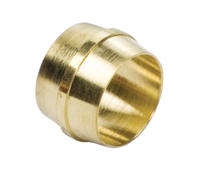
Compression fittings offer a highly convenient, threadless method for connecting copper, plastic, and multilayer tubing without the need for soldering or specialized pressing tools. A typical compression joint consists of three key components, namely the fitting body, a compression nut, and a brass sleeve or ferrule.
When the compression nut is tightened onto the fitting body, it applies a high axial force that drives the ferrule into a tapered recess inside the body. This tapered geometry forces the brass ferrule to compress radially inward, causing it to bite slightly into the outer wall of the tubing. This biting action creates a highly secure mechanical grip that resists high pressures and prevents the tube from slipping out under load. Because the ferrule is made of a ductile brass alloy, it deforms slightly to match the exact contours of the tubing, generating a highly reliable, gas-tight seal without damaging the structural wall of the pipe.
The physical versatility and wide chemical compatibility of brass make these fittings indispensable across a vast spectrum of residential, commercial, and industrial sectors.
In modern residential plumbing, brass fittings are the preferred standard for connecting copper, chlorinated polyvinyl chloride, and cross-linked polyethylene pipes. The non-corrosive nature of the alloy ensures that drinking water remains clean and free of metallic tastes or rust flakes, while its smooth internal surfaces maintain high flow velocities and minimize pressure drops across the piping network.
Furthermore, brass is highly resilient under the continuous pressure fluctuations and thermal cycles common to domestic hot water systems. When hot water passes through a pipe, the material expands, and when the water cools, it contracts. Brass possesses a coefficient of thermal expansion that is highly compatible with copper and plastic pipe materials, which minimizes the mechanical stress placed on joint connections during thermal cycling, reducing the likelihood of fatigue failures and localized weeping joints.
Industrial automation systems, machine shops, and processing plants rely on pneumatic and hydraulic networks to transmit mechanical power and control complex machinery. These networks operate under high pressures and require fittings that can handle rapid pressure spikes, severe vibrations, and exposure to oils and solvents.
Brass fittings are highly favored in pneumatic systems due to their excellent sealing properties with polyurethane and nylon tubing. Push-to-connect brass fittings allow technicians to assemble and modify air lines quickly without tools, improving operational flexibility and reducing maintenance downtime. In low to medium-pressure hydraulic applications, heavy-duty brass pipe adapters and flare fittings provide a robust metallic connection that resists vibration fatigue and prevents dangerous fluid leaks, ensuring the safe and reliable operation of hydraulic presses, lift systems, and lubrication networks.
While brass is an exceptionally durable material, improper installation practices can lead to localized stress concentration, thread damage, and premature joint failure. Following a structured installation protocol is essential to guarantee the long-term performance of the piping system.
Before assembling any threaded brass joint, the male and female threads must be thoroughly inspected for dirt, metal shavings, or burrs that could interfere with thread engagement. Any debris inside the thread valleys must be removed using a wire brush, as even a small particle can prevent proper seating and create a leak path.
Once the threads are clean, a high-quality thread sealant must be applied. If using polytetrafluoroethylene tape, the tape should be wrapped in the same direction as the male threads, which is typically clockwise when looking at the end of the pipe. Wrapping in the opposite direction will cause the tape to unwrap and bunch up as the joint is screwed together, leading to a faulty seal. The tape should be wrapped with moderate tension, covering the first three to four threads with two to three layers of tape, ensuring that the tape does not overhang the end of the pipe where it could break off and obstruct downstream valves or filters.
A common error during the assembly of brass fittings is over-tightening, often driven by the incorrect belief that tighter connections are less likely to leak. Because brass is a relatively ductile metal, excessive torque can easily deform the threads, strip the metal, or put the female fitting under intense radial stress.
Over time, this continuous radial stress can lead to a phenomenon known as stress corrosion cracking, which is a structural failure that occurs when a susceptible metal is subjected to continuous tensile stress in a mildly corrosive environment. To prevent this, installers must use proper hand tools and follow the manufacturer's torque specifications. For tapered pipe threads, a general rule of thumb is to tighten the joint hand tight plus one to two full turns with a wrench. Installers should avoid using long extension bars or impact wrenches on brass fittings, as these tools can easily apply torque far beyond the mechanical limits of the alloy.
When designing an industrial fluid network or a building ventilation system, engineers must compare brass with alternative materials to determine the most cost-effective and functionally appropriate solution.
|
Engineering Property |
Brass Fittings |
Stainless Steel Fittings |
Plastic Fittings (PEX/PVC) |
|---|---|---|---|
|
Mechanical Tensile Strength |
High strength, highly ductile |
Extremely high strength |
Moderate to low strength |
|
Machinability and Tolerances |
Excellent, very close tolerances |
Difficult, higher tooling wear |
Easily molded, moderate tolerances |
|
Corrosion Resistance |
Highly resistant to rust |
Exceptional chemical resistance |
Immune to chemical corrosion |
|
Thermal Expansion Coefficient |
Moderate, compatible with metals |
Low thermal expansion |
Extremely high expansion |
|
Maximum Pressure Rating |
High, depends on thread type |
Extremely high ratings |
Low to moderate pressure limits |
|
Relative Material Cost |
Moderate, highly cost-effective |
High initial material cost |
Low material cost |
Stainless steel fittings offer exceptionally high tensile strength and pressure ratings, making them the standard choice for high-pressure hydraulic lines and highly corrosive chemical processing systems. However, stainless steel is far more difficult to machine than brass, which translates to higher manufacturing costs and more expensive fittings. It is also prone to thread galling, which is a form of wear caused by adhesion between sliding thread surfaces that can lock a joint permanently before it is fully tightened.
Plastic fittings, such as those made from cross-linked polyethylene or polyvinyl chloride, are highly cost-effective and immune to all forms of electrochemical corrosion. However, they lack the mechanical strength of brass and are easily damaged by physical impacts or exposure to high temperatures. In systems where pipes are exposed to potential mechanical damage, or where the fluid pressure exceeds the limits of plastic polymers, brass fittings provide a reliable metallic barrier that ensures structural safety at a fraction of the cost of stainless steel.
In applications involving wide temperature fluctuations, such as solar water heating systems or industrial steam loops, the thermal properties of the fitting material are critical. Plastic fittings have a very high coefficient of thermal expansion, meaning they expand and contract significantly as the fluid temperature changes. This continuous dimensional change can put immense stress on joint connections, leading to premature fatigue and leaks.
Brass possesses a highly stable coefficient of thermal expansion, which is closely matched to that of copper and steel piping. This compatibility ensures that the entire piping system expands and contracts at a similar rate, minimizing the relative movement at joint interfaces. Additionally, brass maintains its mechanical ductility and strength at both sub-zero temperatures and high operating temperatures, preventing the embrittlement that can cause plastic fittings to shatter in cold weather or soften under high heat.
Although brass fittings require virtually no active maintenance once installed in a balanced system, periodic inspections and proper cleaning can extend their service life and prevent localized aesthetic or mechanical issues.
Over years of exposure to atmospheric moisture, oxygen, and trace gases, the surface of a brass fitting will naturally oxidize, transitioning from a bright golden color to a dull brown or green patina. This patina is not a structural defect, rather, it is a protective barrier that seals the underlying metal from further corrosion.
However, in applications where aesthetic appearance is important, or where a clean metal contact is required for electrical grounding, this oxide layer must be removed. To clean the surface safely without scratching the metal, users can apply a mild, non-abrasive polishing compound or a solution of warm water mixed with citric acid. After cleaning, the fitting must be rinsed thoroughly with clean water and dried completely with a soft towel to prevent water spots from forming. Users must never use harsh wire wheels, steel wool, or highly concentrated mineral acids, as these will erode the protective oxide layer and can damage the precision threads of the fitting.
In systems that require frequent assembly and disassembly, such as test benches, laboratory manifolds, or portable fluid transfer equipment, the threads of brass fittings will experience mechanical wear over time. If the fitting is subjected to vibration, the threads can become slightly flattened, leading to a loose fit and potential leakage.
During routine maintenance shutdowns, technicians should inspect the threads of highly cycled fittings for signs of wear, flattening, or cross-threading. If the threads show significant deformation, the fitting must be replaced to prevent joint failure under pressure. For parallel-threaded fittings that utilize elastomeric washers or O-rings, these soft seals must be replaced periodically, as they can harden, crack, or take a permanent set over time due to continuous compression and thermal exposure, restoring a leak-free seal with minimal material expense.
By understanding these metallurgical boundaries, mechanical sealing designs, installation limits, and maintenance guidelines, facility engineers and plumbers can utilize brass fittings to design and maintain highly secure, efficient, and versatile fluid distribution networks that perform reliably under continuous daily demands.
Add:Xingzhong Road DianKou Town Zhuji City Zhejiang Province China
Mob: 0086-139 8951 3573
Tel: 0086-575-87560582
Fax: 0086-575-87560582
E-mail:[email protected]

 英语
英语 西班牙语
西班牙语