24Hours Tel
0086-139 8951 3573
Free Inqiry
E-mail:[email protected]
24Hours Tel
0086-139 8951 3573
Free Inqiry
E-mail:[email protected]
Should you use Teflon tape on brass fittings? The short answer is: use it on tapered pipe threads, avoid it on fittings that seal mechanically. In practice, this means NPT and BSPT male threads usually benefit from PTFE tape, while compression fittings, SAE flare fittings, push-in connectors, and hose barb connections should have no tape at all. The reason has to do with how brass fittings create a leak-tight joint, so it helps to understand two basic sealing methods.
Brass fittings fall into two broad categories. Tapered-thread fittings, such as NPT and BSPT, seal by deforming the threads as the male and female parts are tightened. The wedge-shaped thread creates a metal-to-metal interference fit, but the spiral path along the thread root still leaves a microscopic gap for fluid to follow. PTFE tape fills that gap and lubricates the threads so that you can reach the correct seating torque without galling the brass.
Mechanical-seal fittings, by contrast, depend on a separate element: a compression ferrule, a flared cone, an O-ring, or a flat gasket. The threads in these designs are not the sealing surfaces; they only pull the sealing parts together. Putting tape on those threads can alter the clamping force and interfere with the sealing geometry.
Use PTFE tape on male tapered threads that are intended to seal by thread interference. This includes most NPT and BSPT fittings found in plumbing, pneumatic, and low-pressure hydraulic systems. The tape has two roles: it lubricates the threads so the joint can be tightened fully without seizing, and it fills the spiral clearance between the crest and root of the engaged threads. Three to five wraps of a good-quality PTFE tape is usually enough for a 1/2-inch NPT joint. Smaller threads may need only two or three wraps.
For brass fittings, leave the first thread unwrapped. This reduces the chance of tape fragments entering the fluid line. If the fitting uses a straight thread, such as BSPP or an SAE O-ring boss thread, PTFE tape is not the correct sealant. Use the designated O-ring, washer, or bonded washer instead. Do not combine tape with a thread sealant paste on the same fitting; mixing sealants often creates an inconsistent seal and is one of the most common installation mistakes.
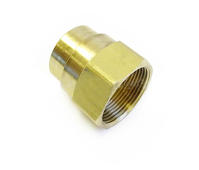
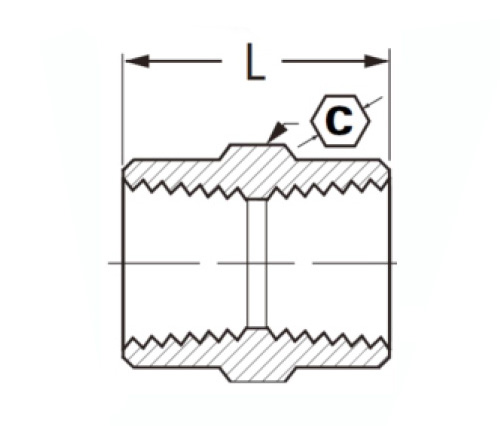 3300 Series Brass Coupling for Industrial Tubing SystemsThis forged and extruded brass coupling suits air, water, cooling, and hydraulic lines up to 1000 psi. Its dryseal threads make it relevant when discussing PTFE tape, since proper thread prep is essential for reliable sealing.View Product →
A compression fitting seals when the nut compresses a brass ferrule onto the tubing. The ferrule is the sealing element; the threads only move the nut. PTFE tape on the nut threads changes the tightening torque and can prevent the ferrule from seating properly. Typical compression fitting designs are machined so that the nut advances the ferrule; adding tape changes friction and often results in a leak or a loose nut. Do not wrap the ferrule itself with tape either. The ferrule must bite into the tube with clean metal contact; tape on the ferrule reduces friction and can actually create the leak it is meant to stop.
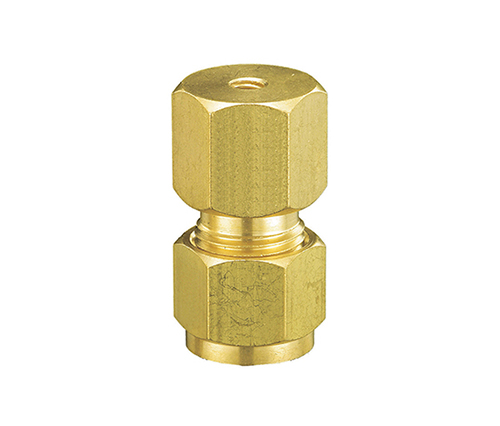 1/4 NPT Compression Double Male Connector for Fog SystemsA copper compression connector rated from vacuum to 1000 psi, built for fog systems and harsh environments. Its metal-to-metal seal design fits the article's guidance against using PTFE tape on compression threads and ferrules.View Product →
SAE 45-degree flare fittings and inverted flare fittings seal by pressing a flared tube end against a matching female cone. The seal is metal-to-metal. Putting tape on the male or female threads is not only unnecessary; it is harmful. The tape can be squeezed into the flow path, and the added lubrication can change torque readings, leading to an under-tightened joint. In brake and fuel systems, this type of contamination can be particularly dangerous.
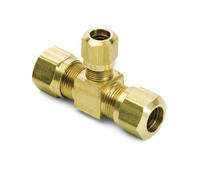
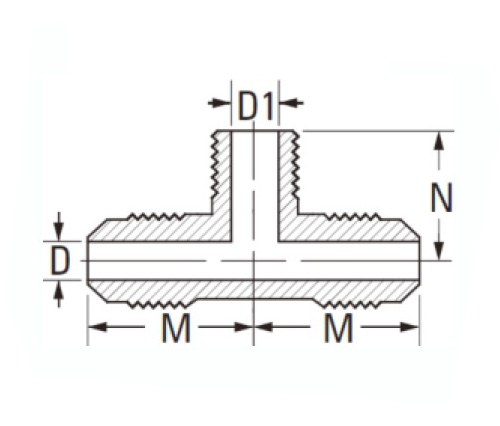 45° SAE Flare Brass Forged Male Branch TeeA UL-listed brass tee meeting SAE J512/J513, used for refrigerant, propane, fuel, and natural gas lines. Its flare and spigot compatibility illustrates metal-to-metal sealing, reinforcing why tape should be avoided on flare fittings.View Product →
Push-in fittings rely on an internal release collar and O-rings, while hose barb fittings form a seal between the barb and a clamped hose. Neither method uses thread sealing tape. Tape here would only create contamination, misalignment, or an unstable connection. The same rule applies if the fitting includes a flat rubber gasket or bonded washer: the gasket is the sealing element, and the threads are just clamping hardware.
When taped correctly, PTFE tape is reliable. Follow these steps for a clean tapered-thread joint:
Select the correct tape grade for the service. White tape is common for water, yellow tape is marked for fuel gas, and pink thread tape indicates a special formulation for certain industrial applications. If the system operates at high pressure or with strong vibration, a pipe thread sealant paste may give a longer service life.
Thread sealant selection affects leak-free life, ease of disassembly, and system cleanliness. The table below compares the most common choices for brass fittings.
| Sealant type | Best for | Advantages | Drawbacks |
|---|---|---|---|
| PTFE tape | Tapered water, air, and gas threads | Easy to apply, no cure time, low cost, prevents galling | Can shred if over-tightened; not ideal for high-vibration joints |
| Pipe thread paste | NPT and BSPT metal threads under moderate pressure | Fills irregular thread paths, good lubrication, easy disassembly | Can be messy; some formulas are not suitable for oxygen service |
| Anaerobic thread sealant | Metal pipe threads requiring high pressure and vibration resistance | Cures in the thread gap, resists shock loads, good for critical systems | Requires clean surfaces, cures only on metal, longer setup time |
Do not rely on tape to compensate for poor machining. A fitting with irregular threads, sharp burrs, or an out-of-round bore will leak regardless of the sealant. Look for cleanly cut threads, consistent wrench flats, and a smooth internal passage. For potable water, choose lead-free brass. For high-pressure service, check the pressure rating and the applicable standard. Reputable manufacturers state the thread standard and material grade, and they can provide test documentation.
Our brass pipe fittings are produced under ISO 9001 controls and tested to SAE, DOT, and ASTM requirements. If you need NPT or BSPT components, browse the brass pipe fittings catalog to see how the threads are finished. Keep in mind that the fitting type drives the sealing method. A compression fitting that leaks without tape usually has a damaged ferrule, an unsuitable tube, or an improperly prepared tube end. Adding tape will not solve those problems. The same is true for a flare joint: a clean, smooth flare is what creates the seal.
The correct answer to “should I use Teflon tape on brass fittings” is yes only when the fitting relies on tapered pipe threads, and no when it uses a compression ferrule, flare cone, push-in O-ring, or gasket. Match the sealant to the sealing mechanism, keep the tape to three to five wraps on the male thread, and avoid tape on mechanical-seal fittings. That approach produces a clean, leak-free connection without over-relying on the tape.
Add:Xingzhong Road DianKou Town Zhuji City Zhejiang Province China
Mob: 0086-139 8951 3573
Tel: 0086-575-87560582
Fax: 0086-575-87560582
E-mail:[email protected]

 英语
英语 西班牙语
西班牙语