24Hours Tel
0086-139 8951 3573
Free Inqiry
E-mail:[email protected]
24Hours Tel
0086-139 8951 3573
Free Inqiry
E-mail:[email protected]
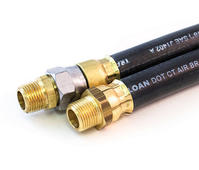
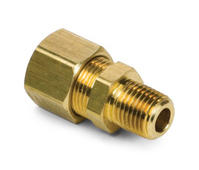
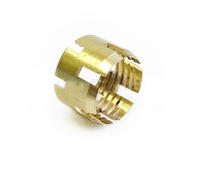
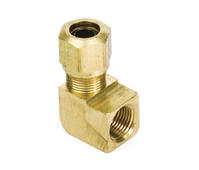
The selection of brass as a foundational material for fluid transfer and connection components is rooted in a unique combination of metallurgical properties: excellent machinability, inherent corrosion resistance, high electrical conductivity, and a low melting point conducive to complex forming processes. For brass fittings manufacturers, producing reliable components requires strict control over alloy composition, forming techniques, and stringent dimensional compliance to meet international standards for sealing and pressure integrity. The lifecycle of a fitting, from raw material to installation, is a testament to precision engineering.
The term “brass” encompasses a wide spectrum of copper-zinc alloys, each engineered with specific additives to optimize performance for a given application. The choice of alloy is the primary determinant of the fitting’s final attributes, including strength, ductility, and resistance to environmental stress.
For high-volume production of geometrically complex fittings, alloys designed for superior machinability are essential. C36000 (Free-Cutting Brass), an alpha-beta alloy, remains a standard in the industry. The inclusion of trace amounts of lead in the matrix facilitates the breaking of swarf (chips) during cutting, reducing tool wear and enabling rapid, high-tolerance production. The microstructure, a mix of the ductile alpha phase and the stronger beta phase, balances formability with necessary rigidity.
In environments involving potable water, high chlorine concentrations, or specific chemical exposures, a critical failure mechanism is dezincification, where zinc selectively leaches from the alloy, leaving behind a weak, porous, copper-rich residue. To combat this, brass fittings manufacturers utilize DZR alloys, such as C37700 or CW602N. These alloys often contain small additions of arsenic or bismuth to form a protective layer on the alloy’s surface, significantly inhibiting the electrochemical corrosion process and ensuring the long-term integrity of the fitting in corrosive media. Bismuth-containing brasses are increasingly used as alternatives to leaded alloys due to regulatory pressures on lead content in fluid systems.
The manufacturing process selected—casting, forging, or machining—is dictated by the required mechanical strength, geometric complexity, and production volume of the specific brass fitting.
Hot forging is the preferred method for fittings destined for high-pressure or high-stress applications (e.g., heavy-duty pneumatic or hydraulic systems). In this process, pre-cut brass billets are heated close to the re-crystallization temperature and then subjected to immense compressive forces within a die cavity. This mechanical work refines the brass grain structure, eliminating internal porosity and orienting the grain flow parallel to the component’s external contour. The resulting fitting exhibits superior tensile strength, fatigue resistance, and density compared to cast alternatives. Forged fittings are typically used for elbows and tees where mechanical stress concentrations are highest.
Machining is indispensable for achieving the critical internal and external features of a fitting, particularly threads and internal bore geometries. Automated CNC (Computer Numerical Control) lathes and multi-spindle screw machines perform complex, multi-axis cutting operations with sub-micron precision.
Thread Formation: The thread profile must be cut to highly exacting standards. The taper angle of NPT threads, for instance, is
Seating Surfaces: Precision machining is vital for generating the perfectly flat or conical sealing surfaces required for flare fittings or compression fittings, where the metal-to-metal contact is the sole barrier against fluid leakage.
While less common for high-pressure industrial fittings, sand or die casting may be used for large, intricate, or low-pressure components. Casting involves pouring molten brass into a mold. While offering geometric flexibility, cast fittings inherently possess a lower mechanical strength and density than forged parts due to microscopic porosity and a less refined grain structure. Subsequent pressure-impregnation treatments may be applied to seal these microscopic pores for low-pressure gas applications.
The effectiveness of a brass fitting is defined by its ability to maintain a leak-proof connection under operating conditions. This relies on the interaction of standardized geometry and mechanical deformation.
|
Fitting Type |
Sealing Principle |
Key Geometric Requirement |
|---|---|---|
|
Tapered Thread |
Mechanical interference and thread deformation. |
Precisely controlled taper angle and pitch diameter. |
|
Compression Fitting |
Ferrule (sleeve) deforms radially against the tube and fitting body. |
Accurate internal bore diameter and high surface finish on the ferrule seating area. |
|
Flare Fitting |
Flared end of the tube is clamped between the fitting nut and the fitting body. |
Exact angle of the cone to ensure full circumferential seating. |
|
Hose Barb |
Interference fit between the raised ridges and the flexible hose material. |
Specific ridge profile and overall diameter to prevent slippage. |
For brass fittings manufacturers, compliance testing is non-negotiable. Fittings are subject to rigorous testing protocols to confirm their suitability for pressure, temperature, and corrosion resistance.
Every batch of critical fittings must undergo hydrostatic or pneumatic pressure testing.
Burst Pressure Test: Fittings are subjected to steadily increasing fluid pressure until structural failure occurs. The observed burst pressure must exceed the specified maximum operating pressure by a significant safety factor.
Proof Pressure Test: A specified high pressure is held for a defined duration without any visual signs of leakage or permanent deformation.
Advanced metrology equipment is used to verify geometric accuracy:
Optical Comparators and CMMs (Coordinate Measuring Machines): Used to check complex contours, bore depths, and critical dimensions to ensure interchangeability.
Thread Gauging: Specialized plug and ring gauges are used to inspect the internal and external threads, ensuring they fall within the allowable tolerance window.
Corrosion resistance is validated through accelerated testing methods:
Salt Spray Testing: Fittings are exposed to a highly corrosive salt fog environment over an extended period. The time to first appearance of corrosion products is measured and compared against performance specifications.
Dezincification Resistance Testing: Specific to DZR brasses, testing involves exposing the alloy to a standardized acid solution for a defined duration, followed by microscopic examination to confirm that the depth of the dezincification layer remains below a defined tolerance .
In conclusion, the manufacturing of a durable and reliable brass fitting is a multi-stage process that leverages material science, mechanical engineering, and stringent quality control (pressure and corrosion testing). The enduring prevalence of brass in connection systems is directly attributable to the manufacturer’s ability to control these variables, producing components that reliably manage fluid dynamics under diverse conditions.
Add:Xingzhong Road DianKou Town Zhuji City Zhejiang Province China
Mob: 0086-139 8951 3573
Tel: 0086-575-87560582
Fax: 0086-575-87560582
E-mail:[email protected]

 英语
英语 西班牙语
西班牙语