24Hours Tel
0086-139 8951 3573
Free Inqiry
E-mail:[email protected]
24Hours Tel
0086-139 8951 3573
Free Inqiry
E-mail:[email protected]
A mechanical contractor walks onto a jobsite with 120 joints of 2-inch copper to install in a commercial riser. The building is occupied, the project manager has banned hot work during business hours, and the schedule allows four days. Across town, a homeowner is replacing a failed water heater connection: two joints of 3/4-inch copper, unlimited time, and a tight budget. Both are asking the same question, copper press fittings vs solder, but the right answer is different for them.
The short answer is this: press fittings deliver unmatched speed, remove open-flame risk, and allow installation on wet lines, at the price of higher fitting costs and a tool investment that can exceed four thousand dollars. Soldered joints are inexpensive, have a documented service life measured in decades, and tolerate higher temperatures, but they demand dry pipe, torch skill, and fire-safe surroundings. Because neither method is universally superior, the decision always comes down to project conditions.
This guide compares the two methods across installation speed, total cost, joint lifespan, safety, code compliance, and application suitability. It also examines a third connection family that is frequently left out of the debate: brass mechanical fittings that require neither heat nor a hydraulic crimping tool. Understanding all three puts you in a position to choose with confidence, whether you are quoting a high-rise mechanical room or fixing a single line in your own basement.
Soldered copper connections, often called sweat fittings, are made by heating a copper fitting and pipe end until a filler metal melts and flows into the gap between them. The filler metal used in potable-water systems today is almost always a lead-free tin-antimony alloy, commonly 95/5 solder, which melts at roughly 450 to 460 degrees Fahrenheit. The joint relies on capillary action: once the flux has cleaned the surfaces and the solder liquefies, it is drawn into the narrow clearance between the pipe and the fitting, filling the entire socket.
Capillary action is the physical mechanism that makes a sweat joint strong. The clearance between a properly sized copper pipe and socket is about 0.004 to 0.006 inches, small enough for the molten solder to be pulled through the entire joint by surface tension. If that clearance is too large, solder will not flow completely and the joint may weep. If the pipe is out of round, the gap becomes uneven and the result is unreliable. This is why quality soldered joints begin with square, clean cuts and careful deburring.
Before heating, the installer must remove oxidation from both surfaces, usually with emery cloth or a fitting brush, and then apply flux. The flux prevents oxidation during heating and promotes solder wetting. Rushing these steps is the leading cause of premature solder failure. A joint soldered over a poorly cleaned surface may pass a pressure test at first and then develop pinhole leaks months later. Overheating, another common fault, burns the flux and oxidizes the copper, leaving a joint that looks soldered but has little actual bond. Finally, the pipe and fitting must be held still while the solder cools; any movement at the moment of solidification creates a crack in the filler metal that can become a leak path.
When performed according to ASTM B828, the standard practice for making capillary joints, soldering produces a permanent metallurgical connection that is effectively as strong as the pipe itself. That is why the method has dominated copper plumbing for more than a century.
Copper press fittings are factory-made fittings with an integral elastomeric O-ring seated inside a recess, surrounded by a cylindrical crimp zone. To install one, the plumber inserts the prepared pipe end into the fitting and closes the jaws of an electro-hydraulic or manually driven pressing tool around the crimp zone. The tool applies a controlled radial force that deforms the brass or copper sleeve inward, creating a permanent mechanical lock and compressing the O-ring against the pipe surface. No heat, no flame, no solder, and no flux are involved.
The metal body of a press fitting is typically machined from forged brass or formed from DZR (dezincification-resistant) copper alloy, depending on the manufacturer and application. The O-ring is the actual sealing element. EPDM is the most common O-ring material for potable water and is generally rated for continuous service up to about 250 degrees Fahrenheit. HNBR O-rings are used in applications involving petroleum products or higher temperatures. The strength of the joint comes from the mechanical deformation of the fitting body into the pipe, while the leak-tightness comes from the O-ring. In some designs, a stainless steel grip ring is also embedded in the fitting to improve pull-out resistance.
The pressing tool is the heart of the system. The jaws clamp around the fitting's crimp zone, and a pump delivers pressure until the die reaches the correct closed diameter; then the tool stops automatically and retracts. That automatic stopping point is why press connections are more repeatable than solder joints: the same force is applied to every joint, regardless of installer fatigue or skill. However, the tool must be correctly sized for the fitting, and the jaws must be kept clean and free of debris. Many manufacturers require annual tool servicing and certification, and some code authorities ask to see service records on larger projects.
Press connections are recognized by major plumbing and mechanical codes in North America, Europe, and many other markets, and listed press fittings carry third-party certifications that verify pressure ratings and O-ring conformity. Because the joint is made cold, it can be installed next to heat-sensitive materials without fire protection, a benefit that will show up again in the safety section.
Speed is the single most cited advantage of press fittings, but it is easy to overstate. A single press joint might be completed in 20 seconds once the tool is in hand, while a soldered joint often takes six to eight minutes counting preparation, heating, cooling, and cleanup. On a full day of 60 or 80 joints, the difference adds up to hours. Yet on a two-joint repair, the time advantage is irrelevant: the soldering setup may take longer than the actual work, but the total time is still measured in minutes.
The table below is a realistic field comparison for 3/4-inch copper pipe, assuming an experienced installer with all tools ready at the work area.
| Task | Soldered Joint | Press Joint |
|---|---|---|
| Cut and deburr pipe | 30 seconds | 30 seconds |
| Clean and apply flux | 60 seconds | Not needed |
| Assemble fitting | 15 seconds | 15 seconds |
| Mark insertion depth | Not needed | 5 seconds |
| Apply heat and feed solder | 90 seconds | Not needed |
| Cool and wipe joint | 120 seconds | Not needed |
| Press the joint | Not needed | 15 seconds |
| Total per joint | About 5.5 minutes | About 1 minute |
For a crew installing 200 joints on a new mechanical floor, the press method can save roughly 14 working hours per 200 joints, enough to compress a project schedule by a full day or more. For a service plumber replacing a single valve, the time saving is only four or five minutes, rarely worth paying a premium per fitting or hauling a heavy tool onto a roof. The decision therefore starts with a simple count: how many joints are in the scope, and how often is the crew in a position to amortize the tooling?
Cost is the most misunderstood part of the press-versus-solder comparison because it involves three different categories: tooling, fittings, and labor. A complete picture requires all three. A contractor who compares only fitting prices will conclude that solder is always cheaper, while a contractor who compares only labor will conclude that press is always faster. Both would be wrong on a full project.
A propane torch kit with a flame guard and a cylinder of lead-free solder can be assembled for under 150 dollars. A battery-powered press tool with a set of interchangeable jaws for common diameters typically costs 2,000 to 5,000 dollars new. Some contractors buy a manual crimp tool for specific diameters at a lower price, and most major tool rental counters offer press guns by the day, week, or month. For a one-off project, rental is the rational choice. For a company that installs copper on a weekly basis, owning a press tool can pay for itself within a single large project.
Press fittings cost significantly more than standard solder fittings at every size, often two to four times as much at small diameters and proportionally more at larger diameters. A 3/4-inch press coupling may cost roughly three times the price of an equivalent sweat coupling. The gap narrows at 2 inches and above, where press versions become more competitive relative to the labor hours saved. Consumables tell the opposite story: solder, flux, and emery cloth cost a few dollars per job, while press fittings have no consumables other than the occasional battery charge and tool maintenance.
| Cost Item | Soldered Joint | Press Joint |
|---|---|---|
| Basic tooling | Torch kit at about $120 | Press tool at $2,000 to $5,000, or rental at $100 to $250 per day |
| Fitting cost, 3/4-inch | $1 to $3 each | $6 to $12 each |
| Solder and flux | $5 to $15 per project | None |
| Direct labor per joint | About $6.90 | About $1.25 |
A useful rule of thumb: the press method starts to become cost-competitive when a given project includes at least 40 to 60 joints, because the extra cost of fittings is recovered by labor savings. Below that number, solder usually wins on total installed cost. That threshold shifts with local labor rates and the size of pipe. Where labor is expensive, the break-even point falls. Where a project is small or fittings sit in a difficult location, the equation moves back toward soldering. Contractors who want a single universal answer rarely find one, which is why many mechanical firms now own both a torch kit and a press tool.
Longevity is where the debate between the two methods becomes most contentious. Solder has an unmatched track record, with many properly installed joints still performing after 50 or 60 years of service. Press fittings have a shorter but well-documented history, and their long-term performance is highly dependent on the O-ring. Neither method is inherently fragile, but they fail in different ways, and understanding those differences matters when a client asks for a 50-year design life.
A properly soldered 95/5 tin-antimony joint retains reasonable mechanical strength at service temperatures far above anything found in a domestic water system, and copper tube itself is used in steam and high-temperature hydronic systems. In practice, the limiting factor in a soldered system is usually the pipe or the equipment, not the joint. Press fittings are limited by the O-ring. EPDM seals in standard press fittings are typically rated for continuous operation up to roughly 250 degrees Fahrenheit, which is adequate for domestic hot water at 120 to 140 degrees and for most hydronic heating loops, but not for steam or high-temperature industrial processes. Pressure ratings are similar for both methods, usually governed by the copper tube itself, and press fittings are commonly listed for working pressures of 200 to 400 psi depending on size and manufacturer.
Soldered joints are rigid. If a system experiences continuous vibration, thermal cycling, or external loading, stress concentrates at the joint and can cause cracking over time. Press joints, by contrast, have a degree of flexibility at the O-ring and the crimped zone, which helps them absorb minor movement. In practice, this makes press connections attractive for equipment connections, motor-driven pumps, and other vibration sources. But it also means a press joint can be pulled apart if a pipe is heavily loaded in tension; press fittings are mechanical connections and must be supported like any other mechanical joint.
The single largest long-term uncertainty in press fittings is the elastomer. O-rings age, particularly under constant heat, ultraviolet exposure, or contact with incompatible chemicals. Most press fitting manufacturers rate elastomers for service lives of 25 to 50 years, and accelerated testing suggests EPDM O-rings can remain serviceable well beyond 50 years in potable water. Still, an O-ring is a polymer, not a metallic bond. A badly installed solder joint can also fail, usually because of an overheated or dirty joint, but a good solder joint has essentially no organic component and therefore no organic failure mechanism. For projects where a 100-year design life is the requirement, soldered or brazed joints remain the conservative engineering choice.
| Factor | Soldered Joint | Press Joint |
|---|---|---|
| Proven service life | 50+ years | 25 to 50 years estimated |
| Maximum continuous temperature | About 400 degrees Fahrenheit | About 250 degrees Fahrenheit with EPDM |
| Vibration behavior | Rigid, stress concentration possible | Flexible at crimp zone |
| Primary failure mode | Poor preparation or overheating | O-ring aging or chemical attack |
| Repairability | Easy with a torch | Fitting must be cut out and replaced |
The most important safety difference between the two methods is obvious: press installation generates no flame, no smoke, and no extreme heat. In occupied buildings, hospitals, schools, data centers, and facilities with dusty or flammable atmospheres, hot work permits can delay a job by days. Press fittings avoid the fire watch, the heat shields, and the risk of igniting insulation, framing, or accumulated dust. This is frequently the deciding factor on renovation projects in live buildings.
Every torch-based joint creates a controlled fire hazard, even when the installer is careful. Combustible material hidden inside walls, oil-soaked wood in old structures, and dropped solder sparks are all real ignition sources. Insurance requirements and building rules increasingly restrict hot work, and many property managers now require a dedicated fire watch for any soldering, which adds labor cost and schedule risk. Press fittings bypass these requirements entirely because there is no flame to permit. That is why press fittings have become the default choice for plumbing work in operating facilities and high-occupancy buildings.
Soldering requires a dry pipe. Any trickle of water keeps the joint temperature below the solder melting point and produces a porous, unreliable connection. Draining a system, waiting for it to dry, and recharging it takes time and can disrupt building occupants. Press fittings are available in versions designed for installation on wet lines, which is critical for emergency repairs and for systems that cannot be fully drained, such as fire sprinkler risers, chilled water loops, and some process lines. Confined spaces are also easier with press, since there is no need to position a flame safely or ventilate combustion products. On the other hand, a press tool has its own footprint: the head must fit around the fitting, which means the tool itself requires a certain clearance, something experienced press installers quickly check before bidding a tight chase.
Both soldered and press connections are code-accepted methods in essentially every jurisdiction that adopts modern plumbing and mechanical codes. The practical questions are which standards apply, whether the chosen tool and fitting combination is listed together, and whether the inspector will require documentation. Getting these details wrong can turn a fast press installation into an expensive rework order.
Soldered copper joints are governed by ASTM B828 for the joining procedure. The pipe and fittings themselves fall under ASTM B88 and ASME B16.22 or equivalent standards. In the United States, potable water systems require lead-free solder containing no more than 0.2 percent lead, verified under NSF/ANSI 372 or an equivalent standard. These requirements are now so standard that buying the wrong solder is unusual, but it still happens with imported materials, so the label should always be checked on the job.
Press fittings are assessed against product standards for joining systems, with additional evaluation of the elastomer seal and the crimp performance. In North America, listed press fittings typically carry certifications from accredited bodies that verify pressure rating, temperature rating, and material conformity. Installing a press fitting with a jaw set that was not certified for that fitting is a code violation, because the listing applies to the fitting, the tool, and the jaw combination together. It is also worth noting that press fittings from different manufacturers are not interchangeable: combining brands invalidates the connection and the warranty, so a contractor who owns a press tool is effectively committed to one fitting brand.
Both methods are fully compatible with lead-free requirements when the right materials are chosen. The brass body of a press fitting must comply with the same lead-content limits as all other potable water components, and soldered joints must use lead-free filler metal. Inspectors on potable water systems increasingly ask for documentation proving compliance, so keep labels and certificates for both fittings and solder on site until the inspection is signed off.
Once the general comparisons are clear, the decision narrows down to the specific job in front of you. No honest answer to the press-versus-solder question can be given without knowing the pipe size, the environment, the service temperature, and the access conditions. The following guidance reflects what works in practice across commercial, industrial, and residential work.
Press fittings are strongest in several specific situations: occupied buildings where hot work is restricted; retrofits where the line cannot be fully drained; large-diameter copper from 2 inches upward, where torch heating becomes slow and expensive; and vibration-prone equipment connections. They are also valuable when skilled torch work is hard to find, because the press operation is easy to train and verify. An inspector can confirm a press joint simply by looking at the crimp mark, whereas a solder joint requires the installer's skill plus a pressure test to verify.
Soldering retains clear advantages for small repairs of a handful of joints; for high-temperature systems, including steam lines and high-temperature hot water; for installations in tight quarters where the press tool head cannot reach; and on budgets where tool payback is unrealistic. Soldered joints also have the cleanest appearance for exposed copper, because there is no crimped collar or bulge. Many designers still specify soldered joints for visible architectural copper purely for aesthetics, and the smooth profile makes it easier to paint or insulate the finished line.
The most pragmatic modern approach is often a hybrid. A contractor might solder the small-diameter branch lines running through tight stud cavities, then switch to press fittings for the 3-inch and 4-inch mains and risers where the time savings are dramatic. Both methods coexist in the same code-compliant system. The mixing decision should be made systematically: define a diameter threshold, designate the areas where hot work is banned, and document which connection type was used where. A written job plan prevents arguments at inspection time.
| Application | Recommended Method |
|---|---|
| Small residential repair, 1 to 5 joints | Solder or compression brass |
| New commercial water distribution, 1/2 to 1 inch | Solder or press, based on labor cost |
| Retrofit in an occupied building | Press |
| Large-diameter risers, 2 inches and above | Press |
| Steam or high-temperature process lines | Solder or braze |
| Wet-line emergency repair | Press |
| Exposed architectural copper | Solder |
| Instrumentation, air brake, and pneumatic tubing | Brass compression or flare fittings |
For copper tubing and small-diameter pipe, there is a connection family that requires no torch and no press tool, and is often the most practical solution for a specific set of jobs: brass mechanical fittings. These include compression fittings with a nut and ferrule, flare fittings that use a 45-degree seat, and threaded brass fittings that join pipe with tapered or parallel threads. They are installed cold, fully dismountable, and inexpensive compared with press systems. A discussion of copper press fittings vs solder is incomplete without them, because in many light-industrial, pneumatic, and instrument applications, neither press nor solder is the appropriate choice at all.
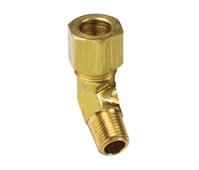
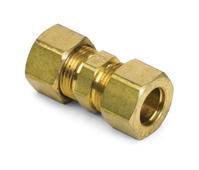
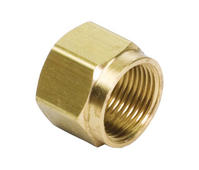
The brass compression fitting is the standard solution for connecting copper, aluminum, and plastic tubing where a flame is not allowed and the tool investment for press is unjustified. When the nut is tightened, the ferrule is compressed around the tubing, creating a metal-to-metal seal that can be loosened and retightened. Compression joints are widely used in instrumentation, air lines, and food-service equipment. For system designers looking for a field-proven mechanical joint, the brass compression fittings from LEGINES cover straight connectors, elbows, tees, and bulkhead unions in the sizes most commonly encountered in tubing systems. A representative example is the brass compression fitting for 5/8-inch tubing, which shows the typical one-piece body and captive nut design that makes field assembly reliable.
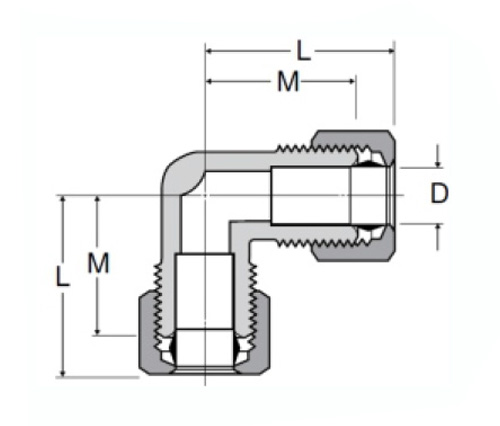 OEM 65# 90° Male Union Elbow Compression Fittings Manufacturers, Factory - ZhejiZhejiang Qinwei Fluid Technology Co., Ltd is China 65# 90° Male Union Elbow Compression Fittings Suppliers and Manufacturers, As OEM 65# ...View Product →
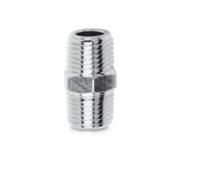
When copper pipe is terminated to equipment, valves, or manifolds, threaded brass fittings provide a joint that can be opened repeatedly for service. NPT threads taper and seal by interference, while BSPP threads use a face seal or bonded washer. Threaded connections avoid the need for a press tool entirely and are the backbone of industrial and commercial piping. The BSPT and BSPP threaded brass fittings manufactured by LEGINES demonstrate the variety of male, female, elbow, tee, and union configurations available, and they are a practical answer whenever a system must be dismantled for maintenance without cutting the pipe.
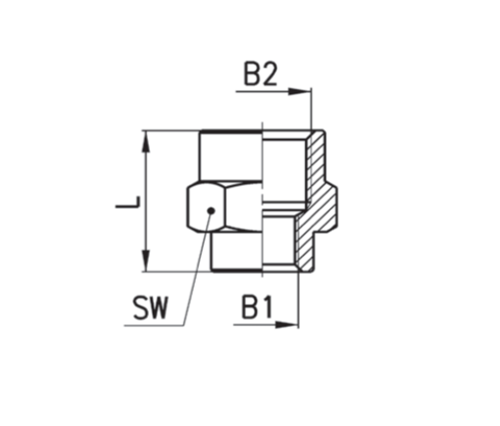 OEM 1/4×3/8 BSPP Female Female Reducer Manufacturers, Factory - Zhejiang Qinwei Zhejiang Qinwei Fluid Technology Co., Ltd is China 1/4×3/8 BSPP Female Female Reducer Suppliers and Manufacturers, As OEM 1/4×3/8 BSPP Fe...View Product →
A specialized but important category is copper fittings for air brake and pneumatic systems in commercial vehicles. These are not plumbing fittings; they are manufactured to safety standards for brake-circuit reliability, and they must be batch-tested and traceable. Threaded and flared brass connections, such as the DOT-approved copper air brake fittings, are used with seamless copper tubing on heavy trucks, trailers, and buses because they tolerate vibration, allow quick field service, and do not require heat near brake lines. Neither soldering nor press joining is appropriate for these safety-critical lines, which makes brass mechanical fittings the correct answer from the start. This is also why the DOT-approved air brake fittings line is held to a different quality standard than ordinary plumbing goods.
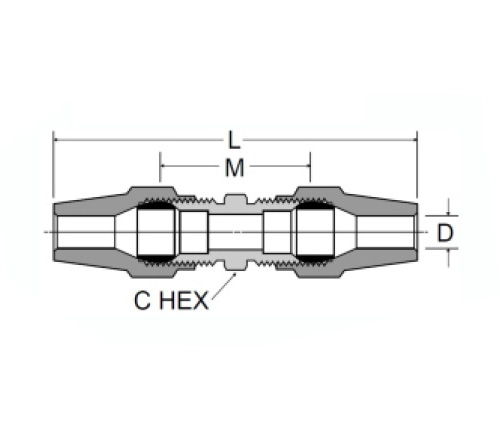 OEM 1362 Air Brake Copper connector Union Manufacturers, Factory - Zhejiang QinwZhejiang Qinwei Fluid Technology Co., Ltd is China 1362 Air Brake Copper connector Union Suppliers and Manufacturers, As OEM 1362 Air Bra...View Product →
The brass mechanical fitting wins when the system must be dismantled for maintenance, when tubing is thin-walled and could be damaged by a press crimp, when local code restricts the use of heat for a specific service, or when temperatures and pressures are moderate and the joint count is small. Mechanical brass fittings also eliminate the calibration and certification requirements of a press tool and the quality variables of torch work. Training a technician to assemble a compression or flare connection correctly takes minutes, and the joint can be inspected visually. Anyone researching this topic would benefit from reviewing how compression fittings work in practice, since the same mechanical principles explain the safety-rated fittings used in truck air systems.
For that reason, the strongest recommendation is to keep the debate broader than press versus solder. Build your specification around the actual service conditions: soldered joints for high-temperature, permanent, low-cost connections; press fittings for speed and safety on large or wet copper systems; and brass mechanical fittings for tubing, for dismantlable service connections, and for safety-rated pneumatic and air brake applications. As a manufacturer of brass fittings and DOT-approved air brake fittings, the LEGINES team sees all three approaches used correctly across different industries, and the common thread is that installers who choose deliberately are the ones whose systems stay leak-free the longest.
When the specifications are not written in stone, a short decision process will prevent the wrong choice. The following questions and the accompanying table summarize the entire comparison into a workflow that takes about five minutes to apply on any project.
| Job Type | First Choice | Second Choice |
|---|---|---|
| Facility renovation on occupied floors | Press | Compression brass |
| New high-rise risers, 2 to 4 inch | Press | Solder if hot work is allowed |
| Small service call, 3 to 5 joints | Solder | Compression brass |
| Steam and high-temperature condensate | Solder or braze | Not press |
| Truck or bus air brake tubing | Brass flared or compression | Not solder, not press |
| Instrument air and control tubing | Compression brass | Flare brass |
When someone asks which is better, the honest answer is that it depends on the building, the budget, the schedule, and the service temperature. Press fittings are the better tool for speed-critical commercial work, occupied buildings, wet lines, and large diameters. Soldered joints remain the better tool for small budgets, high temperatures, visible copper, and systems designed to last the life of the building. And for a surprisingly large set of applications, brass mechanical fittings are the better tool than both, which is why a complete specification should include all three.
The real point is not to defend one brand of connection, but to assign the right method to the right service conditions. Check the standards, count the joints, confirm the temperature and the fire rules, and then decide. That process will not lead you to a single universal answer, but it will lead you to a leak-free installation, which is the only goal that matters on any copper piping job.
Add:Xingzhong Road DianKou Town Zhuji City Zhejiang Province China
Mob: 0086-139 8951 3573
Tel: 0086-575-87560582
Fax: 0086-575-87560582
E-mail:[email protected]

 英语
英语 西班牙语
西班牙语