24Hours Tel
0086-139 8951 3573
Free Inqiry
E-mail:[email protected]
24Hours Tel
0086-139 8951 3573
Free Inqiry
E-mail:[email protected]
In the intricate world of fluid dynamics and gas transport, the reliability of a system often hinges on the smallest components. This is why the expertise of Brass Fittings Manufacturers remains a cornerstone of industrial integrity. These specialized producers focus on the engineering and fabrication of high-grade copper-zinc alloys, transforming raw materials into essential connectors known for their durability and corrosion resistance. The role of Brass Fittings Manufacturers extends beyond simple production; it involves a meticulous adherence to tolerances and a deep understanding of metallurgical properties to ensure that every fitting can withstand the pressures of modern plumbing, HVAC, and hydraulic systems.
The foundation of any high-quality connector lies in the alloy used by Brass Fittings Manufacturers. Brass is preferred primarily because it is a versatile material that offers a unique combination of strength and malleability.
Why do Brass Fittings Manufacturers prioritize specific brass alloys?
Most manufacturers utilize alloys like C36000 (Free-cutting brass) or Lead-Free brass variants to meet global safety standards. These materials are chosen because they provide excellent machinability, allowing Brass Fittings Manufacturers to create complex internal threads and smooth bores that minimize turbulence in fluid flow. The high copper content provides natural antimicrobial properties, which is particularly beneficial in potable water applications.
How does the chemical composition affect the durability of the fittings?
By balancing zinc and copper, Brass Fittings Manufacturers can produce components that resist dezincification and stress corrosion cracking. This metallurgical precision ensures that the products remain functional for decades, even when exposed to harsh environments or varying pH levels in water.
The catalog provided by top-tier Brass Fittings Manufacturers is extensive, covering almost every conceivable connection type required in industrial and residential settings.
What are the most common types of brass connectors available?
Professional Brass Fittings Manufacturers produce a wide array of products, including:
Brass Flare Fittings: Used extensively in high-pressure gas and refrigeration lines.
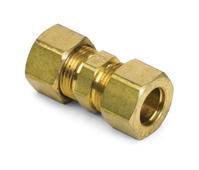
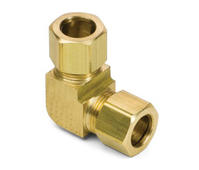
Brass Compression Fittings: Ideal for situations where soldering is not possible or desired.
Brass Pipe Nipples and Couplers: Basic but essential building blocks for rigid piping systems.
Brass Barb Fittings: Designed specifically for plastic tubing and hose connections.
Can Brass Fittings Manufacturers produce custom configurations?
Yes, many Brass Fittings Manufacturers specialize in OEM (Original Equipment Manufacturer) services. This allows for the creation of unique manifolds, specialized valves, and custom-threaded adapters that meet specific engineering requirements not found in off-the-shelf inventories.
The production floor of reputable Brass Fittings Manufacturers is a testament to modern engineering, utilizing advanced machinery to maintain strict quality control.
What role does CNC machining play for Brass Fittings Manufacturers?
The use of multi-axis CNC (Computer Numerical Control) machines allows Brass Fittings Manufacturers to achieve tolerances as tight as +/- 0.01mm. This level of precision is vital for leak-free performance, especially in high-vibration environments or high-pressure pneumatic systems.
Do Brass Fittings Manufacturers utilize forging or casting?
While casting is used for larger, less complex parts, most Brass Fittings Manufacturers prefer hot forging for high-performance components. Hot forging increases the density of the material and eliminates internal voids, resulting in a fitting that is significantly stronger than its cast counterparts.
|
Product Category |
Common Applications |
Key Material Grade |
|---|---|---|
|
Brass Compression Fittings |
Plumbing & Gas Lines |
C36000 / Lead-Free Brass |
|
Brass Flare Fittings |
HVAC & Refrigeration |
High-Strength Forged Brass |
|
Brass Garden Hose Fittings |
Irrigation & Outdoor Use |
Standard Commercial Brass |
|
Brass Hydraulic Fittings |
Heavy Machinery |
High-Pressure Alloy |
|
Brass PEX Fittings |
Modern Residential Plumbing |
Dezincification Resistant (DZR) |
One of the primary reasons industries turn to Brass Fittings Manufacturers is for the inherent longevity of the metal.
How do Brass Fittings Manufacturers test for chemical resistance?
Standard protocols involve salt spray testing and immersion tests to simulate years of exposure to corrosive elements. Brass Fittings Manufacturers often apply additional coatings, such as nickel or chrome plating, to enhance the aesthetic appeal and provide an extra layer of protection against oxidation.
Why is brass superior to other metals in these applications?
Compared to steel, brass does not rust. Compared to plastic, it can withstand significantly higher temperatures and mechanical stresses. Brass Fittings Manufacturers leverage these properties to provide solutions that are safer and more cost-effective over the total lifecycle of the installation.
A fitting is only as good as its seal. This is why the threading and sealing surfaces are the primary focus of quality assurance for any Brass Fittings Manufacturers.
What standards do Brass Fittings Manufacturers follow for threading?
Global Brass Fittings Manufacturers adhere to international standards such as NPT (National Pipe Thread), BSP (British Standard Pipe), and Metric threads. Consistency in these standards ensures that a fitting produced by one manufacturer will perfectly interface with components from another.
How is pressure testing conducted on the assembly line?
Leading Brass Fittings Manufacturers implement 100% air-under-water testing or hydrostatic testing for critical components. By subjecting the fitting to pressures far exceeding its rated capacity, manufacturers can guarantee that no micro-cracks or porosity exist in the metal body.
Many people associate brass with low-pressure plumbing, but specialized Brass Fittings Manufacturers produce components for highly demanding environments.
What are the limits of heavy-duty brass connectors?
Through advanced forging techniques, some Brass Fittings Manufacturers create connectors capable of handling thousands of PSI (pounds per square inch). These are used in hydraulic brake lines and industrial gas distribution where failure is not an option.
How does the thickness of the wall play a role?
Designers at Brass Fittings Manufacturers calculate the "wall thickness" based on the expected stress. By reinforcing the high-stress points of an elbow or a tee fitting, they ensure the component can handle the kinetic energy of fluid surges without deformation.
In recent years, the regulatory landscape for metal components has tightened, especially regarding lead content.
How have Brass Fittings Manufacturers adapted to lead-free requirements?
To comply with laws like the "Safe Drinking Water Act," many Brass Fittings Manufacturers have shifted a significant portion of their production to bismuth or silicon-based brass alloys. These materials maintain the machinability of traditional brass while ensuring the water passing through remains safe for consumption.
Do Brass Fittings Manufacturers provide material certifications?
Reliable Brass Fittings Manufacturers provide Mill Test Reports (MTRs) and Certificates of Conformance. These documents trace the material back to its original heat lot, ensuring that the chemical composition and physical properties meet the project's specific safety standards.
Even in a traditional industry, Brass Fittings Manufacturers are constantly refining their designs to improve installation efficiency.
Are push-to-connect brass fittings becoming more common?
Many Brass Fittings Manufacturers now offer "push-fit" technology, which allows for the connection of pipes without tools, solder, or glue. This innovation relies on high-precision internal O-rings and stainless steel gripping teeth, all housed within a robust brass body.
How is the integration of sensors handled?
Some advanced Brass Fittings Manufacturers are now designing "Smart Fittings" that include ports for pressure and temperature sensors. These are critical for the Internet of Things (IoT) in industrial automation, allowing for real-time monitoring of fluid systems.
With so many options in the global market, distinguishing between various Brass Fittings Manufacturers requires looking at their technical capabilities.
Does the manufacturer's testing facility matter?
Absolutely. Brass Fittings Manufacturers with in-house laboratories for spectral analysis and mechanical testing offer a higher level of assurance. This ensures that the alloy used is exactly what was specified in the design phase.
What is the importance of surface finishing?
Beyond aesthetics, the surface finish provided by Brass Fittings Manufacturers affects the ease of installation. A smooth, burr-free thread reduces the torque required for a tight seal and prevents damage to the mating part, which is a hallmark of a professional-grade manufacturer.
Sustainability has become a operational priority for many high-output Brass Fittings Manufacturers.
How do Brass Fittings Manufacturers handle scrap metal?
Brass is 100% recyclable. Most Brass Fittings Manufacturers operate a closed-loop system where the "chips" and "swarf" from CNC machining are collected, cleaned, and sent back to the foundry to be melted into new brass rods.
Is energy efficiency a priority in the forging process?
By using induction heating instead of traditional furnaces, modern Brass Fittings Manufacturers significantly reduce their carbon footprint. This precise heating method also ensures a more uniform grain structure in the forged fitting, further enhancing the quality of the final product.
Add:Xingzhong Road DianKou Town Zhuji City Zhejiang Province China
Mob: 0086-139 8951 3573
Tel: 0086-575-87560582
Fax: 0086-575-87560582
E-mail:[email protected]

 英语
英语 西班牙语
西班牙语