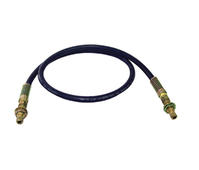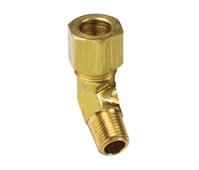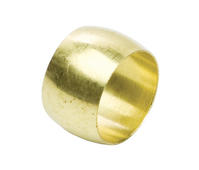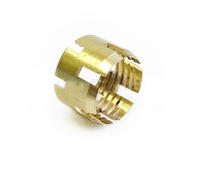
24Hours Tel
0086-139 8951 3573
Free Inqiry
E-mail:[email protected]
24Hours Tel
0086-139 8951 3573
Free Inqiry
E-mail:[email protected]
A compression fitting is a mechanical connector widely used in plumbing, hydraulic, pneumatic, refrigeration, and gas distribution systems to join two lengths of tubing or to connect tubing to threaded ports, valves, or equipment. Unlike traditional joining methods such as soldering, brazing, welding, or solvent cementing, compression fittings rely solely on mechanical force to create a leak‑tight seal. This makes them exceptionally versatile, easy to install, and ideal for applications where heat, open flames, or toxic adhesives are impractical or unsafe.
The basic design of a compression fitting consists of three critical components: a threaded fitting body (often with a male or female end), a compression nut, and a ferrule (sometimes called an olive or compression ring). When the nut is tightened onto the body, it drives the ferrule axially and radially against the outer wall of the tubing. The ferrule deforms slightly—either by biting into the tube surface or by compressing uniformly—to form a strong mechanical grip and a durable seal that withstands internal pressure, vibration, and thermal cycling.
Compression fittings are manufactured from a wide range of materials including brass, copper, stainless steel, bronze, aluminum, and engineering plastics such as nylon or polypropylene. Brass compression fittings dominate the residential and commercial plumbing markets due to their excellent corrosion resistance, machinability, and cost‑effectiveness. Stainless steel compression fittings are preferred in chemical plants, offshore platforms, and food processing lines where hygiene and resistance to aggressive media are paramount. Plastic variants are common in low‑pressure pneumatic circuits and laboratory instrumentation.
Whether you are a maintenance engineer, a refrigeration technician, a fire sprinkler installer, or a home handyman, understanding the fundamentals of compression fittings is indispensable for building reliable, long‑lasting connections. This comprehensive guide answers the most searched questions—what is a compression fitting used for, what are the two types of compression fittings, how to select the right fitting, and how to install it correctly—while also covering common pitfalls, maintenance tips, and industry best practices.
The question “what is a compression fitting used for” is one of the most frequently asked by both professionals and DIY enthusiasts. The answer spans a broad spectrum of industries and use cases, all united by the need for a secure, demountable, and heat‑free connection. Below are the primary applications where compression fittings are the preferred choice.
In domestic water supply lines, compression fittings are often employed to connect copper, PEX, or CPVC tubing to shut‑off valves, angle stops, faucet supply hoses, and water heater connections. They are especially useful in tight spaces where soldering with a torch would risk fire damage or where plastic piping cannot tolerate high temperatures. Many plumbers rely on compression fittings for quick repairs, branch connections, and transition joints between different pipe materials.
Industrial machinery, construction equipment, and automated production lines use compression fittings extensively to route hydraulic oil, lubricants, and compressed air. The robust mechanical grip provided by the ferrule ensures that the fitting can withstand high operating pressures—often exceeding 10,000 psi in hydraulic applications—while remaining resistant to shock loads and continuous vibration. In pneumatic systems, compression fittings offer a simple method to connect polyurethane or nylon tubing to solenoid valves, cylinders, and pressure regulators.
Compression fittings are a standard choice for natural gas, propane, and fuel oil piping because they eliminate the need for open flames during installation. Gas codes often permit the use of brass compression fittings with copper or stainless steel tubing, provided that the fitting is rated for the specific gas and pressure. They are commonly found in gas meters, appliance connectors, and branch lines serving furnaces, boilers, and commercial kitchen equipment.
In HVACR systems, compression fittings are used to connect copper refrigerant lines to service valves, filter‑driers, expansion valves, and compressors. The ability to disassemble and reassemble the joint without damaging the tubing is a major advantage during system maintenance, retrofits, or component replacements. Flareless compression fittings, in particular, are favored for their resistance to refrigerant leakage under extreme temperature swings.
Precision compression fittings—often of the double‑ferrule type—are ubiquitous in analytical chemistry, pharmaceutical manufacturing, and environmental monitoring. They connect small‑diameter stainless steel or Teflon tubing to chromatographs, spectrometers, gas analyzers, and sampling systems. The dead‑volume‑free design and reproducible sealing torque ensure that the sample integrity is preserved and that no cross‑contamination occurs.
Fire sprinkler risers and branch lines frequently employ compression fittings to join steel or copper pipes in both wet and dry sprinkler systems. The mechanical nature of the joint allows for rapid installation and future modifications, and the absence of heat‑affected zones preserves the metallurgical properties of the piping.
Saltwater environments demand corrosion‑resistant connections, and stainless steel compression fittings deliver excellent performance in boat engines, bilge pumps, cooling systems, and hydraulic steering circuits. Their reliability in high‑humidity and salt‑spray conditions makes them a trusted solution for marine engineers.
Compression fittings are used in fuel injection systems, air brake circuits, turbocharger oil feeds, and coolant lines. Their compact size and ability to handle pressure spikes make them suitable for engine compartments where space is limited and temperatures vary widely.
When professionals and homeowners ask “what are the two types of compression fittings,” they are typically referring to the classification based on the number of ferrules—or compression rings—used in the assembly. However, the industry also recognizes other dichotomies such as standard versus instrumentation, or metal‑tube versus plastic‑tube fittings. For clarity and practical utility, we focus on the two most fundamental and widely used categories: single‑ferrule compression fittings and double‑ferrule (two‑ferrule) compression fittings. Each type has distinct design features, performance characteristics, and ideal application areas.
As the name implies, a single‑ferrule compression fitting uses only one ferrule—a ring that is typically made of brass, stainless steel, or copper. The ferrule has a tapered inner and outer profile. When the compression nut is tightened, the ferrule is driven forward into a matching tapered seat inside the fitting body. This action causes the leading edge of the ferrule to “bite” or dig into the outer surface of the tubing, creating a strong mechanical lock and a 360‑degree seal around the tube circumference.
Single‑ferrule fittings are prized for their simplicity, lower cost, and ease of installation. They are the standard choice for most residential plumbing, low‑ to medium‑pressure hydraulic systems, and pneumatic applications. Because the bite deforms the tubing slightly, these fittings are generally considered permanent; once tightened, they are difficult to remove and re‑use without replacing the ferrule. However, they offer excellent pull‑out resistance and can tolerate considerable vibration.
Common examples of single‑ferrule compression fittings include the standard brass compression couplings used for copper water pipes, as well as many push‑to‑connect fittings that incorporate a gripping ring. In the industry, this type is sometimes referred to as a “bite‑type” or “cutting‑ring” fitting.
Double‑ferrule compression fittings, also called two‑ferrule or “twin‑ferrule” fittings, employ two separate ferrules: a back ferrule and a front ferrule. The back ferrule is typically harder and acts as a driver, while the front ferrule is softer and deforms to create the seal. When the nut is tightened, the back ferrule pushes the front ferrule against the tubing and into the fitting body’s tapered seat. The front ferrule grips the tube securely, and the back ferrule provides a secondary seal and prevents the front ferrule from over‑compressing.
The double‑ferrule design offers several significant advantages over the single‑ferrule type. First, it produces a more uniform and reliable seal because the sealing load is distributed between two ferrules. Second, it allows for repeated assembly and disassembly without losing sealing integrity, as long as the ferrules are not damaged. Third, it minimizes cold flow and creep of the tubing material, which is particularly important with soft metals like copper or plastics. Double‑ferrule fittings are the gold standard in high‑pressure instrumentation, hydraulic systems operating above 6,000 psi, and applications involving extreme temperature fluctuations or corrosive media.
Well‑known brands such as Swagelok, Parker, and Hoke manufacture double‑ferrule fittings that are widely used in oil and gas, petrochemical, and semiconductor industries. They are often made from 316 stainless steel and are available with additional options like heat‑treating, passivation, and special coatings to enhance performance.
Although the single‑ferrule versus double‑ferrule distinction is the most common answer to “what are the two types,” it is worth noting that compression fittings can also be categorised by their end connections—for example, male NPT (National Pipe Thread) versus female NPT, or flareless versus flare‑type (though flare fittings are a separate category). Additionally, fittings designed specifically for plastic tubing often use a different ferrule geometry that compresses without biting, relying instead on a friction grip. Nevertheless, for the vast majority of industrial and commercial applications, the two‑ferrule system stands apart as the high‑performance alternative, while the single‑ferrule remains the workhorse for everyday plumbing and light‑duty tasks.
Selecting the correct compression fitting involves evaluating several parameters beyond just the number of ferrules. Key considerations include the tubing material and outer diameter, the system pressure and temperature, the fluid or gas being conveyed, the required connection type (male/female thread or tube‑to‑tube), and the environmental conditions (humidity, UV exposure, chemical attack). Below is a structured approach to making an informed decision.
Compression fittings are designed to work with specific tubing materials—copper, brass, stainless steel, aluminum, PEX, nylon, polyurethane, and PTFE. The fitting must be compatible with the tubing’s hardness and surface finish. For metal tubing, the outer diameter (OD) must match exactly; for plastic tubing, the OD is also critical, but the fitting may require a different ferrule design that does not cut into the tube. Always measure the OD with a caliper or refer to the manufacturer’s specification.
Every compression fitting has a rated pressure at a given temperature. For high‑pressure hydraulic systems (above 3,000 psi), double‑ferrule stainless steel fittings are mandatory. For domestic water lines (below 200 psi), brass single‑ferrule fittings are more than adequate. Check the temperature limits as well—some plastic ferrules degrade above 150°F (65°C), whereas metal ferrules can handle up to 400°F (200°C) or more.
Corrosive fluids such as acids, alkalis, and saltwater require corrosion‑resistant materials like 316 stainless steel or special alloys (Monel, Inconel). For potable water, brass fittings must comply with NSF/ANSI 61 standards to avoid lead leaching. For gases, especially flammable ones, the fitting must be leak‑tight and capable of withstanding thermal cycling without loosening.
Compression fittings come in various configurations: straight couplings, elbows (90° and 45°), tees, crosses, adapters from tube to NPT, BSP, or other thread standards, and bulkhead fittings for panel mounting. Select the geometry that matches your piping layout and space constraints.
If you anticipate frequent disassembly for cleaning or inspection, double‑ferrule fittings are preferable because they can be re‑tightened several times with minimal effect on seal quality. Single‑ferrule fittings are generally considered one‑time use, although some manufacturers offer replaceable ferrules.
In many jurisdictions, gas and fuel line fittings must meet specific standards (e.g., ANSI Z21.15 for gas appliances). Ensure that your chosen fitting carries the appropriate certification marks and has been tested for the intended service.
Proper installation is critical to achieving a leak‑free joint. Even the highest‑quality compression fitting will fail if the installation procedure is flawed. Follow these steps for reliable results.
Cut the tubing squarely using a tube cutter or a fine‑tooth hacksaw with a guide. A square cut ensures that the tubing bottoms out fully inside the fitting body. Deburr the cut end thoroughly with a reamer or a file to remove any burrs that could damage the ferrule or cause turbulent flow. For plastic tubing, use a sharp knife and avoid crushing the tube.
Slip the compression nut onto the tubing first, followed by the ferrule (or ferrules in the case of double‑ferrule types). Ensure that the ferrule is oriented correctly—usually the tapered end points toward the fitting body. Then insert the tubing into the fitting body until it reaches the internal shoulder. Tighten the nut finger‑tight to hold the components in place.
Using a wrench, tighten the nut an additional 1 to 1.5 turns after finger‑tight for single‑ferrule fittings on soft copper or plastic tubing. For double‑ferrule instrumentation fittings, follow the manufacturer’s specific torque or turn‑count recommendation—often this is 1‑1/4 turns for 1/4‑inch and smaller sizes, and 1‑1/2 turns for larger sizes. Over‑tightening can deform the tubing excessively, reducing its wall thickness and creating a stress riser, while under‑tightening leads to leaks.
After assembly, pressurise the system gradually and inspect the joint with a soap‑and‑water solution (for gas) or by observing for drips (for liquid). If a leak is detected, try tightening the nut an additional 1/8 to 1/4 turn. If the leak persists, disassemble, inspect the ferrule and tubing for damage, and replace any deformed components. Never use thread sealant or Teflon tape on the compression threads—the seal is made by the ferrule, not the threads.
In critical applications, use a torque wrench set to the value specified by the fitting manufacturer. Record the torque value for future reference. Some high‑end fittings have witness marks to indicate proper tightening.
Despite their simplicity, compression fittings are prone to certain installation errors that can compromise performance. Awareness of these pitfalls will save time and money.
Brass ferrules are not suitable for stainless steel tubing because they are softer and may gall or fail to bite. Always match the ferrule material to the tube material—harder ferrules for harder tubes, and vice versa.
Excessive torque can crush the tubing, reduce flow area, or cause the ferrule to cut too deeply, leading to premature fatigue failure. Follow the recommended turns or torque values.
Single‑ferrule fittings should never be reused because the ferrule has already been work‑hardened and deformed. Double‑ferrule fittings can sometimes be reused if the ferrules are in good condition, but it is safer to replace them if any doubt exists.
Burrs inside the tube can catch the ferrule, prevent full bottoming, and create turbulent flow that erodes the seal. Always deb‑ur thoroughly.
NPT threads are tapered and require sealant, while BSP threads are parallel and use a bonded seal. Using the wrong thread adapter can cause cross‑threading or leaks.
Scratches, dents, or ovality in the tubing prevent the ferrule from sealing uniformly. Cut back to a clean section of tube before installing a fitting.
Compression fittings are generally low‑maintenance, but periodic inspection is advisable, especially in high‑vibration or thermal‑cycling environments. Check for signs of external leakage, corrosion, or loosening of the nut. If a fitting weeps, try tightening it 1/8 turn; if that fails, disassemble and inspect the ferrule and tubing. Replace any components that show grooving, cracking, or excessive flattening. In systems with frequent temperature changes, consider using a double‑ferrule design that compensates for expansion and contraction.
For long‑term storage, keep fittings in a dry, clean environment to prevent oxidation of the threads and ferrules. Lubricating the threads lightly with a compatible anti‑seize compound can prevent galling during assembly, but be careful not to get lubricant on the sealing surfaces.
In simple terms, a compression fitting is used to join two pieces of pipe or tube together—or to connect a tube to a valve, faucet, or appliance—without using heat or glue. It works by squeezing a metal ring (ferrule) against the tube when you tighten a nut, creating a watertight or gas‑tight seal.
The two most common types are single‑ferrule compression fittings (which use one ring that bites into the tube) and double‑ferrule compression fittings (which use two rings for a more reliable and reusable seal). Single‑ferrule is typical for plumbing and light hydraulics, while double‑ferrule is preferred for high‑pressure instrumentation and critical applications.
Single‑ferrule fittings should not be reused because the ferrule has already deformed to fit the original tubing. Double‑ferrule fittings can sometimes be reused if the ferrules are undamaged, but it is always safer to install new ferrules for a guaranteed seal. The nut and body can usually be reused, but check for thread damage.
A compression fitting relies on a ferrule to deform around the tube, while a flare fitting requires the tube end to be flared outward into a conical shape. Flare fittings are common in brake lines and gas systems; they are generally more tolerant to vibration but require a special flaring tool. Compression fittings are easier to install and do not require tube shaping.
No. The seal in a compression fitting is made by the ferrule against the tube, not by the threads. Teflon tape or pipe dope on the threads can actually interfere with proper tightening and may cause the nut to bind before the ferrule is fully compressed. Only use sealant on the pipe threads if the fitting has a tapered NPT end that connects to a threaded port.
A general rule is to tighten the nut finger‑tight and then turn it 1 to 1.5 full turns with a wrench for sizes up to 1 inch. For double‑ferrule instrumentation fittings, follow the manufacturer’s turn count (typically 1‑1/4 turns after finger‑tight). Always check for leaks after pressurisation and tighten slightly if needed.
Yes, but you must use fittings designed specifically for plastic tubing. These fittings usually have a plastic or brass ferrule that compresses without cutting into the tube, and they often include a tube insert (stiffener) to prevent the tube from collapsing under the ferrule pressure.
Yes, when they are certified for gas service and installed correctly. Brass compression fittings with copper tubing are commonly used for natural gas lines, but you must verify that the fitting meets local gas codes and is rated for the operating pressure of the system. Never use plastic compression fittings for gas.
Leakage after some time is often due to thermal expansion and contraction causing the ferrule to relax, or to vibration that loosens the nut. Try tightening the nut 1/8 to 1/4 turn. If the leak persists, the ferrule or tubing may have been damaged during initial installation, requiring disassembly and replacement of the ferrule and possibly a short section of tubing.
The size refers to the outer diameter (OD) of the tubing it is designed to fit. For example, a 1/2‑inch compression fitting fits 1/2‑inch OD tubing. Always measure the tubing OD accurately, as nominal pipe sizes (e.g., 1/2‑inch copper pipe) often have different actual OD measurements. Use calipers for precision.
It is not recommended because water or debris on the tubing or ferrule can prevent a proper seal. Dry the tube and fitting components thoroughly before assembly. For systems that cannot be drained, use a specialised “wet‑install” fitting, but these are less common.
There is no single maximum; it depends on the material, size, and design. Brass single‑ferrule fittings typically handle up to 1,000–2,000 psi, while stainless steel double‑ferrule fittings can exceed 10,000 psi. Always consult the manufacturer’s pressure‑temperature rating chart for your specific fitting.
As mentioned, single‑ferrule types are not reusable. Double‑ferrule types may be reused if the ferrules are in pristine condition, but many professionals prefer to replace the ferrules to ensure zero leaks, especially in critical services.
If the nut is seized, apply penetrating oil and let it soak. Use two wrenches—one to hold the fitting body and the other to turn the nut. If the ferrule is stuck on the tube, you may need to cut the tube behind the ferrule and use a ferrule puller or carefully split the ferrule with a hacksaw (avoiding the tube).
Yes, but you must use a compression fitting that is specifically rated for PEX. These fittings often include a rigid support tube inserted inside the PEX to prevent collapse, and they use a different ferrule geometry that does not cut the plastic. Always follow the manufacturer’s guidelines for PEX.
Add:Xingzhong Road DianKou Town Zhuji City Zhejiang Province China
Mob: 0086-139 8951 3573
Tel: 0086-575-87560582
Fax: 0086-575-87560582
E-mail:[email protected]

 英语
英语 西班牙语
西班牙语